Our Chief Executive's Leadership Blog for April 2026
 Hello,
I’m writing this following a busy day with both LYPFT’s public Board meeting, followed by a Board-to-Board meeting with our colleagues at Leeds Community Healthcare NHS Trust (LCH).
Naturally our forthcoming merger with LCH is taking up a lot of thinking and planning time with senior colleagues, which is right as the changes we are planning are significant for our patients and our staff.
I’m hoping we’ll be able to announce the approval of our strategic outline case in April, which will be our first big announcement about the merger so watch this space!
An inspector called
We were joined by a colleague from the Care Quality Commission (CQC) at our Board meeting last week as the CQC will be conducting a well-led assessment of the Trust in April.
A well-led inspection assesses Trusts on things like shared direction and culture, leadership behaviours, and workforce equality and inclusion.
In the lead up to this they’ve carried out inspections of the following services:
- Rehabilitation Inpatient Services at Asket House, Asket Croft and Ward 5 Newsam,
- Acute Inpatient Services at the Becklin and Newsam Centres, and
- Older People’s Inpatient Services at The Mount.
I want to thank everyone who has hosted an inspection so far and given a great account of themselves to the inspection team.
There are of course things that have been picked up which we need to address – which is why the inspections are valuable, and local leaders are taking those actions forward now.
Last October the CQC visited our inpatient young people’s mental health wards in Leeds and York. In March they published their report, rating them both as “good”.
They said: “young people were positive about the service, and they thought staff were kind and helpful and that they could speak to them when they needed to.”
The report goes on to say that: “the service always treated people with kindness, empathy and compassion and respected their privacy and dignity,” and that “staff attitudes and behaviours when interacting with young people showed that they were discreet, respectful and responsive, providing them with help, emotional support and advice at the time they needed it.”
Inpatient staffing review
The Board received a report about the comprehensive inpatient staffing review we did back in September 2025 across all 26 of our mental health inpatient wards.
The review aims to provide us with a clear framework on what safe and optimum levels of staffing on our acute wards looks like, which it has done whilst also highlighting the wider system changes needed to deliver a sustainable and modernised clinical model.
In the coming weeks we will be welcoming a review team from the Royal College of Psychiatrists who we hope will give us an even deeper understanding of our adult acute inpatient pathways, clinical model, and workforce structure.
There are several Trust‑wide programmes contributing to our staffing requirements. One of them is conducting a large‑scale campaign to recruit more health support workers for our inpatient wards. Health support workers are the backbone of our clinical teams providing high levels of one-to-one care for service users, and leading interesting therapeutic groups and activities. These roles provide a great entry level opportunity to a career in nursing, and I hope our campaign attracts the wealth of talent that’s out there.
Visits to The Mount
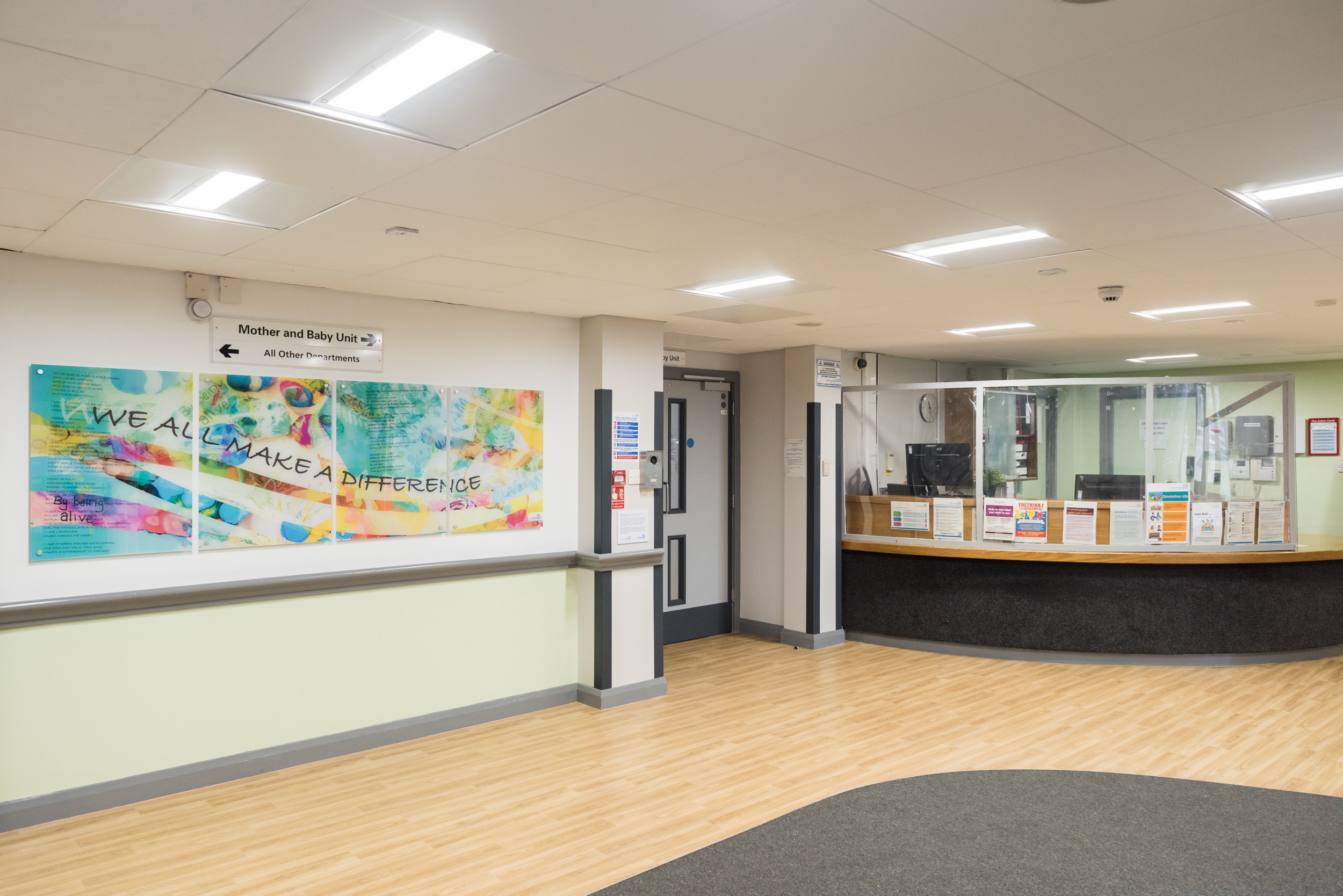
In January I spent some time at The Mount visiting older adult services and the perinatal mental health service.
I was made very welcome by the leadership team who’ve made considerable progress in recent years. This has clearly had an impact with improved recruitment and retention, improved pathways and focus on clinical effectiveness. After I visited, they then hosted an inspection from the CQC, so they probably deserve a few quieter weeks.
The expansion of our regional perinatal Mother and Baby Unit has been delayed by complexities related to the ownership of The Mount (with it being a PFI building) however the leadership team is ploughing on with recruitment and planning for the new delivery model once the additional six beds open, hopefully later this year.
They also shared changes they’ve made on the service pathway since taking on lead provider for the region with a dedicated triage function – bringing brings together senior clinicians and decision makers across inpatient and community teams.
Despite the day-to-day challenges I felt a genuine sense of optimism and positivity instilled from the senior leadership team. Inevitably the merger with the community trust featured in our discussions with the services already identifying the benefits this can bring for them and what they can offer in return.
Neighbourhood Health in Leeds
The long-awaited national guidance on implementing neighbourhood health was published on 17 March. Part of the overall ten-year health plan for England, neighbourhood health aims to put “the person at the centre of how we deliver their health and care by organising services so they can work together to serve a defined population”.
In Leeds we are working with the local authority’s Health and Wellbeing Board to firm up proposals by May on how we will implement neighbourhood health – from the broadest sense of prevention and wider health and wellbeing in every community through to the health and social care offer for when people have greater needs for support, intervention and recovery.
We are also working out how services will map themselves across the neighbourhood “footprint” areas. There will be no perfect option, and each one will work well for some but create challenges for others. One of our key principles is that most planned health and care should be delivered at a single neighbourhood or community level – which feels exciting.
Physical health assessments levels on the up
A big well done to all those who’ve helped achieve a significant improvement in the completion of physical health checks, also known as cardiometabolic assessments, across our inpatient wards and in the Early Intervention in Psychosis service.
In the latest report we heard they are now achieving 82% completion against a target of 80%. This is up from a 50% completion rate in March 2025.
Trust rankings in national performance league tables
March saw the publication of the National Oversight Framework (NOF) data for quarter 3 of 2025/6. The NHS Oversight Framework assesses integrated care boards (ICBs) and NHS trusts to enhance public accountability for performance and identify providers that require support to improve.
All 205 NHS Trusts in England are placed in a segment between 1 (high performing) and 4 (low performing). Segment 5 is reserved for the most challenged organisations that require the most support to improve.
LYPFT is currently in segment 3, so no change from the previous quarter – indicating that the “organisation and/or wider system are off-track in a range of domains or are in financial deficit.” Whilst we have been ranked 42 out of 61 mental health and community trusts across England, we are not reporting a financial deficit or in receipt of deficit support.
Read more about the NOF on our website.
Reasons to be Proud
Aspiring leaders’ graduate

NHS leaders of the future from across West Yorkshire came together to celebrate their graduation from the Mary Seacole Leadership Programme (pictured above).
The NHS needs good leaders, and I was delighted to see around 30 participants from this well-established course reflecting on their six‑month leadership journey and the impact the programme has had on their confidence, skills and personal growth.
Pot Noodles hit the right notes
A music group run by the Leeds Assertive Outreach Team and Rehab services is making a remarkable difference to service users’ wellbeing, confidence and social connection.
The group affectionately known as The Pot Noodles, meets over a 10-week programme to explore music, learn new skills and express themselves through singing, drumming, and songwriting.
Check out one of their jam sessions on YouTube below.
Five-star reviews for Older People’s Service
One of the hardest parts of my job is to review our responses to complaints from service users and carers. So, when you get positive reviews its very uplifting and I’m grateful to people who take the time to do it.
The Memory Clinic and the East North East Older People’s Service have recently had two five-star reviews highlighting the exceptional, compassionate and life-changing care they’ve given.
For the Memory Clinic and “Dr Madelaine and Yolisa” in particular: “The whole experience… from diagnosis with Dr Madelaine to follow-up with Yolisa has been exceptional.”
For the ENE Older People’s Services: “Dr Jake Taylor’s care and treatment rebuilt my life… I felt a new life had come back to me.”
And our latest Team of the Month is . . .

Addictions Plus – Forward Leeds (pictured above) whose dedication, resilience and teamwork have shone exceptionally bright during a highly demanding period. Despite intense staffing pressures and increasingly complex clinical presentations, the team has continued to provide safe, effective support to people across Leeds.
And our latest Individual of the Month is . . .
Farah Sanam – a colleague who, according to her nomination, consistently puts service users first. She is widely recognised as a champion of the service‑user voice, making sure people’s experiences and choices shape clinical decision‑making.
During recent staffing pressures, Farah stepped in at short notice on several occasions to ensure service users were seen and duty cover remained safe and responsive. Colleagues described her professionalism, reliability and commitment as “a true role model”.