Public Meeting of the Board of Directors – Thursday 27 November 2025
Public Meeting of the Board of Directors will be held at 9.30am on Thursday 27 November 2025 Inspire@ room, Horizon Leeds, 3rd Floor, 2 Brewery Wharf, Kendall Street, Leeds, LS10 1JR
Agenda
Opening proceedings
| Item | Item title | Lead | Time |
| 1 | Apologies for absence (verbal) | Merran McRae | 9.30am |
| 2 | Sharing stories – Adult Acute (verbal) | Adult Acute | 9.35am |
| 3 | Declarations of interests and any declarations of conflicts of interest in any agenda item (enclosure) | Merran McRae | No time specified |
| 4 | Minutes of the meeting held on 25 September 2025 (enclosure) | Merran McRae | No time specified |
| 5 | Matters arising (verbal) | Merran McRae | No time specified |
| 6 | Actions outstanding from the public meetings of the Board of Directors (enclosure) | Merran McRae | 10.05am |
Use of resources
| Item | Item title | Lead | Time |
| 7 | Chief Executive’s report (enclosure) | Sara Munro | 10.10am |
| 7.1 | System Review Report (enclosure) | Sara Munro | 10.20am |
| 7.2 | Provider Capability Self-Assessment Return (enclosure) | Sara Munro | 10.30am |
| 8 | Report from the Chair of the Finance and Performance Committee for the meetings held on 28 October and 25 November 2025 (to follow) | Cleveland Henry | 10.35am |
| 8.1 | Finance and Performance Committee Terms of Reference (enclosure) | Cleveland Henry | – |
| 9 | Report from the Chief Financial Officer (enclosure) | Dawn Hanwell | 10.40am |
| 10 | Organisational Priorities Q2 Update Report (enclosure) | Dawn Hanwell | 10.50am |
| 11 | Report of the Chief Operating Officer (enclosure) | Joanna Forster Adams | 10.55am |
| 11.1 | Emergency Preparedness, Resilience and Response (EPRR) Core Standards Assurance Report (enclosure) | Joanna Forster Adams | 11.05am |
| Not applicable | Break | Not applicable | 11.10am |
Patient centred care
| Item | Item title | Lead | Time |
| 12 | Report from the Chair of the Quality Committee for the meetings held on 9 October and 13 November 2025 (enclosure) | Dr Frances Healey | 11.25am |
| 13 | Report from the Director of Nursing and Professions (enclosure) | Nichola Sanderson | 11.30am |
| 13.1 | Safer Staffing Report (enclosure) | Nichola Sanderson | 11.35am |
| 13.2 | Violence Prevention Reduction Self-Assessment Standard (enclosure) | Nichola Sanderson | 11.40am |
| 14 | Report from the Medical Director (enclosure) | Dr Chris Hosker | 11.50am |
| 14.1 | Report from the Guardian of Safe Working Hours – Quarter 2 | Dr Chris Hosker | 11.55am |
Workforce
| Item | Item title | Lead | Time |
| 15 | Report from the Chair of the Workforce Committee for the meeting held on 27 October 2025 (enclosure) | Zoe Burns-Shore | 12pm |
| 16 | Report from the Director of People and OD (enclosure) | Darren Skinner | 12.05pm |
| 17 | Report from the Freedom to Speak Up Guardian | Shereen Robinson | 12.15pm |
Governance
| Item | Item title | Lead | Time |
| 18 | Report from the Chair of the Mental Health Legislation Committee for the meeting held on 4 November 2025 (enclosure) | Kaneez Khan | 12.25pm |
| 19 | Report from the Chair of the Audit Committee for the meeting held on 21 October 2025 (enclosure) | Martin Wright | 12.30pm |
| 20 | Board Assurance Framework (enclosure) | Sara Munro | 12.35pm |
| 21 | Future Meeting Dates and Work Schedule (for information) | Merran McRae | – |
| 22 | Use of Trust Seal (verbal) | Merran McRae | – |
| 23 | Any other business | Merran McRae | 12.40pm |
The next meeting of the Board will be held on Thursday 29 January 2026 at 9.30am Inspire@2 room, Horizon Leeds, 3rd Floor, 2 Brewery Wharf, Kendall Street, Leeds, LS10 1JR.
Declaration of Interests for Members of the Board of Directors
Executive Directors
| Name | Directorships, including Non-executive Directorships, held in private companies or PLCs | Ownership or part-ownership of private companies likely to do business with NHS | Majority or controlling shareholdings in organisations likely to do business with NHS | Position of authority in a charity or voluntary organisation in health/social care | Connection with voluntary or other organisation contracting for NHS services | Connection with organisation considering financial arrangement with Trust | Other commercial or interests (including political/ministerial appointments) | Declarations made in respect of spouse or co-habiting partner |
| Sara Munro (Chief Executive) | None. | None. | None. | Trustee Workforce Development Trust | None. | None. | None. | None. |
| Dawn Hanwell (Chief Financial Officer and Deputy Chief Executive) | None. | None. | None. | None. | None. | None. | None. | None. |
| Chris Hosker (Medical Director) | Director Trusted Opinion Ltd. | None. | Director Lilac Tree Clinic Ltd. | None. | Director Lilac Tree Clinic Ltd. | None. | None. | Partner: Director Trusted Opinion Ltd. |
| Joanna Forster Adams (Chief Operating Officer) | None. | None. | None. | None. | None. | None. | None. | Partner: Director of Public Health Middlesbrough Council and Redcar and Cleveland Borough Council; Chair The Junction Charity |
| Nichola Sanderson (Director of Nursing and Professions) | None. | None. | None. | None. | None. | None. | None. | None. |
| Darren Skinner (Director of People and Organisational Development) | Director Skinner Consulting Ltd. | None. | None. | None. | None. | None. | None. | None. |
Non-Executive Directors
| Name | Directorships, including Non-executive Directorships, held in private companies or PLCs | Ownership or part-ownership of private companies likely to do business with NHS | Majority or controlling shareholdings in organisations likely to do business with NHS | Position of authority in a charity or voluntary organisation in health/social care | Connection with voluntary or other organisation contracting for NHS services | Connection with organisation considering financial arrangement with Trust | Other commercial or interests (including political/ministerial appointments) | Declarations made in respect of spouse or co-habiting partner |
| Merran McRae (Chair) | Director Finnbo Ltd | None. | None. | None. | None. | None. | None. | Partner: Director Finnbo Ltd |
| Zoe Burns-Shore (Non-executive Director) | Executive Director for Customer Delivery Money and Pensions Service | None. | None. | None. | None. | None. | None. | None. |
| Frances Healey (Non-executive Director) | None. | None. | None. | Trustee NCEPOD | None. | None. | Visiting Professor University of Leeds; Advisory Role and Peer Reviewer for research studies | None. |
| Cleveland Henry (Non-executive Director) | Director 63 Argyle Road Ltd. | None. | None. | Chair Community Foundations for Leeds | None. | None. | Director of Group Delivery & Deployment Optum (UK) | Partner: Lead Cancer Nurse Leeds Teaching Hospitals NHS Trust |
| Kaneez Khan (Non-executive Director) | Director Primrose Consultancy Yorkshire | None. | None. | None. | None. | None. | None. | None. |
| Katy Wilburn (Non-executive Director) | None. | None. | None. | None. | None. | None. | None. | None. |
| Martin Wright (Non-executive Director) | None. | None. | None. | Trustee Roger’s Almshouses (Harrogate) | None. | None. | None. | Partner: Trustee Roger’s Almshouses (Harrogate) |
Declarations pertaining to directors being a Fit and Proper Person under the CQC Regulation 5 and meeting all the criteria in the Provider Licence and the Trust’s Constitution to be and continue to be a director
Each director has been checked in accordance with the criteria for fit and proper persons and have completed the necessary self-declaration forms to show that they do not fit within any definition of an “unfit person” as set out in the provider licence, the Health and Social Care Act 2008 (Regulated Activities) Regulations 2008 or the Trust’s constitution; that they meet all the criteria for being a fit and proper person as defined in the Social Care Act 2008 (Regulated Activities) Regulations 2008; and that there are no other grounds under which I would be ineligible to continue in post.
Executive Directors
| Criteria | Dr Sara Munro | Nichola Sanderson | Dawn Hanwell | Dr Christian Hosker | Joanna Forster Adams | Darren Skinner |
| a) Are they a person who has been adjudged bankrupt or whose estate has been sequestrated and (in either case) have not been discharged?
|
No | No | No | No | No | No |
| b) Are they a person who has made a composition or arrangement with, or granted a trust deed for, any creditors and not been discharged in respect of it?
|
No | No | No | No | No | No |
| c) Are they a person who within the preceding five years has been convicted of any offence if a sentence of imprisonment (whether suspended or not) for a period of not less than three months (without the option of a fine) being imposed on you? | No | No | No | No | No | No |
| d) Are they subject to an unexpired disqualification order made under the Company Directors’ Disqualification Act 1986? | No | No | No | No | No | No |
| e) Do they meet all the criteria for being a fit and proper person as defined in the Social Care Act 2008 (Regulated Activities) Regulations 2008. | Yes | Yes | Yes | Yes | Yes | Yes |
Non-Executive Directors
| Criteria | Merran McRae | Zoe Burns-Shore | Kaneez Khan MBE | Dr Frances Healey | Cleveland Henry | Martin Wright | Katy Wilburn |
| a) Are they a person who has been adjudged bankrupt or whose estate has been sequestrated and (in either case) have not been discharged?
|
No | No | No | No | No | No | No |
| b) Are they a person who has made a composition or arrangement with, or granted a trust deed for, any creditors and not been discharged in respect of it?
|
No | No | No | No | No | No | |
| c) Are they a person who within the preceding five years has been convicted of any offence if a sentence of imprisonment (whether suspended or not) for a period of not less than three months (without the option of a fine) being imposed on you? | No | No | No | No | No | No | No |
| d) Are they subject to an unexpired disqualification order made under the Company Directors’ Disqualification Act 1986? | No | No | No | No | No | No | No |
| e) Do they meet all the criteria for being a fit and proper person as defined in the Social Care Act 2008 (Regulated Activities) Regulations 2008. | Yes | Yes | Yes | Yes | Yes | Yes | Yes |
Minutes for the Public Board of Directors on Thursday 25 September 2025 at 09:30am
Held in Inspire@ room, Horizon Leeds, 3rd Floor, 2 Brewery Wharf, Kendall Street, Leeds, LS10 1JR
Attendance
| Name | Role | Apologies |
| Mrs M McRae | Chair of the Trust | Attended |
| Mrs Z Burns Shore | Non-Executive Director | Attended |
| Mrs J Forster Adams | Chief Operating Officer | Attended |
| Mrs D Hanwell | Chief Financial Officer and Deputy Chief Executive | Attended |
| Mr C Henry | Non-Executive Director (Senior Independent Director) | Attended |
| Dr F Healey | Non-Executive Director | Attended |
| Dr C Hosker | Medical Director | Attended |
| Ms K Khan MBE | Non-Executive Director | Attended |
| Dr S Munro | Chief Executive | Attended |
| Mr D Skinner | Director of People and Organisational Development | Attended |
| Miss N Sanderson | Director of Nursing and Professions | Attended |
| Miss K Wilburn | Non-Executive Director | Sent apologies |
| Mr M Wright | Non-Executive Director (Deputy Chair of the Trust) | Attended |
All members of the Board have full voting rights.
Also in attendance:
- Mrs Clare Edwards – Associate Director of Corporate Governance / Trust Board Secretary
- Miss Kerry McMann – Head of Corporate Governance
- Miss Rose Cooper – Deputy Head of Corporate Governance
- Ms Tracey Ibberson – Clinical Team Manager, South Locality Community Mental Health Team (for minute 25/108)
- Ms Maddie Ciocoiu – Mental Health Practitioner, South Locality Community Mental Health Team (for minute 25/108)
Six members of the public attended the meeting, including three governors.
Minutes
Mrs McRae opened the public meeting at 09:30 and welcomed everyone.
25/107 – Apologies for absence (agenda item 1)
Apologies were received from Miss Katy Wilburn, Non-Executive Director. The meeting was quorate.
25/108 – Sharing stories – Community and Wellbeing Service (agenda item 2)
Mrs McRae welcomed Ms Tracey Ibberson, Clinical Team Manager, and Ms Maddie Ciocoiu, Mental Health Practitioner from the South Locality Community Mental Health Team (CMHT). Ms Ibberson provided an overview of the multi-disciplinary team who had 750 people on the case load over a wide geographical area. The team also had close links with other teams to provide care across wards, the community and primary care. Ms Ciocoiu explained her role was subcontracted into the Trust through Northpoint with a focus to support service users to move through services.
Ms Ciocoiu provided the Board with an overview of a service user diagnosed with bi-polar who had received multiple therapies and medication in the past but had had a relapse and been referred into CMHT. Ms Ciocoiu worked to formulate options for care planning and through the development of their professional relationship this allowed them to go at the pace of the service user to develop interventions which ultimately led discharge from the service with the service user reengaging with hobbies, family and friends. Ms Ciocoiu read out the card she received from the service user that noted her thanks for all the support and care she received and the impact that this has had on her life.
Mrs McRae thanked Ms Ibberson and Ms Ciocoiu for the presentation acknowledging the work undertaken within the service. Miss Sanderson thanked the team and noted the need to capture what Ms Ciocoiu had brought to the new role in order to learn more widely across services.
Mrs Forster Adams extended her thanks to the team and acknowledged the challenges within the South locality due to staff turnover, and that it was a credit to the team for embracing partnership working for collaborative working. There was a need to consider how that was built on and a need to continue to influence collaboration and staff support. Ms Ibberson reiterated the importance of staff development and morale to support service delivery and staff retention.
Dr Munro thanked the team for attending and for the work undertaken which positively impacted on people’s lives. She noted that in relation to community transformation the way the team were working was at the heart of future models of working and supporting neighbourhood models of care. She asked Ms Ciocoiu what her motivation was, and she responded that she had been interested in what makes a person and their resilience for living a fulfilled life and understanding their motivations. Ms Ibberson noted that she would consider any Board support required from a workforce perspective at the request of Dr Munro.
Miss Sanderson acknowledged the work of Ms Ibberson in the face of challenges for the service which reflected her leadership abilities.
Mrs McRae reiterated her thanks to the team for the presentation and taking time to attend.
The Board of Directors thanked everyone for attending the meeting and sharing the engagement work within the Community and Wellbeing Service.
25/109 – Declaration of interests for directors and any declared conflicts of interest in respect of the agenda items (agenda item 3)
Mr Henry noted that he would need to amend his declarations due to a change in his substantive role, however there were no changes that affected any agenda items.
The Board of Directors noted that there were no changes to the declarations of interests, and no conflicts in respect of any of the agenda items.
25/110 – Minutes of the previous meeting held on 31 July 2025 (agenda item 4)
The minutes of the meeting held on 31 July 2025 were received and agreed as an accurate record.
25/111 – Matters arising (agenda item 5)
The Board of Directors noted that there were no matters arising.
25/112 – Actions outstanding from the public meeting of the Board of Directors (agenda item 6)
Mrs McRae presented the action log which showed those actions previously agreed by the Board in relation to the public meetings, those that were completed and those that were still outstanding.
It was noted that action 25 was on the agenda for the meeting and all others were completed.
The Board received the cumulative action log, agreed to close the actions that had been completed and noted the updates provided for ongoing actions.
25/113 – Action 24 supporting information – Sharing Stories Update (agenda item 6.1)
Miss Sanderson presented the action update paper, taking it as read by the Board and provided overview of progress with the requests. She acknowledged that Ms Jackie Prescott was in attendance at the meeting and had made the original requests. Miss Sanderson noted that the Trust had worked with carers regarding training opportunities and the Recovery College, and links had been made with Mindwell which was an important resource. In relation to the PMVA training this could not be offered directly but there was an opportunity to work with care co-ordinators to develop skills in recognising early warning signs.
Ms Prescott queried progress with the development of a course for carers and Miss Sanderson acknowledged that this had not been progressed however they could continue discussions outside of the meeting to pick up the specifics.
The Board received the additional information and noted the content.
25/114 – Report from the Chief Executive (agenda item 7)
Dr Munro presented the Chief Executive’s report, taking the content as read. She highlighted several points including that the Board was mindful of the issues nationally and locally regarding social unrest and polarisation of views, and the impact on local communities due to protests. The Trust was also aware of instances of discriminatory abuse towards staff and the impact on vulnerable service users in communities. She noted that the first open space event had been held with the Head of Equality, Diversity and Inclusions, with more to follow. She reiterated the importance of local conversations and team level discussions to provide staff support and respond to experiences. She acknowledged the challenges as the Trust was unable to run a zero tolerance approach due to care the Trust provides however individual issues are addressed as they arose.
She acknowledged the current service pressures and the industrial action that was managed within the organisation. She also referred to the mutual aid underway with a local provider and the positive feedback following staff engagement sessions which would lead to a second wave of engagement sessions in the coming months.
She noted that the Trust remained in segment 2 of the National Oversight Framework and was committed to remain in that position and push upwards to segment 1. The Provider Capability Self-Assessment was being co-ordinated by Mrs Edwards and would be reviewed by the Board prior to submission to NHS England.
Dr Munro referenced the Leeds City Ambitions update within her report, and the Neighbourhood Health pilot that was reflected in the Sharing Stories item.
She noted that the update regarding the Leeds Provider Review would be covered in the private Board meeting.
She highlighted the Reasons to be Proud including the Baton of Hope and the celebration event, and the Spotlight Award for the volunteer role within the perinatal service.
Mrs McRae thanked Dr Munro for the report noting the importance of staff support during national change.
Mrs Burns Shore noted the importance of sickness absence figures within the National Oversight Framework and queried the triggers to move into segment 1. Dr Munro responded that it was relative to several metrics and sickness absence was higher for all trusts in the North of England. She acknowledged the long-term sickness position and the work underway regarding the system for recording Return to Work interviews. Mrs Hanwell added that the absolute number and metric was not totally clear and there was national concern on several metrics about what was measured and how. Dr Munro added that the flu vaccination rate had reduced in the last couple of years and the target to increase it by 5% would support a reduction in staff sickness but there were improvements needed across the NHS in terms of vaccinations.
Ms Khan commented it was important to hear the updates on local rhetoric and the approach being taken by the Trust and the staff sessions held. She added that the ambition launch for health inequalities demonstrated the focus on including schools to support the workstream which would lead to a positive impact over time. Mrs McRae reiterated the Board support for Ms Khan and the work she undertook within communities.
In relation to vaccinations, Dr Healey noted that there was variation across the country however there may be learning from Trusts who perform well which could support improving the vaccine rate within LYPFT.
Mrs McRae thanked Dr Munro for the report.
The Board received the report from the Chief Executive and noted the content.
25/115 – Report from the Chair of the Finance and Performance Committee for the meetings held on 23 September 2025 (agenda item 8)
Mr Henry presented the Chair’s report from the Finance and Performance Committee meeting on 23 September 2025, and noted the report demonstrated the level of discussion undertaken.
He noted that financial performance remained on track due to non-recurrent items and that the Out of Area Placements costings had been acknowledged. He also highlighted the discussions regarding the system position and challenges regarding achieving a breakeven position.
He noted the importance of data reporting and recording in relation to the National Oversight Framework and the improvements in relation to workforce efficiencies. Detailed discussion had taken place at the Committee meeting regarding patient flow and Out of Area Placements. He noted the discussion about physical health checks and that Quality Committee would review the quality elements however Finance and Performance Committee would continue to review performance.
The Committee received the Winter Plan Assurance Statement and were assured on winter resilience and that the operating plan met the requirements, therefore recommended Board approval. The Committee has reviewed the risk appetite statement and amended the appetite from minimal to cautious for strategic risk four regarding finance, however felt it was appropriate for the others to remain as they were.
He concluded that there had been in-depth detailed discussions with good analysis and challenge regarding finance and performance whilst acknowledging the challenging time, and the balance of service delivery and the financial position.
Mrs McRae acknowledged the complexity of the oversight of items by multiple Committees therefore there was a need to ensure that there was not duplicate reporting. Dr Healey noted the strong link to quality for physical health and the need to consider the National Oversight Framework metrics and alignment to Committees with the potential for a primary Committee to be allocated to ensure they were not being reported twice. Mr Henry confirmed that the Committee was not requesting an additional report but that it was appropriate for the report to be reviewed by both.
Mrs McRae thanked Committee members and Mr Henry for the report.
The Board of Directors received the Chair’s report from the Finance and Performance Committee and noted the matters reported on.
25/116 – Report from the Chief Financial Officer (agenda item 9)
Mrs Hanwell presented her Chief Financial Officer’s report, noting the discussion at Finance and Performance Committee. She referred to the large amount of activity in the finance community over the summer and highlighted several key points including that the Trust was holding its financial position with the surplus and plan but that there was non-recurrent funding within that position. Positive inroads had been seen in relation to reductions in agency spend and work continued on bank spend which was linked to the staffing review report.
In relation to the National Oversight Framework, finance was the override to maintain a segment two rating, and productivity and counting activity was key and could be included moving forward.
She informed the Board that medium term financial planning would be required, likely a need to undertake a 5 year narrative and 1-3 year financial plan. She noted that there was a huge amount of narrative around Board understanding and approval for this, therefore an Extraordinary Board of Directors meeting may be required in December 2025 to review and sign off the plan.
There was a national narrative regarding deconstructing the block contract as the link between income and activity or productivity had been lost. It was noted that this could impact on mental health activity due to data quality issues and from mental health and community perspectives it was difficult to get alignment to activity and cost base, but national working groups would be implemented which the Trust would link in with.
She noted that the underlying financial position would be reviewed in the private Board meeting.
In relation to the system position there was concern that West Yorkshire may be off plan collectively, which would lead to pressure and scrutiny. Further guidance regarding the cash regime and how this may change would be addressed in the private Board meeting.
Mr Wright noted the detailed discussion at Finance and Performance Committee regarding payment by results and the need to help shape what those measures and results were.
Mrs McRae thanked Mrs Hanwell for the report.
The Board received the Chief Financial Officer’s report and noted the content.
25/117 – Report of the Chief Operating Officer (agenda item 10)
Mrs Forster Adams presented her report, noting the depth of the discussion at Finance and Performance Committee. She acknowledged the work underway with colleagues working hard to deliver programmes of work, and noted the context of opportunities through Neighbourhood Health. The launch of the work programme had taken place which was positive with a commitment for those involved to work together to improve the services offered to the communities served.
She noted that performance was not positive regarding the Out of Area Placement position. The previous year a programme of work had been delivered which had demonstrated improvement, this then plateaued and over the past three months the position had deteriorated. The teams continued to work and understand the core issues behind this increase both nationally and locally, and there were a considerable number of challenges that needed to be understood to address them in a way that would lead to sustained improvement. She acknowledged that the current position could not be maintained from a financial or quality of care perspective therefore there was a need to focus on the clinical model and clinical effectiveness to strengthen the pathway approach. She also referenced the work underway regarding discharge across the locality which included housing and social care and would link into the overall work programme.
In relation to the performance in Emergency Departments she noted that this linked to the work with Leeds Teaching Hospitals NHS Trust to strengthen the offer at the point of access.
She noted that there were issues with data quality in the crisis response figures however this may be masking service delivery issues which would be understood further. She informed the Board that the national Exercise Pegasus process was underway to test resilience to a future pandemic and would be helpful to reflect on learning.
Due to the National Oversight Framework metrics, length of stay and access to the deaf CAMHS service was now included in the report as performance for this heavily influenced the position. There was therefore a focus on length of stays over 60 days and supporting discharge to suitable accommodation to support recovery.
Mrs Burns Shore queried whether the Out of Area Placement position had been directly associated with the closure of Oasis House. Mrs Forster Adams confirmed that there was a quantifiable impact as many of the service users would have normally been directed to Oasis House, but there was now a date for it to reopen.
Mrs Burns Shore queried the support offered due to criteria for funded care treatment not being met. Mrs Forster Adams noted that support was offered however this was linked to the Home Office Right to Reside process.
Mrs McRae thanked Mrs Forster Adams for her report.
The Board received the Chief Operating Officer report and discussed the content.
25/118 – Winter Plan Board Assurance Statement (agenda item 10.1)
Mrs Forster Adams took the document as read and noted that whilst the Winter Plan format was familiar, the Board Assurance document provided a framework to assess ourselves. The purpose of the plan was to improve the performance of the NHS to deliver services and provide a strengthened approach. She noted her thanks to the team involved in the Trust response document.
The document set out the proposed compliance which had been discussed at Finance and Performance Committee with a recommendation for Board approval. Mr Wright added that the checklist approach looked at existing work which was encouraging as it identified that the Trust was already compliant.
The Board approved the Assurance Statement for the Winter Plan. Mrs McRae thanked Mrs Forster Adams for her report.
The Board received and approved the Winter Plan Board Assurance Statement.
25/119 – Report from the Chair of the Quality Committee for the meeting held on 11 September 2025 (agenda item 11)
Dr Healey presented the Chair’s Report from the Quality Committee meeting held on 11 September, taking it as read. She noted that the Committee continued to work to gain assurance over a number of areas. She highlighted the report on falls prevention which was a more robust report than previous which was a positive improvement, and the medical devices standalone report provided wider assurance.
In relation to the national inequalities reduction framework she referenced the thoughtful and detailed report which demonstrated that the Trust was already ahead which was positive.
Mrs McRae thanked Dr Healey for the report.
The Board of Directors received the Chair’s report from the Quality Committee and noted the matters reported on.
25/120 – Specialist Supported Living Peer Review Update (agenda item 12)
Miss Sanderson presented the report noting that it was agreed at the last Board that an update would be provided. She recognised that the team in the service were ambassadors in terms of advocacy and involvement of service users in all areas of service delivery. The peer reviews took place within a couple of homes and demonstrated high quality care with robust support plans in place to help service users feel safe and supported. The medication safety work had led to a sustained decline in medication errors. She noted that improvement and learning within the service had been actively implemented with an evidenced governance process to show outcomes.
She acknowledged the vacancies at Healthcare Support Worker level which are employed at high levels within the service and referenced the focus on improving the vacancy position.
Mr Wright noted that the peer review process was really helpful and queried if there was a programme of peer reviews that could lead to more Board reports. Miss Sanderson noted that it may be more helpful to have a specific section in her Director of Nursing and Professions report to include the feedback and information. It was acknowledged that this would be helpful to inform the internal audit programme or share good practice. Mrs Edwards also confirmed that the service was part of the leadership and learning visit programme.
Mrs McRae thanked Miss Sanderson for the report.
The Board of Directors received the Specialist Supported Living Peer Review Update and noted the content.
25/121 – Safer Staffing Report (agenda item 12.1)
Miss Sanderson presented the report taking it as read by the Board. She noted that the report was in a reduced format due to national guidance for reporting to Board. She highlighted the non-compliant shifts in June and July 2025 which were due to unexpected absence however nursing associates were able to provide cover for the appropriate level of work. She also noted that the registered nurse vacancies were reducing due to the ongoing recruitment campaign and qualified preceptee position. Enhanced observations remained the most frequent reason for bank staff use. Work was underway regarding the approach around ward establishment and multi-disciplinary team make up, with the opportunity to embrace a broader range of roles across inpatient services.
The Board of Directors received the Safer Staffing Report and noted the content.
25/122 – Safer Staffing Establishment Review (agenda item 12.2)
Miss Sanderson presented the report taking it as read by the Board and noting that the report showed themes that had been previously discussed in safer staffing reports. She highlighted the focused work for inpatient services regarding the budgeted establishment and the staff on shifts, which showed that wards were working above or within the numbers. Most wards were identified as being above the budgeted establishment, but this was balanced with broader roles within the wards, including therapy assistants and Occupational Therapists, which created a robust multi-disciplinary team which was different to neighbouring Trusts who may not take this approach for wider professional groups.
The report concluded that the acute in-patient areas would benefit from increased staffing, totalling one additional member of staff per shift, however this would be reviewed over the next 12 months to consider the impact of wider programmes of work including the enhanced care programme. Within Ward 2 there was an opportunity to consider different roles that the ward could use rather than immediately increasing the establishment, and this would also be reviewed over the next 12 months.
Dr Healey acknowledged the thorough review and the use of data to inform the decisions. She noted that some service users needed higher observations and there was a need to understand the financial and quality impact of this. Dr Munro noted that this was the same for all Mental Health Trusts and that there was a need to support a shift in practice whilst ensuring staff were supported to deliver patient care that puts patients at the centre.
Mr Wright queried if the increase in staffing compliment was built into the forecast for the year, and Mrs Hanwell responded that the run rate was built into the forecast. He also questioned the timing of increasing staffing levels, and Miss Sanderson noted that staff were feeling listened to as evidenced in the safer staffing work stream and clearly understood each other’s challenges. The work was analysed and reviewed on a monthly basis, and it was hoped that in the next 12 months it would be clearer as to what the establishment should be, but there was a need to embed new roles such as occupational therapy assistants and therapy co-ordinators to support patients and their care. Mr Wright acknowledged this however he had hoped that it could be done over a shorter period than 12 months. Miss Sanderson confirmed that progress would be made by the end of the financial year which would provide an opportunity to take stock. It was agreed that Miss Sanderson would provide a progress report at the end of the financial year which would be a combined report to consider the full pathway for the areas, not just staffing.
Mrs McRae thanked Miss Sanderson for the report.
Action for Nicola Sanderson.
The Board of Directors received and noted the content of the Safer Staffing Establishment Review.
25/123 – Guardian of Safe-working Hours Q1 Report (agenda item 13)
Dr Hosker presented the report taking it as read by the Board, noting the standard format for the quarterly update. He reiterated the purpose of the report to ensure safe working for resident doctors including shift patterns and training provision. There were seven exceptions reported in the report, with three relating to doctors working over allotted shifts and four missing educational opportunities. There were no areas for escalation to the Board.
The Board of Directors received and noted the content of the Guardian of Safe Working Hours Q1 Report.
25/124 – Report from the Chair of the Workforce Committee for the meeting held on 7 August 2025 (agenda item 14)
Mrs Burns Shore presented the report, taking it as read by the Board, and acknowledged the discussion regarding the Equality Annual Report. She highlighted that the Violence Prevention and Reduction Standard was not easy to translate therefore needed to be benchmarked again. She also noted that the intention planning numbers had increased which was positive to see.
She noted that the Quality Committee had suggested a review of the restrictive interventions report and following review the Committee felt assured that this was being well managed.
The Board of Directors received the Report from the Chair of the Workforce Committee and noted the content.
25/125 – Equality Annual Report (including WRES and WDES and Gender Pay Gap) (agenda item 15)
Mr Skinner presented the report taking it as read and highlighted a number of key points. The WRES data had 4 metrics that showed favourable changes, and despite the decline in results the Trust had done better or the same than the sector average. There was an unfavourable change in the increasing likelihood of white candidates being shortlisted over those from an ethnically diverse background and work was underway with the recruitment team to review and address this. He noted that ethnically diverse staff were more likely to enter the disciplinary process however the small numbers overall made this look more significant. The changes to Decision Making Groups to support the disciplinary process and formal investigations was positive and there were only a small percentage of formal outcomes being formally sanctioned.
It was acknowledged that there was a need to do more work regarding Board ethnicity representation and that there was a small increase regarding staff from ethnically diverse background experiencing bullying and harassment therefore work was being undertaken through the staff networks.
For the WDES data, there were 3 metrics that showed a favourable change, and there was an increased level of harassment and bullying experienced by staff with a disability or long-term condition by colleagues or service users. There had been a reduction in harassment from managers and an increase in reporting when it occurred.
The gender pay gap element showed a positive position in relation to the median gender pay gap figures with a decrease in the gap to 0.7%. He noted that Local Clinical Excellence Awards were no longer in place which reduced the gap. He added that there would be a review of the LGBTQ+ detail which would be reported moving forward.
He referred to the recommendations which included a Strategic Equality, Diversity and Inclusion Group which he would chair, the Resolving Concerns Policy to reduce harassment and a review of the workplace reasonable adjustments process. There was also a review of recruitment and selection training to reduce any unconscious bias and focus on inclusive recruitment to support the application process using values based recruitment.
Ms Khan commented that the ethnically diverse issues had been noted for a while and that staff sickness was linked to the culture of organisation. Mr Skinner responded that the staff networks were included in the work programme to support this.
Mr Wright noted that progression through the organisation would support diversity and there was a need to get ethnically diverse candidates on to the shortlist and into posts to support progression. Mr Skinner noted that the statistics showed LYPFT had successfully increased the number of ethnically diverse candidates putting themselves forward and appearing on shortlists. He questioned whether this success was, however, negatively impacting on the statistics reporting the success of those shortlisted candidates being appointed. Mrs Burns Shore confirmed that this was the case but that it was not sufficient to explain the underperformance in this statistic.
Discussion took place regarding whether the ethnicity of interview panels was monitored and that there was an aim include cultural inclusion ambassadors in the whole process. Ms Khan added that there was a need to consider how the Trust promoted an inclusive approach to staffing.
Mrs McRae welcomed that there was no sense of complacency as evidenced by the work underway. She added that the strategic group would support this to continue with monitoring through the Workforce Committee. She thanked Mr Skinner for the report.
The Board received the Equality Annual Report and noted the content.
25/126 – Report from the Chair of the Mental Health Legislation Committee for the meeting held on 5 September 2025 (agenda item 16)
Ms Khan presented the Chair’s report, taking it as read, and highlighted the MHA assessment which needed to be reported correctly. She noted that the Committee did not receive all the equity data from across the organisation therefore there was a need to consider how this was reviewed from an assurance perspective.
She highlighted the increase in community treatment orders and an increase in Asian service users across the in-patient population. It was hoped that this would decrease over time as had happened in the decrease in black service users.
Mrs Forster Adams noted the missing ethnicity data for approximately 6% of service users was a key performance metric to support the Trust ambition to address health inequalities therefore it would be reviewed in the performance meetings and reported through to the Finance and Performance Committee.
Mrs McRae noted the disappointing position for the documentation for MHA capacity and Dr Hosker confirmed that performance was being tracked, however the different ways to document this meant monitoring it was challenging.
Mrs McRae thanked Ms Khan for the report.
Action for Joanna Foster Adams
The Board received and noted the content of the Reports from the Chair of the Mental Health Legislation Committee.
25/127 – Board of Directors Terms of Reference (agenda item 17)
Mrs McRae presented the updated Terms of Reference for the Board of Directors noting annual requirement.
The Board approved the Terms of Reference.
The Board received the Board of Directors Terms of Reference and approved the content.
25/128 – Use of Trust Seal (agenda item 18)
The Board noted that the Trust Seal had not been used since the previous meeting.
25/129 – Any other business (agenda item 19)
There were no additional items of business raised.
25/130 – Resolution to move to a private meeting of the Board of Directors
At the conclusion of business, the Chair closed the public meeting of the Board of Directors at 11:55 and thanked members of the Board and members of the public for attending.
The Chair then resolved that members of the public would be excluded from the meeting having regard to the confidential nature of the business transacted, publicity on which would be prejudicial to the public interest.
Cumulative Actions Report for the Public Board of Directors’ Meeting
Open actions
| Log number | Action (including the title of the paper that generated the action); | Person who will complete the action | Meeting to be brought back to / date to be completed by | Update report – comments |
| 33 | Safer Staffing Establishment Review (minute 25/122 – agenda item 12.2 – September 2025) It was agreed that Miss Sanderson would provide a progress report at the end of the financial year to which would be a combined report to consider the full pathway for the areas, not just staffing. |
Nichola Sanderson | March 2026 | New |
| 34 | Report from the Chair of the Mental Health Legislation Committee for the meeting held on 5 September 2025 (minute 25/126 – agenda item 16 – September 2025) Mrs Forster Adams noted the missing ethnicity data for approximately 6% of service users was a key performance metric to support the Trust ambition to address health inequalities therefore it would be reviewed in the performance meetings and reported through to the Finance and Performance Committee. |
Joanna Forster Adams | Management action | New |
Closed Actions
| Log number | Action (Including the title of the paper that generated the action)
|
Person who will complete the action | Meeting to be brought back to / date to be completed by | Update report – comments |
| 24 | Sharing stories – Supporting carers to care with confidence (minute 25/025 – agenda item 2 – March 2025)
It was agreed that a response on updates to the asks for support would be provided to the Board in six months’ time, with Miss Sanderson taking the lead on the action. |
Nichola Sanderson | September 2025 | Complete
An update was provided at the September Board of Directors meeting |
| 25 | Report from the Chief Financial Officer
(minute 25/040 – agenda item 16 – March 2025) It was agreed that an update regarding the run rate and justification for staffing levels work would be brought back to the Board in six months time.
|
Nichola Sanderson | September 2025 | Complete
An update was provided at the September Board of Directors meeting |
| 30 | Declaration of interests for directors and any declared conflicts of interest in respect of the agenda items (minute 25/079 – agenda item 3 – July 2025)
Dr Munro noted that there was need to include her interim role as Chief Executive at Leeds Community Healthcare NHS Trust. |
Corporate Governance Team | Management action | Complete
The declarations of interest have been updated to include Dr Munro’s interim role as Chief Executive of Leeds Community Healthcare NHS Trust |
| 31 | Report from the Chief Executive (minute 25/085 – agenda item 8 – July 2025)
It was agreed that the planned autumn Board Development Session would include the 10 Year Plan to consider its implications. |
Clare Edwards | Management action | Complete
The NHS 10 Year Plan has been added to the planning for the Board Development Session in October 2025. |
| 32 | Safer Staffing Report (minute 25/095 – agenda item 17 – July 2025)
Mr Wright queried whether a recent service visit to the service had taken place. Mrs McRae noted she had visited in the last year however the plan would be reviewed for future service visits and the service would be added if required. |
Corporate Governance Team | Management action | Complete
The Specialised Supported Living Service has been added to the forward plan for service visits. |
Actions from Committees for the Board of Directors
None.
Cover sheet for Chief Executive’s Report
- Paper title: Chief Executive’s Report
- Date of meeting: 27 November 2025
- Presented by: Dr Sara Munro, Chief Executive Officer
- Prepared by: Dr Sara Munro, Chief Executive Officer
This paper supports the Trust’s strategic objective/s (SO):
- SO1 – We deliver great care that is high quality and improves lives.
- SO2 – We provide a rewarding and supportive place to work.
- SO3 – We use our resources to deliver effective and sustainable services.
This paper relates to the Trust’s strategic risks (SR):
- SR1: Quality including safety assurance processes
- SR2: Delivery of the Quality Strategic Plan
- SR3: Culture and environment for the wellbeing of staff
- SR4: Financial sustainability
- SR5: Adequate working and care environments
- SR6: Digital technologies
- SR7: Plan and deliver services that meet the health needs of the population we serve.
Executive summary
The purpose of this report is to update and inform the Board of key activities and issues from the Chief Executive.
Do the recommendations in this paper have any impact upon the requirements of the protected groups identified by the Equality Act? No
Recommendation
The Board is asked to:
- The Board is asked to note the content of the report.
Meeting of the Board of Directors
27 November 2025
Chief Executive’s Report
The purpose of this report is to update and inform the Board of key activities and issues from the Chief Executive.
Our services and our people
Service Visits
Over the past two months I have visited Specialist Supported Living Services (SSLS), and the Leeds Autism Diagnosis Service (LADs). SSLS continue to provide high levels of personalised care and support to residents that focuses on quality of life, promoting independence and active engagement in the local community. They have been adapting well to changes in the wider system which impact on the process for residents being identified for and choosing to live in SSLS. LADs have seen an increase in demand for the consultancy aspect of the service with several examples of how they have supported teams to adapt the way care is provided in response to the service users autism. Demand remains high compared to when the service was first established but there has been a reduction in referrals since a peak post the covid pandemic. They continue to prioritise referrals based on level of complexity and risk and are fully engaged with wider service developments across West Yorkshire.
Service Pressures – Industrial Action
The British Medical Association (BMA) Resident Doctors Committee (RDC) announced industrial action from 7:00am on Friday 14 November to 6:59am Wednesday 19 November 2025. Wes Streeting, Secretary of State for Health and Social Care, tabled a new offer to resident doctors – (formerly junior doctors) in an open letter on 5 November 2025 but the BMA’s RDC rejected the offer saying the proposal was too limited for them to call off their action. There have been subsequent letters to NHS CEOs from NHS England on expectations to maintain 95% of elective activity during the industrial action and to ensure we are prudent on incentivizing cover from senior doctors; and from the BMA stating derogations/emergency cover from resident doctors will not be considered if elective activity has not been curtailed or stood down and incentives offered to senior doctors. This reflects a degree of tension that has been very well managed in the Trust. Thank you to all those who have worked together across the different trust departments to ensure we have had sufficient cover for our services and minimal disruption in planned activity.
Staff Engagement
We have now commenced the second round of executive engagement events which are led by executive directors and their deputies – these follow on from the successful events we held earlier in the year. We are including an update on trust priorities, the wider current context and implications of the Leeds provider partnership review and more time for questions and discussion. We will share themes from the events once they have concluded and seek feedback to inform our approach for the year ahead.
We also held a more focused staff huddle this month to share the findings from the Leeds review and the implications for the trust in creating a new integrated provider with Leeds Community Healthcare NHS Trust (LCH). Feedback on the call is that staff would welcome another briefing session which will be facilitated.
Medium Term Planning
All Trusts and ICBs are required to develop a medium-term plan with the first draft submission required mid-December. The first submission requires a financial, capital and workforce plan for the next 3-5 years. We will then be required to resubmit this with a 5-year strategic narrative by February 2026. We are still awaiting the detailed technical planning guidance and financial allocations for 2026 onwards that will be key for the completion of our submission. We will also need to highlight that the 5-year strategic plans are subject to change in light of the development of the strategic outline case for organisational merger with LCH. An extra ordinary board meeting has been scheduled to enable sign off for the first submission in December 2025. Key messages/must do’s for mental health, learning disability and autism are listed below.
In 2026/27, all ICBs and mental health providers must:
- Continue to expand coverage of mental health support teams in schools and colleges ahead of the ask for full national coverage by 2029.
- Develop a plan for delivering their local approach to establishing mental health emergency departments co-located with or close to at least half of Type 1 emergency departments by 2029.
- Use ring-fenced funding to support the delivery of effective courses of treatment within NHS Talking Therapies and reduce ill-health related inactivity through access to Individual Placement and Support for people with severe mental illness.
- Reduce inappropriate out-of-area placements and locked rehabilitation inpatient services. From 2027/28 onwards, ICBs should only commission mental health inpatient services for adults and older adults that align with the NHS Commissioning Framework.
- Reduce longest waits for CYP community mental health services by improving productivity and reducing local inequalities and unwarranted variation in access.
- Identify and act on productivity opportunities including, in children and young people’s community mental health services, increasing the number of direct and indirect contacts per whole time equivalent hours worked, and reducing the average length of stay in adult acute mental health beds.
- Ensure mental health practitioners across all providers undertake training and deliver care in line with the Staying safe from suicide guidance, which sets out the latest evidence in understanding and managing suicide.
| Success measure | 2026/27 target | 2028/29 target |
| Expand coverage of mental health support teams (MHSTs) in schools and colleges (including teams in training) | 77% coverage of operational mental health support teams and teams in training | 94% coverage, reaching 100% by 2029 (operational mental health support teams and teams in training) |
| Meet the existing commitments to expand NHS Talking Therapies and Individual Placement and Support | 63,500 accessing Individual Placement and Support by the end of 2026/27
805,000 courses of NHS Talking Therapies by the end of 2026/27 with 51% reliable recovery rate and 69% reliable improvement rate |
73,500 accessing Individual Placement and Support by the end of 2028/29
915,000 courses of NHS Talking Therapies by the end of 2028/29 with 53% reliable recovery rate and 71% reliable improvement rate |
| Eliminating inappropriate out-of-area placements | Reducing the number of inappropriate out of area placements by end of March 2027 | Reducing or maintaining at zero the number of inappropriate out of area placements |
- People with a learning disability and autistic people too often experience avoidable health inequalities and can also be inappropriately admitted to mental health hospitals for long periods. To improve health outcomes and access to and experience of care, in 2026/27 all ICBs and providers must:
- Reduce the very longest lengths of stay in mental health hospitals.
- Reduce admission rates to mental health hospitals for people with a learning disability and autistic people.
- Optimise existing resources to reduce long waits for autism and ADHD assessments and improve the quality of assessments by implementing existing and new guidance, as published.
| Success measure | 2028/29 target |
| Reduce reliance on mental health inpatient care for people with a learning disability and autistic people | Deliver a minimum 10% reduction
year-on-year |
ALIGNMENT WITH LEEDS COMMUNTIY HEALTHCARE NHS TRUST
The board met on the 7th November 2025 and agreed (as did LCH) we should develop a strategic case which sets out the rationale, risks and benefits of merging with LCH to create a new integrated provider of physical and mental health services. This followed on from recommendations emerging from the Leeds provider review and more detailed discussions at the board to board held in October.
We have now formally notified NHSE of this decision, along with staff across both organisations and key stakeholders. A range of communication and engagement events have been put in place to keep staff informed and we will adapt this as the work progresses. So far, the response from staff has been one of curiosity, positivity and as expected questions regarding timescales, processes and potential implications.
At the time of writing we are securing professional expertise to support the development of the business case following which more detail will be shared with both boards on the process, governance and engagement that will be required. The aim is to complete the strategic outline case for both boards to review and approve submission to NHSE before the end of this financial year (February/March 2026).
LEEDS SYSTEM UPDATE
A separate paper has been presented to the board which contains the Leeds provider partnership review report and the Leeds response to the recommendations in the report. We are establishing appropriate governance oversight and engagement to take forward the recommendations. The timing of this will need to consider the recently announced changes that need to be implemented at pace in the ICB and NHSE.
Regional and national updates
Strategic Commissioning Framework
On 4 November 2025, NHS England published the strategic commissioning framework: NHS Strategic Commissioning Framework. As set out in the Medium-Term Planning Framework, the Strategic Commissioning Framework sets out the expectations of ICBs as strategic commissioners, and what ICBs and providers can expect from NHS England, as part of a step-by-step guide with an updated commissioning cycle. The document describes NHS England’s ambition for the future of strategic commissioning as follows:
ICBs will continue to work in partnership. They will use their ability to bring together providers, local government and other stakeholders to best improve healthcare and the health and wellbeing of their local population, prioritising the achievement of system goals within total available resource.
- ICBs will work with public health and local stakeholders to assess the needs of local populations. They will use healthcare intelligence, and a clear understanding from people with lived experience, to create a strong evidence base for commissioning decisions.
- ICBs will take a biological, psychological and social view of population health. This will include assessing the impact that poor health has on children and young people’s life chances and population employment outcomes as well as using strategic commissioning to integrate work, health and skills where appropriate.
- ICBs will develop a clear, evidenced-based methodology for determining priorities and the commissioning and decommissioning of services to meet these priorities.
- ICBs will be transparent in making decisions and sharing the evidence on which they are based. They will use high quality data, analysis and dialogue and a sound understanding of what or who is driving cost in a system and of any variations in productivity between providers.
- ICBs will commission across pathways of care and increasingly focus on population-based care. They will be guided by population segmentation and risk stratification, to ensure commissioning models take a person centric approach to address the drivers of risk and have a sharp focus on equity in access, experience and outcomes.
- ICBs will strengthen their understanding of and ability to carry out their payor functions. They will be capable of driving efficiency and performance through cost, market and contractual management; translating payment reform nationally; and driving change locally to ensure incentives align to local need.
- ICBs will continue to fulfil their quality duties as part of strategic commissioning. They will assess procurements from a quality perspective, monitoring quality as part of contracts, using contractual levers to drive quality improvement, and proactively managing risks in accordance with the National Quality Board guidance. Within this, ICBs are responsible for both the care they directly commission for their population and the services the NHS commissions within their catchment area.
- ICBs will strengthen their understanding of the role of technology and data in how and what they commission. This includes leveraging service user and staff apps and digital health technologies, including AI, to drive prevention, integrate care provision across pathways and ease management of workforce within and across organisations.
- ICBs will continue to use their role as social and economic anchor institutions within their local communities to influence the wider determinants of health and promote social value in line with Cabinet Office guidelines on procurement.
- ICBs will continue to develop a clear set of skills and capabilities to carry out strategic commissioning. They will focus on identifying, developing and deploying their diverse workforce and growing the data, analytical and transformation capabilities required to drive change.
- ICBs will support providers to develop their commissioning and integrator capabilities as some look to take on new roles as multi-neighbourhood providers and integrated health organisations (IHOs).
- ICBs, NHS regions and their partners will share an understanding of the appropriate scale of commissioning for specific services and population groups. NHS England expects all ICBs to begin to adopt the strategic commissioning approach outlined in the framework as part of the NHS planning process for the financial year 2026/27.
NHS England plans to incorporate elements of the framework in the assessment it is required to undertake of each ICB as a strategic commissioner from 2026/27. This will be completed during a period of significant staffing reductions and change in the ICB.
Changes to the Health and Care Landscape – Integrated Care Boards
On Friday 7 November 2025, the ICB was advised of the following developments:
- The Treasury has approved a national model voluntary redundancy (VR) scheme (which was received on 11 November 2025).
- As part of the scheme there will be a partial contribution to the financial costs of redundancy which will be managed through regions. ICBs will need to manage the difference in overall costs.
- There is an expectation that ICBs now move rapidly towards the future organisational structure which delivers within the £19 per head envelope by early 2026-27.
- A voluntary redundancy scheme and launch of consultation across the Northeast and Yorkshire region simultaneously was suggested though this is subject to finalisation.
Subject to NHSE approval the West Yorkshire ICB is planning to launch the VR scheme on the 26th November and at that point share indicative structures only as more work is needed to finalise those. This would be followed by a full consultation early in the new year.
The rationale behind this option is as follows:
- Potential to reduce staffing costs in 2026-27 in line with the ask from NHSE
- Allows staff to make an informed decision based on indicative structures
- Allows time to finalise / refine structures in line with national guidance and work with the wider system with regards to transitional arrangements.
Over the coming months, the ICB has set out the following two broad areas of focus:
- We will need to create the new ICB, a new operating model and work with you all to create new ways of working as a system. This includes our well-advanced place provider partnership arrangements and good work with West Yorkshire councils, the West Yorkshire Combined Authority and provider collaboratives
- We will also need to deliver our core business as an ICB, including planning, managing winter, responding to industrial action and maintaining priority developments on areas like neurodiversity and neighbourhood health.
Staff will be leaving the organisation during this period, and we will need to ensure that our capacity is focused on delivering both sets of priorities and managing significant risks.
Reasons to be proud
At Leeds and York Partnership NHS Foundation Trust, we’re proud to celebrate the incredible work of our teams and individuals who go above and beyond to deliver compassionate, high-quality care
October Team of the Month
HR Operations Team: The HR Operations Team, led by Mubina Ahmed, has been awarded Team of the Month for their outstanding contribution to the Trust’s strategic goals and their unwavering support for staff and managers.
This small but mighty team has played a pivotal role in reducing long-term sickness absence, improving governance, and supporting the return of staff to work. Their proactive approach to training and advising on HR policies ensures managers are equipped to lead effectively. Their recent work on the Mutually Agreed Resignation Scheme (MARS) is a testament to their agility and dedication. With just weeks to prepare, the team launched the scheme smoothly and professionally balancing this alongside their day-to-day responsibilities.
“The team’s ability to flex, reprioritise, and deliver under pressure is exceptional. They are a vital part of our Trust’s success,” said nominator Holly Tetley.
Sara’s spotlight award
Kelly Hezelgrave, Physiotherapy Associate Practitioner has been honoured with Sara’s Spotlight Award for her exceptional clinical response and compassionate care during a critical incident. During a routine respiratory visit, Kelly quickly recognised a young man in distress and took immediate, life-preserving action. Her calm leadership, clinical expertise, and advocacy ensured the patient received the urgent care he needed. Her actions not only stabilised the patient but also provided emotional reassurance in a vulnerable moment.
Kelly’s nomination highlighted her professionalism, compassion, and unwavering commitment to patient safety. Her colleagues describe her as someone who inspires through her advocacy and dedication to excellence. “Kelly, we are so proud of you. You don’t settle for ‘what will do’, you fight for what’s best. You truly honour the people you support, and your belief in them shines through everything you do,” said Clinical Director Lyndsey-Jayne Charles during the award presentation.
Kelly was surprised and humbled by the recognition, saying it was simply “what anybody would do.”
We Remembered Them
- Staff and service users joined a remembrance service at Becklin Centre led by Chaplaincy team and Op Courage colleagues
- We welcomed Deputy Lieutenant of West Yorkshire – who was paraded in by standard bearers (pictured)
- Over 100 staff also joined a virtual remembrance service with Lead Chaplain Laurence McGonnell
Celebrating Occupational Therapy week
Our Occupational Therapy team marked OT Week with creative activities and meaningful engagement for service users.
- Showcased engaging displays and posters on the history and principles of OT.
- Ran a ‘coffee and connect’ outing group to spark conversation and community reconnection.
- Delivered an interactive session on ‘occupational balance’ to support wellbeing and prevent deprivation.
- Celebrating the success of their community allotment group in partnership with Season Well
The Spark of Innovation Award Nomination
Nasser Mohammed, Health Facilitation and Involvement Team has been nominated for the award at Social Care Stars ceremony to be held on the 5 December 2025.
- Recognises individuals who introduce groundbreaking ideas, transforming support and care through innovation.
- Celebrates creators of new technologies, strategies, and solutions that enhance independence, inclusion, and wellbeing.
- Honours professionals who push boundaries, challenge convention, and evolve services for people with learning disabilities and autism.
Ward 4 The Mount Older People’s Service
Over the past year, this dedicated team has consistently gone above and beyond to provide exceptional care for patients with complex needs and physical comorbidities.
- Delivered exceptional care to patients with complex needs and physical comorbidities.
- Maintained a strong focus on trauma-informed and person-centred approaches.
- Received numerous positive Have Your Say cards praising their caring ethos and support.
“I feel very fortunate to have joined them part way through the year, it is such a pleasure to work with such a caring group of people, and it makes me very hopeful for the future.” — Rachel Conway, Manager
Research Hero
The Attune project is a participatory arts-based exploration of young people’s mental health following adverse childhood experiences. Ranil Tan, Principal Investigator, and Louise Combes, Drama Therapist, previously worked in EMERGE which supported the Attune research project.
- Led innovative research into [specific area, e.g., perinatal mental health or co-production].
- Focused on amplifying lived experience in research design and delivery.
- Shared insights that will influence future practice and policy.
Ranil Tan, “Research isn’t just about data—it’s about people. This project showed how collaboration and listening can create meaningful change.”
Cover sheet for Provider Partnership Review Report
- Paper title: Our Leeds response to thevaluecircle Report
- Date of meeting: 27 November 2025
- Presented by: Dr Sara Munro, Chief Executive Officer
- Prepared by: Dr Sara Munro, Chief Executive Officer
This paper supports the Trust’s strategic objective/s (SO):
- SO1 – We deliver great care that is high quality and improves lives.
- SO2 – We provide a rewarding and supportive place to work.
- SO3 – We use our resources to deliver effective and sustainable services.
This paper relates to the Trust’s strategic risks (SR):
- SR1: Quality including safety assurance processes
- SR2: Delivery of the Quality Strategic Plan
- SR3: Culture and environment for the wellbeing of staff
- SR4: Financial sustainability
- SR5: Adequate working and care environments
- SR6: Digital technologies
- SR7: Plan and deliver services that meet the health needs of the population we serve.
Executive summary
The purpose of this report is to update and inform the Board of the Provider Partnership Leeds response to thevaluecircle report.
Do the recommendations in this paper have any impact upon the requirements of the protected groups identified by the Equality Act? No
Recommendation
The Board is asked to note the content of the report.
Meeting of the Board of Directors
27 November 2025
Chief Executive’s report
Our services and our people
The purpose of this report is to update and inform the Board of the Provider Partnership Leeds response to thevaluecircle report.
Executive Summary
Leeds has a strong history of working in partnership and senior leaders across health and care have acted as Team Leeds delivering ambitious change and improvement programmes over many years.
Significant investment in shared capabilities – particularly analytics – has strengthened our understanding of the Leeds populations’ needs and supported better use of the Leeds £.
With changes in the national policy landscape – such as neighbourhood health, the evolving role of the ICB, the now published ‘Fit for the Future: The 10 Year Health Plan for England,’ and our local recently launched Leeds Ambitions, we now have the opportunity to be bolder, to build on what has worked well to date in Leeds and take our collective efforts to the next level, and ultimately better meet the needs of local people.
Leeds remains ambitious. Chief Executives have challenged the partnership to develop further and faster. Responding to this ambition – and to a direct request from Rob Webster, Chief Executive of NHS West Yorkshire Integrated Care Board (WYICB), for Leeds to outline how it could hold NHS budget accountability for the whole city – the partnership commissioned thevaluecircle to explore barriers and opportunities to strengthen provider collaboration and develop a neighbourhood model of health and care. This also aligns with the government’s ‘Fit for the Future: The 10 Year Health Plan for England,’ which re-positions ICBs as strategic commissioners and asks providers to collaborate more formally, taking shared responsibility for resources and outcomes across populations, beyond organisational boundaries.
thevaluecircle is a specialist advisory consultancy working across the NHS, health and care sector, and independent organisations. The review team comprised of former NHS chief executives, clinicians, nurses, and board-level leaders with broad system experience, providing expertise and insights from across the sector.
The findings of thevaluecircle, confirm our joint ambition and work programmes, as well as highlighting the frustration felt by staff on the frontline, those leading services and senior managers, often due to barriers between statutory organisations. These may manifest in several ways such as complex decision-making, information governance issues, or financial flow issues.
This paper, jointly authored by the collective leadership of Leeds City Council and NHS partners, sets out our shared response to those findings.
In summary, this paper presents the findings and agreed direction of moving to more formalised provider partnership arrangements and underpinning formal governance required to safely receive the accountability being asked of the partnership. This is a formal request of each statutory Board to provide a mandate to progress, at pace, the technical and governance work needed.
Board is asked to:
- Consider and comment on the independent report undertaken by thevaluecircle.
- Provide a formal mandate to their Chief Executive/ Accountable Officer to collectively scope, review and assess the considerations and impact for the organisation and Board of forming a Joint Committee, with the aim that it will:
- Operate in shadow form April 2026 and to keep developing, with organisations working through specific aspects.
- Retain sight of all the Leeds NHS spend.
- During the transitional year from April 2026 in line with neighbourhood development, specifically take responsibility for the majority of budgets other than CHC, the Acute hospital, and the GMS contract.
- Need capability and capacity to accept delegated responsibility safely from partner members.
- Address the necessary health improvement, performance, quality and sustainability issues.
- To provide the mandate for CEOs, Accountable Officers and senior leaders within the organisations / sectors to develop options and proposals to return to organisations / sectors in February / March 2026:
- Building on the existing transformation priorities and shared arrangements, options for integrated functions whether this be around groups of the populations or enabling functions e.g. digital, data and insight, workforce, estates etc.
- More formal risk/gain share arrangements, with a view to greater responsibility for the Leeds £ in place.
- What is on/off the table and be explicit what assurance they need to deepen formal arrangements.
- Being clear on what Leeds needs from the West Yorkshire ICB future model.
- Use the time before ICB organisational change is enacted to ensure the operating models of both the strategic commissioner in West Yorkshire and the capacity and capability transferred to us, as a proposed ‘integrator function’, correctly support the function of the Leeds Provider Partnership from April 2027.
- Ensure alignment with the wider Leeds City Ambitions.
Our proposals to develop a more formalised Place Provider Partnership comes at a time of significant change and opportunities for Leeds. Our recommendations will improve our ability to respond to organisational and system level challenges. Consequently, our recommendations will require significant change to the way in which resource, risk and assurance is managed at individual organisation level to system level, in the form of a Joint Committee.
We recognise that the impact of these recommendations on the way in which Boards currently operate should not be underestimated and need to be fully understood by all Board members.
This represents a pivotal shift: from partnership by alignment to partnership by formal joint governance – creating the foundation to manage shared resources, risk and assurance at system level.
Why Leeds Needs to Move Further, Faster
During our review process, we have continued to remain focused on serving the needs of our community, improving health outcomes, and addressing inequalities. Leeds City Council
serves the UK’s second-largest city by population (GP registration c900,000), with a health
and care system of exceptional scale and complexity, incorporating 19 Primary Care Networks (over a third of all those in West Yorkshire), over 3200 Third Sector organisations and c60,000 people working in health and social care.
Our longstanding partnership working – across the Health & Wellbeing Board, Partnership Leadership Team, Integrated Commissioning Executive, and the Leeds Committee of the WYICB – has delivered real progress. We have established joint ventures, aligned major change programmes, and shared oversight of the Leeds £. However, our shared partnership transformation programmes have made it clear; the current arrangements have reached their limits.
We know that programmes such as HomeFirst are making a difference, and show what can be achieved through collaborative efforts, however our shared partnership programmes have made it clear that the current arrangements do not provide the mechanisms needed to stretch their impact. This means that long standing challenges such as ‘No Criteria to Reside’ (NC2R), Out of Area Placements, Care of Complex Children and Inequalities, continue to result in poor outcomes for people and inefficient use of our limited Leeds £. The pace and depth of change now required, demand a new approach.
What this means for each organisation
Leeds Teaching Hospitals NHS Trust, in common with acute trusts across the country, is facing significant challenges in the level of demand for its services, maintaining operational performance and living within its allocated budget. Addressing these challenges in the long term and on a sustainable basis requires a different approach, including shifting resources to help develop models of community care, an increased focus on prevention and closer more integrated working with partners in the local Place.
Leeds City Council is currently projecting a significant overspend with the majority being in children’s and adult social care. This is on top of budget savings for the current financial year of circa £103.8m. Complex need, demand for services and costs are not expected to decrease in the short-term. The Council is undergoing an internal reset and reshape process which includes being a much more integrated council across the different directorates and consolidation of some functions. The Council is also scoping radical cross-cutting prevention and locality working programmes. All of this lends itself to opportunities outside of the Council and for the Council to be part of a more formal integrated place provider partnership.
Leeds & York Partnership NHS Foundation Trust (LYPFT) and Leeds Community Healthcare NHS Trust (LCH) boards have formally approved the development of a Strategic Outline Case, the first stage of a business case. It will set out why becoming an integrated care provider (of both community and mental health), is the right thing to do and will outline options for how the two organisations can be brought closer together for the benefit of the people they serve.
The Leeds Health and Care system and regional and national NHS colleagues have backed the move, which is so important if as a system we are to deliver neighbourhood health fit for the future and as set out in the national 10-year Health Plan.
Plans will seek to improve health outcomes for the people cared for, improve the working lives of colleagues and make best use of the ‘Leeds pound’ through better productivity and efficiency. Will continue to work with and involve all stakeholders this moves forward.
General Practice in Leeds & the Leeds GP Confederation
The Local Medical Committee (LMC), GP Confederation, South & East Leeds GP Group and General Practice clinical and non-clinical colleagues have formed the General Practice Provider Collaborative. This will ensure our collective voice is heard in the city’s health and care system. It will also guide decisions on where services are best delivered, at practice or city level or anything in between. For the LMC this ensures its role in statute. For the GP Confederation as a provider, it recognises the ability of the GP Confederation to deliver services at scale, independently or in partnership, will support practices, improve patient care, and help achieve the city’s health ambitions. This is a new chapter for General Practice — one built on collaboration, shared strategy, and better care for our communities.
ICB in Leeds implications for the ICB and shift to strategic commissioning and system integrator is reflected in other sections of this Board paper.
thevaluecircle independent review confirmed our own assessment that a more formal partnership governance is essential for us to go further, faster. We must align around a shared vision and purpose, and drive change deeper into our organisations. Transformation needs to be core to our business not secondary. Crucially, the involvement of Leeds City Council must be built on, and relationships with general practice and the third sector strengthened if we are to deliver on our ambitions for population health and tackling inequalities.
A system in Transition – A Window of Opportunity
Statutory organisations in Leeds are undergoing significant change. thevaluecircle report recommends greater alignment between LCH and LYPFT, and their boards have recently merging.
LTHT’s senior leadership has also seen considerable change in recent months. At the same
time Leeds City Council is also undergoing change with a recently appointed Chief Executive. We collectively recognise the need to balance this opportunity for transformation with the continuity required to maintain stability in NHS provision and secure existing relationships.
Another recent major step forward is the creation of a GP Provider Collaborative Board,
representing all four levels of general practice in the city: the individual practice, the PCN, area level (for example South and East GP Federation) and the city (Leeds GP Confederation). This Board will nominate representatives to the CEO/AO Steering Group (referenced in section 6 of this report) and, in due course, the Joint Committee. It will also provide a forum for engaging GPs citywide as neighbourhoods and new governance forums develop.
National delays in the implementation of the ICB operating model will result in continued delegation of resources from the WYICB to Leeds place via an accountable officer throughout the remainder of 25/26 and into the transitional 26/27 year. This gives us greater time to work with the WYICB to shape the future relationship between the place Provider Partnership and WYICB in its future role as a Strategic Commissioner.
Our Proposal: Ambitious, Inclusive, Deliverable
As per the proposal set out in thevaluecircle report, section 3.3 of the attached report, we recommend that we establish a Joint Committee in Leeds from April 2026 in shadow form during the transitional year of 26/27, including all statutory providers, the ICB in Leeds, General Practice, and the Third Sector.
Through the existing Leeds Committee of the WYICB and our Leeds Health and Care Partnership Memorandum of Understanding, all partners already have a voice in the collective spend of the NHS’s £1.9bn resource. We propose that we strengthen collective accountability, to ensure that Leeds retains a decisive role in how the totality of NHS resources is spent. We propose that we work with the WYICB over the next 18 months to further secure this, ensuring we utilise the remainder of 25/26 to plan and 26/27 as a preparation and learning year to shadow future arrangements. Work is underway within the WYICB regarding how it proposes to transfer responsibilities and budgetary management to place Provider Partnerships and current thinking is that this is likely to be via delegation in the 26/27 shadow year and via contractual mechanisms from 27/28.
Given that development of neighbourhood health is going to require places to drive transformation through changes in financial flows and contractual models, we propose that a future Joint Committee holds, in shadow form, responsibility for the following budget areas: LCH and community spend, community beds, LYPFT and mental health spend, all GP spending (excluding GMS contract), Better Care Fund, Learning Disability Pool, wider discretionary spend, and Medicines Management.
However, neighbourhood development and the ‘left-shift’ will require that we work across the interface between acute care and primary/community and social care. The in-hospital/out of hospital interface is critical to success. We propose that we would therefore look for Acute and GMS contracts to follow in due course, as readiness allows, however we would expect a Joint Committee to strongly influence these, especially as the provider partnership strengthens, and funding flow changes, facilitating neighbourhood development to mature.
As part of the 26/27 shadow arrangements, members of the Leeds Provider Partnership will need to, together, and with the ICB, develop approaches to risk/gain share as part of the due diligence necessary to fully take on such significant responsibility. It will also be essential to harness the broader council expertise and resources (in addition to social care) to build and maintain health in their working with communities and neighbourhoods.
For each member of the provider partnership to assume responsibility for delegated NHS resources there is a need for each partner to also delegate decision making to a Joint Committee to enable greater integration of care. This represents a fundamental change to the way in which each member of a Joint Committee and will require further work to understand the appetite of each partner in the following areas:
- Balance of focus on organisational and system priorities and issues
- Delegating areas of responsibilities currently reserved to organisational statutory Boards
- Establishing mechanisms to ensure oversight and assurance of the areas of responsibility it may choose to delegate to a Joint Committee
- Alignment of risk appetite between the organisational statutory Board and a Joint Committee.
In addition to the potential of assuming responsibility for the management of delegated NHS resources there is an opportunity for the provider partnership, and a Joint Committee to explore and progress opportunities to integrate infrastructure such as digital and estates, as well as front and back-office functions. Greater integration of these areas could improve outcomes and ensure the financial sustainability of each organisation and therefore the provider partnership. It is proposed in 2026, work is undertaken to understand organisational and sector appetite for this and explore the options available.
Building the Capabilities to Succeed
As part of its proposed organisational change blueprint, the WYICB intends to transfer a proportion of its existing functions to each place provider partnership in the form of an “integrator” function. The proposal is that the ‘integrator function’ will provide capacity and capabilities to enable the place provider partnership to support local population health, neighbourhood health development, and pathway improvement.
We believe Leeds will need a broader set of functions than currently proposed and thevaluecircle report highlights come of the capabilities Leeds will need as a provider partnership: partnership-building and convening, risk and demand analysis, and robust infrastructure (digital, estates, financial flows).
We propose to work with the WYICB over the coming months to define and shape the integrator functions we require to be transferred from the WYICB to enable us, as a provider partnership, to operate effectively. We also recognise that each partner organisation has responsibilities and some capabilities in these areas. We therefore propose to explore opportunities for joined-up integrator and support functions and how these might ‘dock in,’ alongside the integration of delivery through joint teams around priority issues, whether that is cohort (e.g. vulnerable children) or neighbourhood based (e.g. worst performing IMD neighbourhoods). We are of the view that April 2027 is provisionally a sensible point to formally transfer integrator functions into the Leeds Provider Partnership and that this would align with timescales for more formal contractual delegation of NHS budgets from the WYICB to the provider partnership.
Maintaining Momentum and Assurance
A Chief Executive/Accountable Officer Steering Group, chaired by Dr Sara Munro, as the SRO on behalf of partners, will oversee the work programme required to define, develop and drive the establishment and implementation of all aspects of the future provider partnership and a Joint Committee.
A Delivery Team of senior leaders from each partner and sector will coordinate and progress the work programme within their own organisation and in partnership. A key focus will be establishing a Joint Committee and put in place a more detailed road map along the lines of the three phases set out in thevaluecircle report but with a greater degree of ambition. This will focus on the pace and delivery of the issues that have been identified as problematic, in anticipation of giving our ambitions the best possible chance of success. The Delivery Team will report to the CEO/AO Steering Group on, at least, a monthly basis.
Recommendations for Board
Board is asked to:
- Consider and comment on the independent report undertaking by thevaluecircle.
- Provide a formal mandate to their Chief Executive/ Accountable Officer to collectively scope, review and assess the considerations and impact for the organisation and Board of forming a Joint Committee, with the aim that it will:
- Operate in shadow form April 2026 and to keep developing, with organisations working through specific aspects.
- Retain sight of all the Leeds NHS spend.
- During the transitional year from April 2026 in line with neighbourhood development, specifically take responsibility for the majority of budgets other than CHC, the Acute hospital, and the GMS contract.
- Need capability and capacity to accept delegated responsibility safely from partner members.
- Address the necessary health improvement, performance, quality and sustainability issues.
- To provide the mandate for CEOs, Accountable Officers and senior leaders within the organisations / sectors to develop options and proposals to return to organisations / sectors in February / March 2026:
- Building on the existing transformation priorities and shared arrangements, options for integrated functions whether this be around groups of the populations or enabling functions e.g. digital, data and insight, workforce, estates etc.
- More formal risk/gain share arrangements, with a view to greater responsibility for the Leeds £ in place.
- What is on/off the table and be explicit what assurance they need to deepen formal arrangements.
- Being clear on what Leeds needs from the West Yorkshire ICB future model.
- Use the time before ICB organisational change is enacted to ensure the operating models of both the strategic commissioner in West Yorkshire and the capacity and capability transferred to us, as a proposed ‘integrator function’, correctly support the function of the Leeds Provider Partnership from April 2027.
- Ensure alignment with the wider Leeds City Ambitions.
Board is asked to consider the following questions:
- What do you need to understand to be able to support the establishment of a Joint Committee?
- What do you see as the greatest opportunities, for your organisation and Leeds Place, for a Joint Committee to address?
- What do you see at the greatest risks associated with establishing the proposed Joint Committee and how might these be mitigated?
Next Steps
- Nov 2025: Mobilise work programme
- Nov 2025 – Jan 26: Undertake work to scope and assess the considerations and impact for the organisation and Board of forming a Joint Committee. Secure legal expertise from Hill-Dickinson to understand legal implications of proposals.
- Nov – Dec 2025: Each organisation to engage and work with Non-Executive Directors (NEDs), elected members and equivalent to share and test proposals about formation of a Joint Committee
- Nov – Feb 2026: Develop options and proposals building on the existing transformation priorities and shared arrangements, options for integrated functions whether this be around groups of the populations or enabling functions e.g. digital, data and insight, workforce, estates etc.
- Jan 2026: Facilitate joint session with Board members (and equivalent) to collectively review detailed proposals about proposed Joint Committee and options and proposals (which may require further development through a shadow year) of integrated functions.
- Feb 2026: Based on feedback from Board members (and equivalent) to refine proposals and present formal proposal for formation of a Joint Committee to organisational Boards in February/March 2026.
Dr Sara Munro
Chief Executive Officer
18 November 2025
Leeds Provider Partnership Review
A PDF version of the Leeds Provider Partnership Review published by thevaluecircle on 10 November 2025 can be found here.
For an accessible version of the report, please contact contact thevaluecircle at enquiries@thevaluecircle.co.uk
Cover sheet for Provider Capability Self-Assessment Return
- Paper title: Provider Capability Self-Assessment Return
- Date of meeting: 27 November 2025
- Presented by: Dr Sara Munro, Chief Executive Officer
- Prepared by: Clare Edwards, Associate Director of Corporate Governance
This paper supports the Trust’s strategic objective/s (SO):
- SO1 – We deliver great care that is high quality and improves lives.
- SO2 – We provide a rewarding and supportive place to work.
- SO3 – We use our resources to deliver effective and sustainable services.
This paper relates to the Trust’s strategic risks (SR):
- SR1: Quality including safety assurance processes
- SR2: Delivery of the Quality Strategic Plan
- SR3: Culture and environment for the wellbeing of staff
- SR4: Financial sustainability
- SR5: Adequate working and care environments
- SR6: Digital technologies
- SR7: Plan and deliver services that meet the health needs of the population we serve.
Executive summary
In August 2025, NHS England issued guidance for the Providers Capability Self-Assessment Framework which requested providers to review themselves against criteria based on the Insightful Board to drive a reflective, self-assessment process for Boards to identify assurance.
The high-level summary position and supporting evidence were collated in September 2025, which was collated into a final draft for review at the Board Strategic Discussion Session on 7 October 2025. At the strategic session, the Board reviewed the narrative and evidence, and agreed the overarching compliance position for each domain using the NHS England approach.
Following final review, the Chair and Chief Executive approved the submission and evidence list documents, and these were submitted to the regional NHS England team via email on 17 October 2025.
The final submission document and supporting evidence list have been circulated with this paper.
Do the recommendations in this paper have any impact upon the requirements of the protected groups identified by the Equality Act? No
Recommendation
The Board of Directors is asked to note the submission to NHS England, following formal approval at the Extraordinary Board of Directors meeting on 7 November 2025.
Provider Capability – Self-Assessment Template
The Board is satisfied that:
Strategy leadership and planning
- The trust’s strategy reflects clear priorities for itself as well as shared objectives with system partners
- The trust is meeting and will continue to meet any requirements placed on it by ongoing enforcement action from NHSE
- The board has the skills, capacity and experience to lead the organisation
- The trust is working effectively and collaboratively with its system partners and provider collaborative for the overall good of the system(s) and population served
Confirmation status: Confirmed
Mitigating/contextual factors where boards cannot confirm or where further information is helpful:
- The Trust has a clear strategy and shared objectives that are aligned to the wider health economy including the Healthy Leeds Plan. The Trust is an active participant in collaborative work in Leeds, West Yorkshire and beyond with evidenced input and outs, including the Community Mental Health Transformation Programme. The Trust providers leadership and contribution to a number of city-wide initiatives.
- The recent external Well Led review confirmed the Trust’s strong position for Board capability and credibility, noting a stable Board with no vacancies. System partners describe having a positive relationship with the Trust.
- The Trust has no enforcements action in place and is fully compliant with its licence.
- Decisions will be made by the Board in the coming months that will impact on the future direction and form of the organisation. This will support succession planning for the Board,
Quality of care
- Having had regard to relevant NHS England guidance (supported by Care Quality Commission information, its own information on patient safety incidents, patterns of complaints any any further metrics it chooses to adopt) the trust has, and will keep in place, effective arrangements for the purpose of monitoring and continually improving the quality of healthcare provided to its patients.
- Systems are in place to monitor patient experience and there are clear paths to relay safety concerns to the board
Confirmation status: Confirmed
Mitigating/contextual factors where boards cannot confirm or where further information is helpful:
- There is Board level engagement in quality and strong systems in place to monitor patient safety and experience. The Trust has a model for quality improvement across via the STEEEP model, and annual service review processes in place with a clear oversight at Committee and Board. Quantitative data is presented and reviewed by Committees and Board including patient experience surveys and incident data, with triangulation between service delivery, workforce information and patient safety and quality data presented to Board. The Trust meets the requirements of this domain, and continues to focus on areas of improving and embedding clinical outcomes and quality through outcome data and benchmarking processes.
- Board members regularly visit services and departments.
People and Culture
- Staff feedback is used to improve the quality of care provided by the trust
- Staff have the relevant skills and capacity to undertake their roles, with training and development programmes in place at all levels
- Staff can express concerns in an open and constructive environment
Confirmation status: Confirmed
Mitigating/contextual factors where boards cannot confirm or where further information is helpful:
- The Trust actively seeks and acts on staff feedback with the Board having high level awareness and oversight of staff survey results, intention planning, workforce diversity position and action plans. There is clear sight of training and development at Board level.
- Significant assurance audit in relation to Freedom to Speak up process was recently received, noting the very strong approach taken by the Trust, and the Board completed the Freedom to Speak Up reflection tool.
- As evidenced in the Well Led Review, there is a strong level of psychological safety across the organisation.
- The People Plan metrics are reported regularly through Workforce Committee and Board to provide assurance. The Executive Management Team undertake engagement sessions with staff across the organisation.
Access and delivery of services
- Plans are in place to improve performance against the relevant access and waiting times standards
- The trust can identify and address inequalities in access / waiting times to NHS services across its patients
- Appropriate population health targets have been agreed with the ICB
Confirmation status: Partially confirmed
Mitigating/contextual factors where boards cannot confirm or where further information is helpful:
- The Trust has a Health Equity Strategy and work programme in place with agreed oversight and assurance mechanisms via Committees.
- The Board Assurance Framework identifies risks and actions to support health equity and performance related areas.
- Reports to Board clearly demonstrate the performance position and any related improvements or actions required. The Trust acknowledges that national guidelines and approaches are required for some service performance improvement approaches such as ADHD, however those targets within its control are monitored. Analysis of waiting lists in relation to health inequalities remains an area of focus and improvement for the Trust. The Trust’s access position translates into the segmentation for the organisation.
Productivity and value for money
- Plans are in place to deliver productivity improvements as referenced in the NHS Model Health System guidance, the Insightful board and other guidance as relevant
Confirmation status: Partially confirmed
Mitigating/contextual factors where boards cannot confirm or where further information is helpful:
- The Trust actively engaged in Corporate Benchmarking analysis across West Yorkshire MHLDA Trusts and complied with checklists including Model Hospital to ensure a robust review of productivity opportunities. The Trust acknowledges that there is the potential for wider visibility at Board level of the productivity work underway, however there is a limited infrastructure for mental health metrics in relation to this. Plans are in place to include benchmarking in productivity workstreams.
- Clear reporting to Committees and Board in relation to productivity performance and the National Oversight Framework position. The Finance and Performance Committee scrutinises the processes in place to provide assurance to Board.
- The Trust’s 2026/27 productivity plan is in progress.
Financial performance and oversight
- The trust has a robust financial governance framework and appropriate contract management arrangements
- Financial risk is managed effectively and financial considerations (for example, efficiency programmes) do not adversely affect patient care and outcomes
- The trust engages with its systems partners on the optimal use of NHS resources and supports the overall system in delivering its planned financial outturn.
Confirmation status: Confirmed
Mitigating/contextual factors where boards cannot confirm or where further information is helpful:
- The Trust has a robust programme of internal audit with significant assurance received via the Head of Internal Audit Opinion. The Trust has no material contract disputes.
- The Trust has a quality impact assessment process for financial efficiency programmes, with executive leadership.
- The Trust has strong governance in place via the Finance and Performance Committee to consider delivery of financial performance and associated risks, and there is a clear oversight at Board level on the delivery against the financial plan and associated risks.
- The Trust has agreed to end the year with a stretch surplus to help deliver the system plan for 2025/26.
In addition, the board confirms that it has not received any relevant third-party information contradicting or undermining the information underpinning the disclosures above.
Confirmation status: Confirmed
Signed: Merran McRae, Chair; and Sara Munro, Chief Executive
Date: 16/10/2025
Provider Capability – Self-Assessment Evidence Signpost Template
Strategy leadership and planning
- The trust’s strategy reflects clear priorities for itself as well as shared objectives with system partners
- The trust is meeting and will continue to meet any requirements placed on it by ongoing enforcement action from NHSE
- The board has the skills, capacity and experience to lead the organisation
- The trust is working effectively and collaboratively with its system partners and provider collaborative for the overall good of the system(s) and population served
Provide links to evidence and any supplementary information to support self-assessment:
- Trust Strategy
- Trust Constitution
- Trust Quality Account
- Trust Well Led Review Report
- Trust Provider licence
- Trust CoS7 Compliance Statement
- Trust Annual Report & Annual Governance Statement
- Trust Digital Plan
- Trust Care Service Strategic Plan
- Trust Improving Health Equity Strategic Plan
- Letter from the WYICB Director of Finance
- WY ICB Digital, Data & Tech Strategy Refresh Stakeholder Engagement
- WY CIO Council Meeting
- WYMHLDA Digital Forum
- West Yorkshire Health and Care Partnership Board Terms of Reference
- Healthy Leeds Plan
- Secondary Care Pathways notes
- MHLDA Partnership Board Notes
- MHLDA Committees in Common
- Leeds Community Mental Health Transformation Partnership Agreement
- Leeds Health & Care Partnership Leadership Team meeting notes
- PLT CMHT Presentation
Quality of care
- Having had regard to relevant NHS England guidance (supported by Care Quality Commission information, its own information on patient safety incidents, patterns of complaints any any further metrics it chooses to adopt) the trust has, and will keep in place, effective arrangements for the purpose of monitoring and continually improving the quality of healthcare provided to its patients.
- Systems are in place to monitor patient experience and there are clear paths to relay safety concerns to the board
Provide links to evidence and any supplementary information to support self-assessment:
- Trust Quality Strategic Plan
- Trust Governance Accountability Assurance and Performance Framework
- Trust Board Assurance Framework
- Trust Well Led Review Report
- Board report from Medical Director
- Board report from Director of Nursing & Professions
- Leadership & Learning Visit schedule
- LYPFT response to Nottingham Inquiry
- Learn Report with compliance
- Workforce Performance Report
- Patient and Carer Experience and Involvement Update Report
- PLACE report
- Woodland Square Peer Review visit summary report
- Improving Health Equity Strategic Plan
- Clinical Governance Framework
- Board Update on Individual Incidents Report
People and Culture
- Staff feedback is used to improve the quality of care provided by the trust
- Staff have the relevant skills and capacity to undertake their roles, with training and development programmes in place at all levels
- Staff can express concerns in an open and constructive environment
Provide links to evidence and any supplementary information to support self-assessment:
- Board Report Staff Survey report
- Council of Governors Staff Survey Report
- Quality Committee Report Staff Survey Report
- DAWN Network Members meeting presentation
- All Staff Huddle Staff Survey presentation
- Intention Plan Report to Workforce Committee
- EEMT People Promises
- Staff listening events invite
- Staff Listening event presentation
- Workforce Planning Template (tab 6)
- Compulsory Training Review Group Terms of Reference
- Trust People Plan 2024-2027
- Board report from Director of People & OD
- Workforce Performance Report
- Freedom to Speak Up Board Report
- Freedom to Speak Up Policy
- Internal audit for Freedom to Speak Up
- Staff Survey benchmarking data reports (comparison to peers)
Access and delivery of services
- Plans are in place to improve performance against the relevant access and waiting times standards
- The trust can identify and address inequalities in access / waiting times to NHS services across its patients
- Appropriate population health targets have been agreed with the ICB
Provide links to evidence and any supplementary information to support self-assessment:
- Board Report from Chief Operating Officer
- Care Services Delivery and Development Group report from the Deputy Director of Operations
- Care Services Delivery and Development Group Minutes
- Care Services Performance Group minutes
- Care Services Delivery and Development Escalation and Assurance Report (example)
- Operational Management Meeting minutes (example)
- Improving Health Equity Strategic Plan
- SESIMIC Deep Dive Plan
- MHLDA Performance Planning update report
Productivity and value for money
- Plans are in place to deliver productivity improvements as referenced in the NHS Model Health System guidance, the Insightful board and other guidance as relevant
Provide links to evidence and any supplementary information to support self-assessment:
- Presentation to WY DOFS Corporate Benchmarking.
- Back Office Re-Design PiD
- Finance element of the NOF
- Chief Operating Officer Report with performance re LOS trajectory
Financial performance and oversight
- The trust has a robust financial governance framework and appropriate contract management arrangements
- Financial risk is managed effectively and financial considerations (for example, efficiency programmes) do not adversely affect patient care and outcomes
- The trust engages with its systems partners on the optimal use of NHS resources and supports the overall system in delivering its planned financial outturn.
Provide links to evidence and any supplementary information to support self-assessment:
- Board report from the Chief Financial Officer
- Internal Audit Annual Report and Head of Internal Audit Opinion 2024-25
- Draft Internal Audit Programme 25/26
- Finance Report to Finance & Performance Committee
- QIA SOP
- EQIA meeting September 2025
- Letter from the WYICB Director of Performance
Cover sheet for Terms of Reference for the Finance and Performance Committee
- Paper title: Terms of Reference for the Finance and Performance Committee
- Date of meeting: 27 November 2025
- Presented by: Cleveland Henry, Non-executive Director and Chair of the Finance and Performance Committee
- Prepared by: Rose Cooper, Deputy Head of Corporate Governance
This paper supports the Trust’s strategic objective/s (SO):
- SO1 – We deliver great care that is high quality and improves lives.
- SO3 – We use our resources to deliver effective and sustainable services.
This paper relates to the Trust’s strategic risks (SR):
- SR4 – Financial sustainability
- SR5 – Adequate working and care environments
- SR6 – Digital Technologies
- SR7 – Plan and deliver services that meet the health needs of the population we serve.
Executive summary
The Finance and Performance Committee reviewed and approved its terms of reference on the 23 September 2025, and the following amendments were made. All amendments are highlighted in yellow on the attached document:
- Page 1 – Updated to make it clear that it is a requirement for the Chair of the Audit Committee to be a member of the Finance and Performance Committee, as agreed by the Committee at its September meeting.
- Page 3 – Removed the Managing Director of Thrive by Design as a regular attendee of the Committee.
- Page 4 – Updated the Alternative Chair section to make it clear that the other non-executive director member of the Committee other than the Chair and the Deputy Chair, is the Chair of the Audit Committee.
- Page 6 – Reference to “Commissioning for Quality and Innovation (CQUIN)” removed as this was now outdated terminology, as agreed by the Committee at its April meeting.
- Page 9 – Reference to “parent committee” under Duties of the Chairperson amended to “Board of Directors”, as agreed by the Committee at its September meeting.
Do the recommendations in this paper have any impact upon the requirements of the protected groups identified by the Equality Act? No
Recommendation
The Board is asked to:
- Review the changes made and ratify the revised Terms of Reference.
Finance and Performance Committee
Terms of reference
(To be ratified by the Board of Directors)
1. Name of committee
The name of this committee is the Finance and Performance Committee.
2. Composition of the committee
The members of the Committee and those who are required to attend are shown below together with their role in the operation of the Committee.
Members: full rights
| Title | Role in the Committee |
| Non-executive Director
(Committee Chair) |
Non-executive directors provide constructive challenge and strategic guidance, and lead in holding the executive to account. In particular, non-executive directors should scrutinise the performance of the executive management in meeting agreed goals and objectives, receive adequate information and monitor the reporting of performance. They should satisfy themselves as to the integrity of clinical and other information, and make sure that clinical quality controls, and systems of risk management and governance, are robust and implemented.
(Code of Governance for NHS Provider Trusts, NHS England 2022) |
| Non-executive Director
(Additional non-executive member (see section 3) – Must be the Chair of the Audit Committee) |
Non-executive directors provide constructive challenge and strategic guidance, and lead in holding the executive to account. In particular, non-executive directors should scrutinise the performance of the executive management in meeting agreed goals and objectives, receive adequate information and monitor the reporting of performance. They should satisfy themselves as to the integrity of clinical and other information, and make sure that clinical quality controls, and systems of risk management and governance, are robust and implemented.
(Code of Governance for NHS Provider Trusts, NHS England 2022) |
| Non-executive Director
(Additional non-executive member (see section 3) – Deputy Chair of the Committee, they must not also be the Chair of the Audit Committee) |
Non-executive directors provide constructive challenge and strategic guidance, and lead in holding the executive to account. In particular, non-executive directors should scrutinise the performance of the executive management in meeting agreed goals and objectives, receive adequate information and monitor the reporting of performance. They should satisfy themselves as to the integrity of clinical and other information, and make sure that clinical quality controls, and systems of risk management and governance, are robust and implemented.
(Code of Governance for NHS Provider Trusts, NHS England 2022) |
| Chief Financial Officer | Executive lead for financial resources within the Trust. Assurance and escalation provider to the Finance and Performance Committee. |
| Chief Operating Officer | Executive Director with responsibility for the oversight and delivery and development of Care Services. Assurance and escalation provider to the Finance and Performance Committee. |
| Director of People and Organisational Development | Executive lead for workforce development. Assurance and escalation provider to the Finance and Performance Committee. |
| Director of Nursing and Professions / Director of Infection Prevention and Control | Executive lead for quality. Assurance and escalation provider to the Finance and Performance Committee. |
While specified Board members will be regular members of the Finance and Performance Committee any other Board member can attend the meeting on an ad-hoc basis if they wish and will be recognised as a member for that particular meeting and if necessary, will count towards the quoracy.
In attendance: in an advisory capacity
The Committee may also invite other members of Trust staff and partners to attend to provide advice and support for specific items from its work plan when these are discussed at the Committee’s meetings.
These could include, but are not exhaustive to, the following individuals:
- Assistant Director of Finance
- Associate Director for Corporate Governance
- Associate Director of Estates and Facilities
- Chief Digital Information Officer
- Deputy Director of Finance
- Head of Procurement
- Managing Director of North of England Commercial Procurement Collaborative
Managing Director of Thrive by Design (previously mHabitat).
Non-executive directors are also welcome to observe Board sub-committee meetings that they are not a member of as part of their development.
In addition to anyone listed above as a member, at the discretion of the Chair of the Committee the Finance and Performance Committee may also request individuals to attend on an ad-hoc basis to provide advice and support for specific items from its work plan when these are discussed in the meetings.
2.1 Governor Observers
The role of a governor at Board sub-committee meetings is to observe the work of the Committee, rather than to be part of its work as they are not part of the formal membership of the Committee. The governor observes Board sub-committee meetings in order to get a better understanding of the work of the Trust and to observe non-executive directors appropriately challenging the executive directors for the operational performance of the Trust.
At the meeting the governor observer will be required to declare any interest they may have in respect of any of the items to be discussed (even though they are not formally part of the discussion). Governors will receive an information pack prior to the meeting. This will consist of the agenda, the minutes of the previous meeting and summaries of the business to be discussed. Governor observers will be invited to the meeting by the Corporate Governance Team. The chair of the meeting should ensure that there is an opportunity for governor observers to raise any points of clarification at the end of the meeting.
2.2 Associate Non-executive Directors
Associate Non-executive Directors will be invited to attend Board sub-committee meetings as part of their induction. They will be in attendance at the meeting, in the capacity of observer only, unless invited to contribute by the Chair in circumstances that support the Associate NEDs’ development and understanding. This is so the accountability of the substantive members of the Committee is maintained.
Associate NEDs will be invited to meetings by the Corporate Governance Team and will be sent copies of the meeting papers.
3. Quoracy
Number: The minimum number of members for a meeting to be quorate is three. This should comprise at least one non-executive director and one executive director. Attendees do not count towards quoracy. If the Chair is unable to attend the meeting, and if otherwise quorate, the meeting will be chaired by the Deputy Chair of the Committee.
Deputies: Where appropriate members may nominate deputies to represent them at a meeting. Deputies do not count towards the calculation of whether the meeting is quorate except if the deputy is representing the member under formal “acting up” arrangements. In this case the deputy will be deemed a full member of the Committee.
It may also be appropriate for attendees to nominate a deputy to attend in their absence.
A schedule of deputies, attached at appendix 1a, should be reviewed at least annually to ensure adequate cover exists.
Non-quorate meeting: Non-quorate meetings may go ahead unless the Chair decides not to proceed. Any decisions made by the non-quorate meeting must be reviewed at the next quorate meeting.
Alternate chair: The unique character of Board sub-committees is that they are chaired by a non-executive director. If the Chair cannot attend this meeting, the non-executive director member who is the Deputy Chair of the Committee would chair the meeting. The other non-executive director member who is the Chair of the Trust’s Audit Committee is not eligible to chair this Committee. If the Chair cannot attend this meeting another non-executive director would chair this Committee. However, if one of the other non-executive directors that is a member of this Committee is also the Chair of the Trust’s Audit Committee then they are not eligible to chair this Committee. This is in keeping with best practice to ensure that the Chair of the Audit Committee is seen to be suitably independent. In this circumstance the other non-executive director who is a member of this meeting would be the Deputy Chair for this Committee. In exceptional cases such as a non-executive director vacancy on the Committee, the Chair of the Audit Committee would be asked to chair the meeting if the assigned Chair is unable to attend the meeting.
4. Meetings of the committee
Meetings may be held face-to-face or remotely as is considered appropriate. Remote meetings may involve the use of the telephone and / or electronic conference facilities.
Frequency: The Finance and Performance Committee will meet up to eight times a year or as agreed by the Committee. The Committee will meet following the NHS England quarter close downs and there will be up to another four meetings scheduled each financial year.
Urgent meeting: Any member of the Committee may request an urgent meeting. The Chair will normally agree to call an urgent meeting to discuss the specific matter unless the opportunity exists to discuss the matter in a more expedient manner.
Administrative support: The Corporate Governance Team will provide secretariat support to the Committee.
Minutes: Draft minutes will be sent to the Chair for review and approval within seven working days of the meeting.
Papers: Papers for the meeting will be distributed electronically by the Corporate Governance Team a minimum of three working days prior to the meeting. This is so the circulation of papers is aligned to that of the Board of Directors. Papers received after this date will only be included if decided upon by the Chair.
5. Authority
Establishment: The Finance and Performance Committee is a sub-committee of the Board of Directors and has been formally established by the Board of Directors.
Powers: Its powers, in addition to the powers vested in the executive members in their own right, are detailed in the Trust’s Scheme of Delegation.
In consultation with the Board of Directors, the Committee is able to access independent professional advice and secure the attendance of persons outside the Trust with relevant experience and expertise if it considers this necessary.
Cessation: The Finance and Performance Committee is a standing committee in that its responsibilities and purpose are not time limited. However, the Committee has a responsibility to review its effectiveness annually and on the basis of this review and if agreed by a majority of members the Chair may seek Board authority to end the Finance and Performance Committee’s operation.
In addition, the Trust should periodically review its governance structure for continuing effectiveness and as a result of such a review the Board may seek the winding up of the Finance and Performance Committee.
6. Role of the committee
6.1 Purpose of the committee
The principal purpose of the Finance and Performance Committee is to provide the Board with assurance on financial governance and performance; strategic matters in relation to procurement, estates, information technology and information management; ; performance against CQUINS; clinical activity and key indicators.
6.2 Guiding principles for members (and attendees) when carrying out the duties of the committee
In carrying out their duties members of the Committee and any attendees of the Committee must ensure that they act in accordance with the values of the Trust, which are:
- we have integrity
- we are caring
- we keep it simple.
6.3 Duties of the committee
The Finance and Performance Committee has the following duties.
General governance duties
- ratify plans, policies and procedures relevant to the remit of the Committee, this includes approval of the Trust’s Financial Procedure and the Standing Financial Instructions prior to the Board of Directors ratifying them
- develop a forward plan for the work of the Committee that ensures proper oversight and consideration of all mandatory and statutory declarations is scheduled into the business of the Committee
- to review the Board Assurance Framework to ensure that the Board of Directors receives assurances that effective controls are in place to manage strategic risks related to any area of the Finance and Performance Committee’s responsibilities.
Financial governance
Receiving assurance that:
- the Trust has high standards of financial management and that financial systems and procedures promote the efficient and economical conduct of business and safeguard financial propriety and regularity throughout
- financial considerations are fully taken into account in decisions within the Trust and that there is effective management of financial and operational business risks in the organisation
- the Trust is reviewing the impact of any issues that may affect mandatory and regulatory financial duties operationally
- the Trust is complying with the Licence holder’s duty to operate efficiently, economically and effectively and has effective financial decision-making, management and control in place
Procurement
Receiving assurance that:
- the Trust’s Procurement Plan is driving reductions in all non-pay expenditure and progressing as originally intended
- operational reports are reviewed regarding compliance with effective procurement procedures with lessons learnt being implemented
- the Trust has a system to minimise the risk of Standing Financial Instruction and EU Procurement Law breaches for all Trust non-pay expenditure.
Financial strategy
- review the detailed medium term financial plans as part of the annual Strategic Plan, prior to ratification by the Board of Directors and onward submission to NHS England
- scrutinise the quarterly financial reports to NHS England and provide assurance to the Board of Directors on the continuity of services rating, to ensure compliance with the Risk Assessment Framework
- review and monitor the financial impact and achievement of cost improvement plans.
Receiving assurance:
- regarding the Trust’s contracting performance and the robustness of information provided to document activity
- on the on-going development of payment mechanisms and tariff system within the Trust to ensure that these are effective and will be deployed meeting national targets and mandatory guidance.
IT and information governance
Receiving assurance:
- approve the Trust’s Health Informatics Plan and receive assurance that it is progressing as originally intended
- Chair’s reports from the Information Governance Group.
Capital and estates
Receiving assurance that:
- the Trust’s Strategic Estates Plan is progressing as originally intended
- actions related to the Trust’s capital programme are being taken forward operationally and advising the Board of Directors of issues that needed to be escalated
- action is being taken operationally relating to the Trust’s estate from regulatory and statutory bodies and in respect to sustainability.
Performance
Receiving assurance on the Trust’s performance against:
- annual budgets, capital plans, and the Cost Improvement Programme
- quality, innovation, productivity, and prevention plans
- clinical activity and key performance indicators.
Internal Audit
- The Committee will also review the draft Internal Audit Annual work plan so it can be assured on the sufficiency of the work the Auditors will carry out in respect of matters pertaining to the duties of the Committee. Assurance on the plan’s sufficiency (or comments on any matters that should be included) will be provided to the Audit Committee to allow it to approve the overall plan.
7. Relationship with other groups and committees
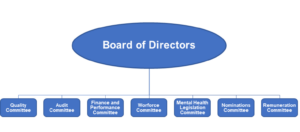
The Finance and Performance Committee does not have any sub-committees. It is linked to the Information Governance Group as an assurance receiver. The Finance and Performance Committee provides a route of escalation for this group to the Board of Directors. Although this does not preclude any other group being asked to provide assurance. The Committee has a duty to work with other Board sub-committees to ensure matters are not duplicated.
Reporting
The Finance and Performance Committee will receive an assurance report from the Information Governance Group. An assurance and escalation report will be made to the Board of Directors by the Chair of the Committee.
Links with operational processes
The Finance and Performance Committee will receive high level reports from operational functions such as estates, informatics, and the North of England NHS Commercial Procurement Collaborative.
In addition to this, operational groups within the Chief Financial Officer’s portfolio will report any significant governance implications by way of highlight reports into the Finance and Performance Committee. Groups dealing with the following areas have thus far been identified:
- Estates Steering Group
- Financial Planning Group
- Digital Steering Group
- Procurement Steering Group
- Emergency Preparedness Resilience and Response Group (this group sits within the Chief Operating Officer’s portfolio).
8. Duties of the chairperson
The Chair of the Committee shall be responsible for:
- agreeing the agenda with the Chief Financial Officer and Chief Operating Officer
- directing the meeting ensuring it operates in accordance with the Trust’s values whilst ensuring everyone at the meeting has a reasonable chance to contribute to the discussion
- giving direction to the minute taker and checking the minutes
- ensuring the agenda is balanced
- ensuring discussions are productive, and when they are not productive, they are efficiently brought to a conclusion
- deciding when it is beneficial to vote on a motion or decision
- ensuring sufficient information is presented to the Board of Directors in respect of the work of the Committee
- ensuring the Chair’s report is submitted to the Board of Directors as soon as possible
- ensuring that governor observers are offered an opportunity at the end of the meeting to raise any points of
It will be the responsibility of the Chair of the Finance and Performance Committee to ensure that it (or any group / committee that reports to it) carries out an assessment of effectiveness annually, and ensure the outcome is reported to the Board of Directors along with any remedial action to address weaknesses. The Chair will also be responsible for ensuring that the actions to address any areas of weakness are completed.
In the event of there being a dispute between any ‘groups’ in the hierarchy (in the case of this Board sub-committee, this would be between the Board and the Finance and Performance Committee and, in recognition of the nature of matrix working between the work of all Board sub-committees, the Finance and Performance Committee and any other Board sub-committee) it will be for the chairs of those ‘groups’ to ensure there is an agreed process for resolution; that the dispute is reported back to the ‘groups’ concerned; and that when a resolution is proposed regarding the outcome this is also reported back to the ‘groups’ concerned for agreement.
9. Review of the terms of reference and effectiveness
The terms of reference shall be reviewed by the Committee at least annually in September and be presented to the Board of Directors for ratification, where there has been a change.
In addition to this the Chair must ensure the Committee carries out an annual assessment in July of how effectively it is carrying out its duties and make a report to the Board of Directors including any recommendations for improvement.
Appendix 1a – Schedule of deputies
It may not be necessary or appropriate for all members (or attendees) to have a deputy attend in their absence. If this is the case, please state below “no deputy required”.
| Committee Member | Deputy |
| NED Chair | Deputy Chair of the Committee |
| NED member | Another NED |
| NED member | Another NED |
| Chief Financial Officer | Deputy Director of Finance |
| Chief Operating Officer | Deputy Director of Operations |
| Director of People and Organisational Development | Associate Director of Employment / Associate Director for People Resourcing and Organisational Development |
| Director of Nursing and Professions | Deputy Director of Nursing |
Cover sheet for Report from the Chief Financial Officer
- Paper title: Chief Financial Officer Finance Report
- Date of meeting: 27 November 2025
- Presented by: Dawn Hanwell, Chief Financial Officer and Deputy Chief Executive
- Prepared by: Jonathan Saxton, Deputy Director of Finance
This paper supports the Trust’s strategic objective/s (SO):
- SO3 – We use our resources to deliver effective and sustainable services.
This paper relates to the Trust’s strategic risks (SR):
- SR4 – Financial sustainability
Executive summary
The Trusts income and expenditure position is broadly as anticipated at month 7, with a £275k surplus, and working towards a forecast outturn of £900k as agreed at system level. It remains of note and of concern that the position is very largely supported by one off non-recurrent means. Whilst some good improvements in run rate reductions our recurrent budget gap remains material. The process to identify additional efficiency as part of the medium planning is underway.
There is significant capital slippage on 2 major schemes, with all efforts being made to accelerate delivery timescales
The Trust maintains an overall robust financial position our cash position remains strong with a cash balance of £122.1m, and liquidity is strong with cover for 95 operating expenditure days. Our overall cumulative better payment practice code (BPPC) performance remained strong, achieving 89.0% of bills paid within target by number (93.0% by value).
We have commenced the necessary work for medium term plans. All provider Boards are individually accountable for the development and delivery of their plans and have a responsibility to be assured in terms of the deliverability, credibility and affordability of the plans that have been agreed, and this should be documented in a Board Assurance Statement.
Do the recommendations in this paper have any impact upon the requirements of the protected groups identified by the Equality Act? No
Recommendation
The Board is asked to:
- Review and consider the Trust revenue and capital positions for 2025/26.
- Note the work underway to develop medium term plans and assurance on the process.
Chief Financial Officer Report
1. Introduction
This report provides an overview of the reported financial position at the end of month 7, 2025/26 financial year. It also includes an update on medium term planning which is underway.
2. Income and Expenditure Performance 2025/26
The table below summarises the position reported to NHSE. This is a £275k surplus against the Trust break-even plan.
Income and expenditure plan position for month 3
| Category | Plan Annual (£’000) | Plan YTD (£’000) | Actual YTD (£’000) | Variance YTD (£’000) |
| Patient Care Income | 235,819 | 141,060 | 143,111 | 2,051 |
| Other Income | 37,634 | 18,547 | 19,428 | 881 |
| Total Income | 273,453 | 159,607 | 162,538 | 2,932 |
| Pay Expenditure | (200,366) | (117,536) | (115,503) | 2,033 |
| Non Pay Expenditure | (68,406) | (39,218) | (44,021) | (4,803) |
| Total Expenditure | (268,772) | (156,754) | (159,523) | (2,770) |
| Surplus / Deficit | 4,681 | 2,853 | 3,015 | 162 |
| Adjustments for NHSE Reporting | (4,681) | (2,853) | (2,740) | 113 |
| Adjusted Position | 0 | 0 | 275 | 275 |
To achieve the year to date position, the Trust is reliant on £4.7m of non-recurrent benefits;
- Interest receivable that is £0.8m over planned levels,
- £1.8m of technical flexibilities have been released into the position
- Unutilised/unplanned additional one-off income £400k (PFI and MHIS)
- Slippage on the Perinatal development £1m year to date
- Unitary charge underspend £650k (related to Parkside Lodge and Little Woodhouse Hall)
Other key items of note in the position are: –
- In October bank expenditure reduced below planned levels for the first time in the financial year but overall remains £0.8m higher than plan year to date, largely driven by increased evening and weekend usage of bank working.
- Agency expenditure has reduced in year and is £1.4m under plan year to date. The majority (91%) of agency is related to medical staff.
- Substantive pay expenditure is also £1.3m under plan, largely attributable to management of recruitment, linked to assessing recurrent cost savings. To note; there are 363WTE substantive vacancies at the end of October, that equates to a £16.5m budgeted underspend.
- Adult Acute Out of area placement (OAP) spend reduced in month but remains above planned levels. The overspend has increased to £3.6m year to date. This is against a highly stretching plan for the year which is acknowledged.
- Overall corporate departments, doctors in training and pharmacy are maintaining underspends due to vacancies.
3. Efficiency Programme
The CIP programme is overseen by the Financial Planning Group where opportunities to increase the run-rate CIP and recurrent budget CIP are explored and progress against each target is monitored.
3.1 Run Rate efficiency
The efficiency programme target is to deliver in year run-rate savings of £18.5m. This is based on our system plan, which reflects run rate movements year on year (not recurrent internal budget).
Year to date overall £9.6m of run-rate reductions have been achieved compared to the year to date (YTD) target of £10.2m, £659k behind target as shown in the table below. However notably the scale of non-recurrent delivery, attributable mainly to the non-recurrent benefits highlighted above are supporting this position. There is increasing emphasis on the assessment of recurrent/non recurrent delivery as clearly this impacts risk and sustainability of position in future years. The non-recurrent schemes cannot be relied upon at the same scale in future years.
The full year estimate of current schemes are £16.6m against the £18.5m target, £1.8m being required in the remaining 5 months of the year. To reduce this gap work continues in the Workforce & Agency Project Board to reduce Overtime, Bank and Agency costs particularly across inpatient wards.
| Schemes | Recurrent / Non-recurrent | Risk | YTD Plan (£000) | YTD Actual (£000) | YTD Variance (£000) | Annual Plan (£000) | Forecast (£000) | Variance (£000) |
| Interest receivable | Non-recurrent | Low | 0 | 790 | 790 | 0 | 1,215 | 1,215 |
| Technical Flexibility | Non-recurrent | Low | 1,831 | 1,829 | (2) | 1,993 | 2,629 | 636 |
| CPC Gainshare | Recurrent | Low | 294 | 292 | (2) | 504 | 500 | (4) |
| Reducing Agency 30% | Recurrent | Low | 933 | 2,392 | 1,459 | 2,600 | 4,622 | 2,022 |
| Reducing bank 10% | Recurrent | Medium | 556 | 81 | (475) | 1,550 | 121 | (1,429) |
| OAPs improvement | Recurrent | High | 2,106 | 0 | (2,106) | 4,101 | 0 | (4,101) |
| Non-Pay savings | Recurrent | Low | 581 | 229 | (352) | 996 | 479 | (517) |
| Unidentified | Recurrent | Medium | 1,750 | 0 | (1,750) | 3,000 | 0 | (3,000) |
| Overtime Reduction | Recurrent | Low | 0 | 295 | 295 | 0 | 535 | 535 |
| Additional Income Agreed | Recurrent | Low | 0 | 345 | 345 | 0 | 591 | 591 |
| Non-recurrent income | Non-recurrent | Low | 0 | 1,021 | 1,021 | 0 | 1,561 | 1,561 |
| Reducing Pay (Recurrent) | Recurrent | Low | 0 | 118 | 118 | 0 | 650 | 650 |
| Interest Receivable | Recurrent | Low | 2,191 | 2,191 | 0 | 3,756 | 3,756 | 0 |
| Reducing pay (Non-Recurrent) | Non-recurrent | Low | 0 | 0 | 0 | 0 | 0 | 0 |
| Total | – | – | 10,242 | 9,583 | (659) | 18,500 | 16,659 | (1,841) |
| – | – | – | – | – | – | |||
| – | Recurrent | – | 8,411 | 5,943 | (2,468) | 16,507 | 11,254 | (5,253) |
| – | Non-recurrent | – | 1,831 | 3,640 | 1,809 | 1,993 | 5,405 | 3,412 |
| – | – | 10,242 | 9,583 | (659) | 18,500 | 16,659 | (1,841) |
3.2 Budget efficiency
The Trusts recurrent internal budgets identified a recurrent £14.5m budget saving programme (recurrent CIP). This is based on allocated budgets not run rate profiles. It is a target figure to balance budgets. assuming every service and department is operating from their opening base budget position, not what is being spent (run rate).
Two Quality Impact Assessment (QIA) panels have been held year to date where several schemes have been agreed to be progressed. In month an additional £0.2m CIP has been transacted resulting in £7.2m of schemes being transacted, as seen below.
| Div/Dept | Target | Transacted | Remaining | Percentage Transacted |
| CFO | 2,000 | 1,653 | 347 | 83% |
| POD | 650 | 34 | 616 | 5% |
| Nursing | 600 | 293 | 307 | 49% |
| Care Services | 9,700 | 3,554 | 6,146 | 37% |
| Medical | 850 | 31 | 819 | 4% |
| CEO | 200 | 133 | 67 | 67% |
| COO | 50 | 50 | 0 | 100% |
| Reserves | 450 | 1,465 | -1,015 | 325% |
| Total | 14,500 | 7,213 | 7,287 | 50% |
50% or £7.3m of recurrent Budget CIP is still to be identified. The main schemes in scope still to be identified relate to programmes of work in care services. The challenge and opportunities for corporate departments will also require more scoping across a wider collaborative approach. Non recurrently vacancies in corporate departments are mitigating recurrent delivery.
4. Forecast
We continue to update and report the forecast outturn each month. As previously noted, we have agreed non recurrently to improve our year end position, to deliver £0.9m surplus as part of the place-based stretch control total. This is now being reported to NHSE. Achieving this stretch will rely on further non recurrent mitigations and will not impact services.
The main assumptions within this forecast are:
- Adult Acute OAPs total £8.9m, a £5.4m overspend on budget.
- SSL overspend of £0.3m
- Adult Acute (£2.9m), Older People (£0.3m), and CYP Wards (£0.3m) continue to overspend
- Interest rate remains at its current level until the end of the financial year, this is £5.0m against a £3.8m budget.
- Expenditure of £5.4m in Agency, reduced from £8.4m in 24/25
- Expenditure of £17m in Bank, increased from £15m in 24/25
- All other variances remain broadly as is
- Non recurrent flexibility over and above year to date of c£1m
Based on the assumptions above, the Trust should achieve a forecast £0.9m surplus as agreed. Delivery is assessed on managing the key risks and variables and the scale of opportunity to deliver further improvements in the remainder of the year, including the run-rate impact of the mutually agreed resignation scheme (MARS) and ongoing control measures.
5. Capital Expenditure
The capital position is detailed in Appendix A. Cumulative year to date capital expenditure is £4.4m at M7 against a plan of £11.6m. The year-to-date position reflects significant in year slippage on the two significant construction schemes at Parkside Lodge (the refurbishment to move ward 5 complex rehab from Newsam Centre) and the Mount (additional perinatal beds). Both schemes have been impacted by several delays including the complexity of agreeing deeds of variation with Equitex, the owners of these sites. All efforts are being made to accelerate the delivery of these schemes but there are still some timing risks against the plans, which are being closely managed
6. Cash Position
There is increased emphasis and scrutiny on organisational cash balances, due to the guidance recently issued in relation to dealing with cash shortages at a system level. This has previously been discussed with the Board. The cash balance of the Trust remains consistently above £100m linked to our strategic investment needs. Year to date is above our planned expectation, partly due to the capital investment slippage, and higher than anticipated opening balances.
The Trust remains in a strong cash position £122.1m as at the end of October. Our overall liquidity (a test of our ability to pay outgoings without further new income) remains high with cover for 95 days operating expenditure. This means the Trust would be able to pay all it’s day to day running costs for 95 days with no new income. A minimum of 4/5 days liquidity is expected to be maintained for an NHS organisation. We are a positive outlier in this regard, but for recognised reasons.
The below graph shows our monthly and forecast cash balances against our plan and last years position

7. Better Payments Practice Code
The Better Payment Practice Code is a national standard that NHS organisations are expected to follow to ensure prompt payment of supplier invoices, supporting good financial management and protecting the cash flow of suppliers, particularly Small or Medium sized Entities. NHS trusts report their BPPC performance each month and year-to-date.
The key targets are:
- Pay at least 95% of invoices within 30 days (from receipt of a valid invoice)
- Pay 95% of invoices by number AND by value
Below is the Trust performance against each target:
| Better Payment Practice Code Non-NHS | Current YTD Number | Current YTD £ | Current month Oct-2025 Number | Current month Oct-2025 £ |
| Total bills paid in the year | 7,796 | 80,707,427 | 1,151 | 13,065,170 |
| Total bills paid within target | 6,937 | 75,089,509 | 986 | 12,659,470 |
| Percentage of bills paid within target | 89.0% | 93.0% | 85.7% | 96.9% |
The Trust achieved the in month target by value but year to date is 93%. In terms of the target by number of invoices, the Trust is 89.0% year to date.
Finance and Procurement have set up a task and finish group with the aim of ensuring the Trust meets both metrics by the end of the financial year.
8. System Financial Position
8.1 System M7 Revenue Position
The month 7 year-to-date position for the ICS was an actual £53.5m deficit against a planned £28.3m deficit; a shortfall/adverse variance against plan of £25.2m. The month 7 adverse variance of £25.2m has deteriorated from the adverse variance at month 6 of £14.1m, a deterioration of £11.1m.
The deterioration in month is mainly due to continued efficiency slippage in providers and non-pay overspends. The key drivers of the YTD adverse variance continue to be industrial action, pay overspends and slippage on delivery of waste reduction/efficiencies, part offset by underspends in other areas.
Above position includes recognition of Deficit Support funding of £28.7m (7/12ths of total annual value of £49.2m)
The ICS continues to forecast a balanced plan to NHSE at Month 7, based on receipt of £49.2m deficit support funding.
8.2 The System M7 Capital Position
Year to date there is a £38.1m underspend against the system operational and IFRS16 capital plans and a £33.1m underspend against the National PDC Capital plans, as is often the case at this point of the year. It is expected that all capital plans are delivered by the end of the financial year. Plans include an additional 5% ‘over programme’ to reflect potential slippage in the year, an additional £8.8m. Providers are aware the 5% over programme plans can only be spent if there is capital slippage.
9. Medium Term Planning
At the time of writing this report full technical planning guidance/finance business rules and allocations (ICB revenue and capital) had only just been released. We are working through this to support the planning process. It has now been confirmed that draft plans will need to be submitted 17th December and final submission for 12th February. At a headline level there is nothing material in the guidance which was not anticipated specifically for our organisation. Changes in the approach to deficit support funding and changes to payment mechanisms for both urgent and emergency care and elective recovery funding will impact Acute providers more significantly and any potential unintended consequences are unclear at this stage. The 2% efficiency ask each of next 3 years is confirmed and this was previously modelled in our initial assessment.
There will be activity, workforce and financial returns required to be submitted. The activity metrics with trajectories are:
- Number of inappropriate Adult Acute OAPs
- Number of CYP with mental health waits over 104 days
- Average length of stay for patients in Adult Acute and PICU Mental Health beds
- Average length of stay for patients in Older adult Acute mental health beds
The financial template has not been released as yet but we have been informed that due to the late publication of guidance and because year 3 revenue allocations are still being assessed (not yet published) the draft plan will only be 2-year revenue financial plan (full 3years for final submission).
A key message in all the guidance and webinars on planning is the move to individual provider Board accountability. The Board role and responsibility to be assured in terms of the deliverability, credibility and affordability of the plans it agrees is emphasised.
To support this a set of statements have been created which outline the key areas that Board’s should have confidence in as part of the development of the medium-term plan. Board Assurance Statements cover the following areas:
- Foundational activities: acknowledgement and confirmation that the key planning actions outlined in the planning framework as part of Phase 1 have been conducted and reviewed.
- Governance and leadership: confirmation that appropriate decision-making structures are in place as well as key input and sponsorship at a senior and clinical level.
- Plan development: to provide assurance that plans have been developed in line with the standards outlined in the planning framework. That the phasing of the plan is realistic, has been co-produced, are evidence based and aligns with national ambitions.
- Productivity: confirmation that all opportunities for productivity have been considered and are reflected in plans.
- Risk: confirmation that risk management is embedded throughout plan development with a specific emphasis on financial risk.
- NHS standard contract & commissioning: early assurance that processes are in place to enable contracts to be agreed and signed off in line with the national timetable and considerations are in place in terms of commissioning and plan alignment.
- Workforce: confirm the impact the 10 Year Health Plan may have on the workforce is being considered in the development of plans.
Board’s are asked to collectively review each statement and apply a maturity assessment against each one. Supporting commentary is mandated against a maturity response of 2-4 i.e. where the action is not yet embedded, include a brief description of any exceptions that we may want to note. The maturity assessment framework is set out below:
- Embedded (Full Assurance): The action is fully integrated into normal operations. It is standardised, sustainable, and reinforced by the policy, leadership, systems, and culture. Continuous improvement is an established norm, and outcomes are consistently positive.
- Maturing: The action is becoming routine. There are documented processes, growing staff awareness, and increasing consistency across teams. Evaluation and improvement mechanisms may be in place but are not yet fully optimised.
- Developing: Steps have been taken to introduce and implement this action. There may be informal processes, or isolated examples of good practice, but they lack consistency, coordination, or broad awareness.
- Not Embedded (No Assurance): There is little to no evidence that this action has started. If it has, it’s ad hoc, inconsistent, or heavily reliant on individuals rather than being supported by systems or structures.
To meet the required timescales, we have set out a timeline below.
| Date | Action | Governance |
| End of September | To complete phase 1 activities and establish governance | Financial Planning Group |
| Early October |
|
Financial Planning Group |
| November |
|
Financial Planning Group |
| Mid/late December | Draft 3-year financial, workforce and activity numerical templates approved and submitted, including assurance statements | Financial Planning Group / EMT, Finance and Performance Committee, Board of Directors |
| Early February | Final 3-year financial, workforce and activity numerical templates (with amends) and 5-year written Strategic Plan approved and submitted, including assurance statements | Financial Planning Group / EMT. Extraordinary meetings of the Finance and Performance Committee and Board of Directors |
| March | Organisational plan assurance and acceptance
Prepare to implement plans |
Financial Planning Group / EMT. Extraordinary meetings of the Finance and Performance Committee and Board of Directors |
There has been a significant amount of work already underway/completed and much still to do to achieve these timescales, but the Board can be assured that the governance and oversight is in place. The full detail of the draft submissions will be shared and discussed at the Extraordinary Board scheduled for 12th December.
10. Conclusion
The Trusts income and expenditure position is broadly as anticipated at month 7, with a £275k surplus, and working towards a forecast outturn of £900k as agreed at system level. It remains of note and of concern that the position is very largely supported by one off non-recurrent means. Whilst some good improvements in run rate reductions our recurrent budget gap remains material. The process to identify additional efficiency as part of the medium planning is underway.
There is significant capital slippage on 2 major schemes, with all efforts being made to accelerate delivery timescales
The Trust maintains an overall robust financial position our cash position remains strong with a cash balance of £122.1m, and liquidity is strong with cover for 95 operating expenditure days. Our overall cumulative better payment practice code (BPPC) performance remained strong, achieving 89.0% of bills paid within target by number (93.0% by value).
We have commenced the necessary work for medium term plans. All provider Boards are individually accountable for the development and delivery of their plans and have a responsibility to be assured in terms of the deliverability, credibility and affordability of the plans that have been agreed, and this should be documented in a Board Assurance Statement.
11. Recommendation
The Board is asked to:
- Review and consider the Trust revenue and capital positions for 2025/26.
- Note the work underway to develop medium term plans and assurance on the process.
Cover sheet for 2025 – 2026 Organisational Priorities Quarter 2 Progress Report
- Paper title: 2025 – 2026 Organisational Priorities Quarter 2 Progress Report
- Date of meeting: 27 November 2025
- Presented by: Dawn Hanwell, Chief Financial Officer
- Prepared by: Amanda Burgess, Head of the Programme Management Office
This paper supports the Trust’s strategic objective/s (SO):
- SO1 – We deliver great care that is high quality and improves lives.
- SO2 – We provide a rewarding and supportive place to work
- SO3 – We use our resources to deliver effective and sustainable services.
This paper relates to the Trust’s strategic risks (SR):
- SR1 – Quality including safety assurance processes
- SR2 – Delivery of the Quality Strategic Plan
- SR3 – Culture and environment for the wellbeing of staff
- SR4 – Financial sustainability
- SR5 – Adequate working and care environments
- SR6 – Digital technologies
- SR7 – Plan and deliver services that meet the health needs of the population we serve.
Executive summary
This report provides a summary of the Trust’s progress against our 2025 – 2026 organisational priorities. This is the second report of 2025 – 2026 setting out how we are initiating our 15 priorities each with an identified lead executive. Our quarterly report is in place to demonstrate the progress made on each priority specifically, identify where a priority may require attention or further action to ensure its intended outcomes are achieved.
Each slide provides a summary of a priority and details how we are delivering against each of the high-level milestones. We have adopted the ‘alert, advise, assure’ approach to provide the key messages on whether the defined milestones are being met, alert where matters require escalation or give assurance that a priority is on track.
In total we have 112 high-level milestones for delivery. At the end of quarter two we have:
- 6 milestones are marked as ‘alert’
- 14 milestones are marked as ‘advise’
- 92 milestones are marked as ‘assure’
All our organisational priorities are governed through the executive-led portfolio specific governance groups to ensure monthly oversight and monitoring is achieved. Any escalations are reporting through to the monthly Extended Executive Management Team meetings.
Do the recommendations in this paper have any impact upon the requirements of the protected groups identified by the Equality Act? No
Recommendation
The Board of Directors is asked to:
- Consider our position against our 2025/26 organisational priorities at the end of quarter 2.
- Be assured as to the systems and processes in place for monitoring and supporting the delivery of each priorities high-level milestones and underpinning tasks.
2025 – 2026 Organisational Priorities Report – Quarter 2 Progress Report
Overview and key messages
This is the second progress report for 2025 – 2026 and provides a summary of the Trust’s progress against our 15 organisational priorities.
The reporting format demonstrates at a high level how we are progressing against the key milestones for each priority. Using the ‘alert, advise, assure’ approach to provide clarity on where we might be going off track, what measures we are putting in place to ensure we deliver the priority and where we are making good progress.
We govern and have oversight of the progress we are making against our priorities through the monthly Extended Executive Management Team meetings. On a quarterly basis assurance is provided through the Finance & Performance Committee and Board of Directors meetings.
At the end of quarter 2 2025 – 2026 the following priorities are reporting as red (alert):
- People Plan metrics: this is our performance against the BAME staff entering a disciplinary process.
- Workforce efficiencies: this is our performance against the target for reducing bank expenditure by 10%.
- CYP Transformation Programme: although good progress has been made and approval to proceed provided, the next step of holding the workshop has taken longer than originally anticipated.
- ReSPECT: although good progress has been made it has taken longer to reach an agreement on a pilot site the ReSPECT documentation should be accessed via the Leeds Care Record (LCR).
- Future FM model: we have chosen to take longer than originally felt necessary to fully analyse the data, engage and consult on our preferred future model for facilities management.
The following priorities are reporting as amber (advise):
- Efficiency and Productivity Programme: this is our performance against our budget and run-rate savings targets.
- People Plan metrics: this is our performance against sickness absence, stress and anxiety, MSK and compliance with clinical supervision.
- Redesigned community mental health service: although significant progress has been made, we are in the process of concluding the management of change for the new complex psychosis service and developing the case for change for our future eating disorders model.
- Delivering an expanded perinatal inpatient service: although good progress has been made, we are slightly behind with formulating working groups to consider how we will ensure consistent bed access, utilisation and overall criteria.
- Clinical outcome measures: although good progress has been made, we are slightly behind schedule with the development of the training materials and protocols.
- Quality dashboard: although good progress has been made, we are slightly behind with the initial testing of the trial metrics and processes including reporting structures for clinical governance.
| Priority Area | Lead | Exec Owner | Scheme status | Alert | Advise | Assure |
| Delivery of Efficiency and Productivity Programme (total efficiency programme) | J. Saxton | D. Hanwell | Live | 2 | ||
| Delivery of our workforce efficiency programme | J. Saxton | D. Skinner | Live | 1 | 2 | |
| Delivery of our Inpatient Quality Transformation Programme | L. McDonagh | J. Forster Adams | Live | 3 | ||
| Reducing mental health ED attendances and delays Project | E. Townsley | J. Forster Adams | Live | 4 | ||
| Delivering a Redesigned Community Mental Health Service Programme | R. Carroll | J. Forster Adams | Live | 1 | 1 | |
| CYPHS Transformation Programme (inc redesign of Tier 3.5/4 models of care) | T. Richardson | J. Forster Adams | Live | 1 | 5 | |
| Delivering an expanded perinatal inpatient service and provider collaborative | R. Mumby | C. Hosker | Live | 4 | 20 | |
| Implementation of ReSPECT (Recommended Summary Plan for Emergency Care and Treatment) to replace the DNACPR (Do Not Attempt Cardiopulmonary Resuscitation) document across the organisation | M.C. Trevett | C. Hosker | Live | 1 | 8 | |
| Delivering improving Health Equity strategic priorities | S. Valtinakis | J. Forster Adams | Live | 3 | ||
| Create clinical outcome reporting systems enabling the implementation of outcome measures across all our service | E. Joubert
I. Hogan |
I. Hogan | Live | 2 | 6 | |
| Develop and implementation of Quality dashboards for revision in selective services | R. Wylde | C. Hosker, D. Skinner | Live | 1 | 15 | |
| Develop and implementation of Culture dashboards | T. Needham
A. McNichol |
D. Skinner | Live | 6 | ||
| Develop and agree our future FM model across our PFI sites | W. Duffy | D. Hanwell | Live | 1 | 3 | |
| Conclude the ERP procurement process and develop/ratify the business case for the preferred ERP, in parallel agree on delivery plan for migrating to the existing ERP platform | I. Hogan | D. Hanwell | Live | 3 | ||
| Delivery of key People Plan priority metrics | H. Tetley,
A. McNichol |
D. Skinner | Live | 2 | 4 | 13 |
Delivery of our Efficiency and Productivity Programme
Our performance at the end of quarter 2
| Savings Type | Annual Target | YTD Target | YTD Actual | Status |
| Budget | £0 | £7,250,000 | £3,581,714 | Advise |
| Run Rate | £0 | £8,625,000 | £8,350,015 | Advise |
Alert, Advise, Assure
Advise:
We have reviewed our efficiency and productivity programme for 2025/26. Against the budget saving target, we are behind plan. Our Equality and Quality Impact Assessment Panel met in August and September and we have subsequently transacted 48% of the target.
At the end of quarter 2, our run-rate savings target is slightly behind plan but progressing well to date.
Delivery of our Workforce Efficiency Programme
Our performance at the end of quarter 2
| Savings Type | Type | YTD Target | YTD Actual | Status |
| Efficiency Workstream – Overtime Reduction | Run-Rate | £386,225 | £247,209 | Assure |
| Reducing Agency Spend | Run-Rate | £700,000 | £2,009,128 | Assure |
| Reduce Bank Expenditure | Run-Rate | £417,000 | £0 | Alert |
Alert, Advise, Assure
Alert:
We have reviewed our Workforce Efficiency Programme for 2025/26 and continuing with the exec-led governance in place. Reducing bank expenditure by 10% is an important priority with greater controls put in place for how we approve the booking and filling of additional shifts. Work is underway to analyse and understand the reasons for requiring additional staff and how we code the reasons on our system. (NB: Please note that negative performance is shown as zero).
Assure:
At the end of quarter two we are making good progress and below target with both the reducing agency spend by 30% and overtime expenditure.
Reducing mental health ED attendances and delays project
Our performance at the end of quarter 2
| Objective or Milestone | Start | Finish | Progress | Status | |
| Baseline Audit of activity against the ED Action Cards | May-25 | Jun-26 | 10% | Assure | |
| Project Set-up and Governance | Jun-25 | Jul-25 | 100% | Assure | |
| Pilot improvements that will have the biggest impact on winter 2025 | Dec-25 | Jun-26 | 0% | Assure | |
Alert, Advise, Assure
Assure:
We have established a new project to develop, implement and monitor the progress we are making across four workstreams. During quarter 2 we have concluded the review of our Acute Liaison Psychiatry (ALPS) systems and processes. In readiness for Winter, we have identified the improvements we would like to pilot, including; enhancing administration support, piloting a triage role and shared escalation arrangements with our acute trust partners.
All activities will be tracked against the two National Oversight Framework metrics.
In addition, working with our partners at LTHT we are exploring how we may in the future be able to create a mental health facility on the acute Trust site.
Delivery of our Inpatient Quality Transformation Programme
Our performance at the end of quarter 2
| Objective or Milestone | Start | Finish | Progress | Status | |
| Improving Flow Programme | Aug-24 | Mar-26 | 70% | Assure | |
| Culture of Care | Feb-25 | Mar-26 | 72% | Assure | |
| Adult Acute Care Pathway | #N/A | #N/A | #N/A | Assure | |
Alert, Advise, Assure
Assure:
Improving Flow: Our programme of work to improve flow continues into 2025/26 and we continue to remain on track with key milestones being met. Despite the ongoing work out of area placements remain a challenge, and during quarter two enhanced arrangements have been introduced supported by our Executive Management Team. Moreover, our length of stay position has reduced in line with the planned trajectory.
Culture of Care: Work continues across the four wards within our Care Services that are testing new ways of working based on the Culture of Care standards. To date we have published a number of successful initiatives on our Staffsite site to share the learning. At this point work is on track to achieve the pilot milestones.
Adult Acute Care Pathway: A comprehensive review is underway to understand our acute service ‘current state’. Clinical and operational data has been collated, and all process mapping exercises have been scheduled to take place by the end of quarter three. Alongside the process mapping, benchmarking work against the National Acute Inpatient Guidance has been completed.
Delivery of our Inpatient Quality Transformation Programme
Our performance at the end of quarter 2
| Objective or Milestone | Start | Finish | Progress | Status |
| Implementation of the complex psychosis Pathway Project Group | Apr-25 | Mar-26 | 31% | Advise |
| Optimising LYPFT community services with integrated models of care and treatment | Jun-25 | Nov-26 | 19% | Assure |
| Delivering a transformed West Yorkshire Eating Disorder Service | Apr-25 | Oct-26 | 15% | Advise |
Alert, Advise, Assure
Advise:
Complex psychosis pathway: The Complex Psychosis Pathway workforce consultation concluded on 30th September 2025 as planned. Feedback is being reviewed, with individual HR meetings taking place during November. It is anticipated that mobilisation to the new service model will commence from January 2026
WY eating disorders service: The case for change document has been completed and now being developed into a detailed business case. The business case will be taken through our governance arrangements in November 2025.
Assure:
Community services: A programme group has been established with a smaller ‘think tank’ group convened utilising the 3Horizons Framework, to enable the development of a draft proposal for community services. The scope of the proposal includes the Community and Wellbeing, Eating Disorders, Gender and Rehab and Regional Specialist Service Lines. The proposal has been revised based on stakeholder feedback and will be shared during October for further review. This process aims to establish an integrated model within a short timescale. Following approval of the ‘case for change’ in November, a full business case will be developed.
Children and young people transformation programme
Our performance at the end of quarter 2
| Objective or Milestone | Start | Finish | Progress | Status | ||
| Revise PC Board governance structure including ensuring the PC Development Session includes all nominated place-based leads | Oct-24 | Oct-25 | 70% | Assure | ||
| Working with place-based providers develop a Standard Operating Procedure that meets the PC aim | Jun-25 | Oct-25 | 100% | Assure | ||
| Develop a PID documenting the aim/objectives for the PC in 2025/26 | Sep-25 | Sep-25 | 90% | Alert | ||
| Working with place-based providers develop a Standard Operating Procedure that meets the PC aim | Jun-25 | Oct-25 | 45% | Assure | ||
| Understanding, identify and address the variation in each place-based pathways | Apr-25 | Dec-25 | 65% | Assure | ||
| Scoping what an inpatient outreach team, day provision and crisis offer might look like linked with each place-based pathway | Jan-26 | Mar-26 | 30% | Assure | ||
Alert, Advise, Assure
Alert:
We have initiated a key programme of work both as a CYP provider collaborative partner and internally to improve the overall offer for young people presenting with mental health need across the CYP mental health system. A workshop event is set to take place on 24th October 2025, it was originally anticipated that this workshop would take place in quarter 2.
The workshop invitation includes all place-based partners with the purpose to agree the aim/objectives for the CYP Provider Collaborative. Following the workshop the outputs will be
documented and shared for collaborative endorsement. The workshop is an important marker in how we shape the aims and aspirations for the collaborative. The Project Initiation Document is to be considered by through our governance during December 2025.
Assure:
Overall, we are on track with the tasks we have set ourselves for delivery. We have endorsement from the Chief Executive’s across each place that the provider collaborative should lead on the transformation of CYP with the workshop being the first step in the transformation process.
Delivering an expanded perinatal inpatient service and provider collaborative
Our performance at the end of quarter 2
| Objective or Milestone | Start | Finish | Progress | Status |
| Perinatal Programme – Ward Build Programme | Jan-26 | May-26 | 0% | Assure |
| Readiness Assessment & Phased Start | May-26 | Sep-26 | 0% | Assure |
| Organise workshop for stakeholders | May-25 | May-25 | 100% | Assure |
| Collate and write report on outputs from workshop with recommendations and present at CRG/Assurance Board | Jun-25 | Jun-25 | 100% | Assure |
| Agree and prioritise recommendations | Jul-25 | Aug-25 | 100% | Assure |
| Form working groups / develop project initiation docs for sign off | Sep-25 | Sep-25 | 75% | Advise |
| Stand up working group to analyse current pathway and agree on local additions | May-25 | May-25 | 100% | Assure |
| Document and agree pathway with wider collaborative groups with local protocols added | Jun-25 | Aug-25 | 100% | Assure |
| Organise and deliver a session with other PNPC to deepen understanding of existing inclusion/exclusion criteria | Jul-25 | Sep-25 | 75% | Advise |
| Work closely with Referral Management Service to develop collective understanding of agreed pathway | Jun-25 | Feb-26 | 75% | Assure |
| Design information/education sessions in relation to pathway | Aug-25 | Nov-25 | 100% | Assure |
| Develop TOR and seek opinion from CRG | Sep-25 | Oct-25 | 75% | Advise |
| Set up working group | May-25 | May-25 | 100% | Assure |
| Develop Project Brief/action plan for sign off | Jul-25 | Jul-25 | 100% | Assure |
| Set up working group through Co-Production Group | Jun-25 | Jul-25 | 100% | Assure |
| Develop project brief/action plan for sign off | Jul-25 | Aug-25 | 100% | Assure |
| Link community workforce with MBU so induction/experience/insight into MBU operations can be can be gained by community staff | Sep-25 | Apr-26 | 10% | Assure |
| Collect data from community partners for WTE/demand/activity | Apr-25 | Mar-26 | 50% | Assure |
| Analysis of demographics at place level across the system | Jul-25 | Feb-26 | 75% | Assure |
| Analysis of demographic demand at community level | Aug-25 | Oct-25 | 75% | Advise |
| Analysis of demographic demand at MBU level | Oct-25 | Nov-25 | 100% | Assure |
| Propose targeted interventions to address inequities | Dec-25 | Jan-26 | 75% | Assure |
| Twice yearly healthcare inequality session at CRG | Apr-25 | Mar-26 | 75% | Assure |
| Agree and disseminate post go live evaluation of PC in first year (in addition to RC survey) | Jan-26 | Feb-26 | 75% | Assure |
Alert, Advise, Assure
Advise:
The Perinatal Provider Collaborative (PC) was formally initiated during 2024/25. Largely the work is on track, however we are slightly behind with formulating working groups to consider how we will ensure consistent bed access, utilisation and overall criteria. It is anticipated that we will be able to progress this during quarter three with an event scheduled on 4th November.
Assure:
Aligned with the opening of the expanded perinatal inpatient ward, during quarter three we will continue to progress the development of a terms of reference for the Complex Care Review.
Implementation of ReSPECT across the organisation
Our performance at the end of quarter 2
| Objective or Milestone | Start | Finish | Progress | Status | ||
| Implementation Group set up and first meeting was the 5th June 2025. Terms of Reference have been circulated in draft for comment. | Mar-25 | Jun-25 | 100% | Assure | ||
| Liaise with LTHT digital team regarding read/write access for consultants, nurse consultants and higher trainees to ensure that they can write and update the ReSPECT document on the LCR. | Jul-25 | Jul-25 | 100% | Assure | ||
| LYPFT to register interest in the citywide digital document plan through Leeds Care Record | Jun-25 | Jun-25 | 100% | Assure | ||
| Liaise with LTHT digital team regarding read/write access for consultants, nurse consultants and higher trainees to ensure that they can write and update the ReSPECT document on the LCR. | Jul-25 | Jul-25 | 30% | Alert | ||
| Training to use the Leeds Care Record. | Jul-25 | Dec-25 | 10% | Assure | ||
| Training analysis | Jun-25 | Dec-25 | 100% | Assure | ||
| Once the training analysis is completed Level1,2 & 3 to be rolled out | Jan-26 | Jun-26 | 90% | Assure | ||
| A pilot at The Mount, OPS inpatients will start in 12 months, June 2026. The Mount currently use ReSPECT and DNARCPR, the pilot will remove the DNAR form in its entirety and the ReSPECT form will replace this. | Jun-26 | May-27 | 0% | Assure | ||
| Implementation across all adult inpatient and LD inpatient wards. | Dec-26 | Jun-28 | 50% | Assure | ||
Alert, Advise, Assure
Alert:
Work has begun alongside LTHT Digital Team to ensure our clinical workforce is able to read/update the ReSPECT document on the Leeds Care Record (LCR). These discussions have been positive, and we are seeking agreement for The Mount to be the first pilot site. Further updates are expected to be known during quarter three.
Assure:
At the end of quarter two we are largely on track with this programme of work and for some elements ahead of schedule. During quarter three we intend to begin communicating with system users about the training requirements across all three levels, following completion of the training being fully tested.
The ReSPECT pilot will take place within older adult inpatients from 1 June 2026 and will last 12 months.
Delivering Improving Health Equity Strategic Priorities
Our performance at the end of quarter 2
| Objective or Milestone | Start | Finish | Progress | Status | |
| Increased coordination of LYPFTs existing programmes, projects and initiatives focused on improving equity to amplify the impact and efficiency of existing initiatives. | Apr-25 | Mar-26 | 80% | Assure | |
| Ensure we are meeting our statutory obligations relating to equity, maximising opportunities to broaden this work and embed within the broader strategic plan. This includes Equality Act, Public Sector Equity Duty, EDS 22, PCREF and the Health Inequalities Duties under Health and Care Act. | Apr-25 | Mar-26 | 80% | Assure | |
| Strengthen our foundations: a focus on our patient, carer, staff and community engagement. | Apr-25 | Mar-26 | 80% | Assure | |
Alert, Advise, Assure
Assure:
At the end of quarter two our Institute for Health Equity (IHE) action plan has been approved with a new IHE team established to support its delivery. New governance arrangements have been initiated to have oversight of the plan progress.
We have made fantastic progress against all three objectives. For the ‘strengthen our foundation’ objective which has a focus on patients, carers and staff, we have successfully engaged with the Racial Equity in Health and Social Care (FRESH) and agreed the objectives and recruited lived experience partners.
Create clinical outcome reporting systems enabling the implementation of outcome measures across all our care services
Our performance at the end of quarter 2
| Objective or Milestone | Start | Finish | Progress | Status | ||
| Establish ePROMs (electronic Patient Reported Outcome Measures) Project governance arrangements, including the development of a PID and Project Timeline | Jun-25 | Aug-26 | 100% | Assure | ||
| Develop understanding of the use of ePROMs across all service areas | Jun-25 | Oct-25 | 80% | Advise | ||
| Pilot and evaluate ePROMs questionnaires through Patient Portal Questionnaire/Survey Module for the Gambling Service | Oct-25 | Dec-25 | 75% | Assure | ||
| Pilot and evaluate ePROMs questionnaires and deployment approach through Patient Portal Questionnaire/Survey Module within two CMHT services | Jan-26 | Mar-26 | 0% | Assure | ||
| Deploy ePROMS across all in-scope services across the Trust. Deployment phased by readiness/infrastructure | Apr-26 | Dec-26 | 0% | Assure | ||
| Design, build and test the Patient Portal | Jan-25 | Oct-25 | 90% | Assure | ||
| Expression of interest submitted to integrate the Patient Portal with the NHS App | Jun-25 | Jun-25 | 100% | Assure | ||
| Compliance, testing and training for Patient Portal including the creation and approval of the Digital Clinical Safety Case and training materials for all staff using Patient Portal | Jul-25 | Nov-25 | 60% | Advise | ||
| Onboard with the NHS App MH Wayfinder Programme in readiness for the Trust endorsing the use of the Patient Portal Appointments Module | Jul-26 | Dec-26 | 0% | Assure | ||
Alert, Advise, Assure
Advise:
At the end of quarter 2 we have identified all the current PROM forms in use across the Trust. All forms can be digitalised apart from one which is hugely positive. Building all forms in the Patient Portal will commence following the technical pilot with training materials and support accessed from quarter four. A template protocol has been developed with the aim of producing a protocol for each measure, to provide standardisation.
Assure:
We have made good progress with building the ePROM forms and testing is underway in readiness for the pilot in November. We are now aware that the enablement of patient reported outcome measures through the NHS App Wayfinder project is dependent upon the prior onboarding of digital appointments. Digital appointments is a priority within the medium-term planning guidance and the NHS 10 Year Plan. Further consideration will need to be given as to how we standardise our appointment management processes across services prior to digital enablement.
Development and implementation of the Culture dashboard
Our performance at the end of quarter 2
| Objective or Milestone | Start | Finish | Progress | Status |
| Establish a project mandate and identify project team members and SRO including publishing a Project Initiation Document outlining the scope, governance and deliverables of the project. | Apr-25 | Jun-25 | 100% | Assure |
| Build a proof of concept Civility and Respect Dashboard as phase 1 utilising stakeholder input to validate and refine dashboard design. | Jul-25 | Sep-25 | 100% | Assure |
| Consolidate learning: Review all feedback and develop plans for a final prototype. | Oct-25 | Nov-25 | 0% | Assure |
| Service-wide integration: Finalise dashboard prototype and ensure it supports aligned reporting across teams, services, and board. | Dec-25 | Feb-26 | 0% | Assure |
| Embed governance structures: Establish clear feedback loops and reporting pathways to support a culture of learning and safety. | Mar-26 | May-26 | 0% | Assure |
| Plan for full rollout: Agree next steps for full implementation. | May-26 | May-26 | 0% | Assure |
Alert, Advise, Assure
Assure:
The objectives and milestones for this priority have been developed. Work however has been underway to develop the culture dashboard with the intent to have a prototype in place by February 2026. Full rollout will take place in the first quarter of 2026/27.
Development and implementation of Quality dashboard for revision in selective services
Our performance at the end of quarter 2
| Objective or Milestone | Start | Finish | Progress | Status | |
| Engage clinical leaders: Hold workshops with Clinical Team Managers and professional leads to introduce STEEEP and daily management systems | Apr-2 5 | Jun-2 5 | 100% | Assure | |
| Baseline understanding: Assess current knowledge and define local meaning for each STEEEP domain (starting with Safe). | Apr-2 5 | Jun-2 5 | 100% | Assure | |
| Develop draft metrics: Identify potential KPIs and discuss how they would provide assurance at team, service, and board levels. | Apr-2 5 | Jun-2 5 | 100% | Assure | |
| Data infrastructure review: Document existing metric availability and explore future measurement needs (involving Informatics/BI as needed). | Apr-2 5 | Jun-2 5 | 100% | Assure | |
| Introduce to teams: Begin phased rollout of STEEEP and daily management system to teams, starting with Safe. | Jul-2 5 | Sep-2 5 | 100% | Assure | |
| Initiate testing: Agree on initial trial metrics and processes, including reporting structures for clinical governance | Jul-2 5 | Sep-2 5 | 67% | Advise | |
| Refine dashboard design: Use insights from team and leadership workshops to inform dashboard and data alignment development. | Jul-2 5 | Sep-2 5 | 100% | Assure | |
| Engage wider stakeholders: Conduct discovery conversations with other clinical leads to shape future service-wide plans | Jul-2 5 | Sep-2 5 | 100% | Assure | |
| Trial review and adaptation: Collect feedback on the Safe trial, agree improvements, and plan the next cycle (e.g., Effective) | Oct-2 5 | Dec-2 5 | 0% | Assure | |
| Expand implementation: Launch second phase of team trials incorporating adjusted metrics and processes | Oct-2 5 | Dec-2 5 | 0% | Assure | |
| Strengthen governance links: Advance the alignment of metrics across team, service line, and beyond for better visibility and assurance | Oct-2 5 | Dec-2 5 | 0% | Assure | |
| Continue dashboard iteration: Develop or enhance dashboards based on evolving requirements and feedback | Oct-2 5 | Dec-2 5 | 0% | Assure | |
| Consolidate learning: Use findings from Safe and Effective trials to develop an action plan for rolling out all six STEEEP domains. | Jan-2 6 | Mar-2 6 | 0% | Assure | |
| Service-wide integration: Finalise dashboard prototype and ensure it supports aligned reporting across teams, services, and board. | Jan-2 6 | Mar-2 6 | 0% | Assure | |
| Embed governance structures: Establish clear feedback loops and reporting pathways to support a culture of learning and safety. | Jan-2 6 | Mar-2 6 | 0% | Assure | |
| Plan for full rollout: Agree next steps for full implementation. | Jan-2 6 | Mar-2 6 | 0% | Assure | |
Alert, Advise, Assure
Advise:
Although good progress has been made, we are slightly behind with the initial testing of the trial metrics and processes including reporting structures for clinical governance. We intend to have this resolved during quarter three.
Assure:
During quarter two work continues to progress the development of draft metrics within our pilot service lines using the STEEEP framework. Alongside this work our Digital Team have made amendments to our reporting tool (Echo). These will be further refined as the discussions continue with each service.
Develop and agree our future facilities management model across our PFI sites
Our performance at the end of quarter 2
| Objective or Milestone | Start | Finish | Progress | Status |
| Facilities management long list of delivery model options considered through PFI programme governance | Jul-25 | Jul-25 | 100% | Assure |
| Meeting with NHS England to consider the Trust’s preferred option(s) for soft/hard facilities management | Jul-25 | Aug-25 | 100% | Assure |
| Facilities management short list of delivery model options with a preferred option considered through PFI programme governance | Sep-25 | Sep-25 | 85% | Alert |
| Development and approval of an Outline Business Case for facilities management considered through PFI programme governance and ratified by the Board of Directors | Sep-25 | Nov-25 | 50% | Assure |
Alert, Advise, Assure
Alert:
During quarter two with involvement from key stakeholders across the organisation, we have refined our long list to create a short list of future facilities management options. This process has taken longer than anticipated however has been vitally important in shaping the approach we should take. We have amended our timescales for taking our final Outline Business Case through governance which will now conclude in March 2026.
Assure:
Overall, we have made good progress with this priority. Allowing sufficient time to fully analyse the data and engage with key stakeholders to help inform our preferred model has felt vital in determining our future service provision post expiry.
Conclude the EPR procurement process and develop/ratify the business case for the preferred EPR. In parallel explore and develop options for adding to the existing EPR platform
Our performance at the end of quarter 2
| Objective or Milestone | Start | Finish | Progress | Status |
| Options and OBC Development | Mar-25 | Jul-25 | 100% | Assure |
| OBC Approval | Jul-25 | Jul-25 | 100% | Assure |
| Procurement Preparation | Sep-25 | May-26 | 20% | Assure |
| Final Procurement pre-approval | Jun-26 | Jun-26 | 0% | Assure |
| Procurement | Jul-26 | Dec-26 | 0% | Assure |
Alert, Advise, Assure
Assure:
At the end of quarter two we are on track with the key milestones we have set ourselves for delivery by December 2026. The Outline Business Case has been endorsed through our internal governance groups and wider engagement continues as we refine our functional and technical specifications.
Delivery of our People Plan metrics
Our performance at the end of quarter 2
| Ambition | KPI | YTD Target | YTD Actual | Suggested RAG | RAG Q1 | RAG Q2 | RAG Q3 | RAG Q4 | RAG Latest | Status |
| Looking After Our People | People Promise 4 theme score – We are safe and healthy. | 6.00% | 6.50% | Green | Green | Green | – | – | Green | Assure |
| Improve staff sickness levels (0.2% reduction year-on-year to 4%) | 5.00% | 6.03% | Amber | Amber | Amber | – | – | Amber | Advise | |
| Stress and Anxiety | 30.00% | 38.00% | Amber | Amber | Amber | – | – | Amber | Advise | |
| MSK | 10.00% | 13.80% | Amber | Amber | Amber | – | – | Amber | Advise | |
| Compulsory Training | 85.00% | 89.00% | Green | Green | Green | – | – | Green | Assure | |
| Wellbeing Assessments | 85.00% | 85.00% | Green | Green | Green | – | – | Green | Assure | |
| Belonging in the NHS | People Promise 3 theme score – We each have a voice that counts | 7.10% | 7.00% | Green | Green | Green | – | – | Green | Assure |
| Performance Development Review (PDR) Compliance | 85.00% | 82.00% | Green | Green | Green | – | – | Green | Assure | |
| Percentage of BAME Colleagues entering the Disciplinary Process (WRES)* | 1.25% | 2.37% | Red | Red | Red | – | – | Red | Alert | |
| Bullying and Harassment (>70%) | 70.00% | 66.20% | Green | Green | Green | – | – | Green | Assure | |
| Percentage of Disabled Staff (staff survey) sharing disability status in ESR | 18.00% | 12.18% | Amber | Green | Green | – | – | Green | Assure | |
| New ways of working and delivering care | Staff Survey increase the number of staff reporting positive opportunities of flexible working (75% 2 year progressive Target) | 75.00% | 73.00% | Green | Green | Green | – | – | Green | Assure |
| Clinical Supervision | 85.00% | 72.00% | Green | Amber | Amber | – | – | Amber | Advise | |
| Growing for the future | Vacancies | 5.00% | 10.60% | Red | Red | Red | – | – | Red | Alert |
| Turnover (8-10%) | 10.00% | 8.69% | Green | Green | Green | – | – | Green | Assure | |
| Apprenticeships | 80.00% | 74.00% | Green | Green | Green | – | – | Green | Assure | |
| Decrease the Internal Bank workforce | 536 | 560 | Green | Green | Green | – | – | Green | Assure | |
| Monthly Fill Rates – RN | 80.00% | 89.00% | Green | Green | Green | – | – | Green | Assure | |
| Monthly Fill Rates – HCA | 80.00% | 87.00% | Green | Green | Green | – | – | Green | Assure |
Alert, Advise, Assure
Alert:
WRES: Although we have seen a reduction in the number of staff entering formal disciplinary processes to such a degree that the WRES metric now reflects a distorted position when viewed in isolation. In 2023/24 we had 25 cases of which 13 colleagues were from an ethnically diverse background. We have seen a positive decrease in case numbers with 13 in total and of those 7 colleagues were from an ethnically diverse background for 2024/25. The Trust has a clear WRES action plan to do more to address this continued disparity.
Advise:
Sickness: At the end of September our sickness rate is at 6.03%. We are however continuing to see an increase in absence related to stress, anxiety and MSK. Absence reasons are being scrutinised as part of the wider workforce efficiency measures.
Clinical supervision: At the end of quarter 2 we are behind the target for clinical supervision.
Assure:
Overall, at the end of quarter 2 we continue to make good progress with our metrics.
Cover sheet for the Report of the Chief Operating Officer
- Paper title: Report of the Chief Operating Officer
- Date of meeting: 27 November 2025
- Presented by: Joanna Forster Adams, Chief Operating Officer
- Prepared by: Members of the Care Services’ Senior Operational Leadership Team
This paper supports the Trust’s strategic objective/s (SO):
- SO1 – We deliver great care that is high quality and improves lives.
- SO2 – We provide a rewarding and supportive place to work.
- SO3 – We use our resources to deliver effective and sustainable services.
This paper relates to the Trust’s strategic risks (SR):
- SR1 – Quality including safety assurance processes
- SR2 – Delivery of the Quality Strategic Plan
- SR4 – Financial sustainability
- SR5 – Adequate working and care environments
- SR7 – Plan and deliver services that meet the health needs of the population we serve.
Executive summary
This report is presented to the November Board of Directors’ meeting. It highlights the most significant service delivery and development challenges we face, and it sets out where service delivery has stabilised or where improvements have been made in Care Services. Through a whole system approach, we continue to manage and lead a response to these challenges in the delivery of consistent and sustainable high-quality care for all people needing our support. Additionally, as we fast approach winter, along with the challenges planned for this time of year, we are also faced with needing to provide coordinated strategic responses to several incidents across Care Services. More information on these is included in the attached paper.
This report is derived from work with operational, clinical and quality colleagues, where information and intelligence is used alongside experience, to establish where we should prioritise our efforts for improvement (and recovery where necessary). Our established arrangements for operational and clinical governance enable us to highlight key areas for the attention of the Board. It has also been presented and discussed in the Finance and Performance Committee.
Do the recommendations in this paper have any impact upon the requirements of the protected groups identified by the Equality Act? No
Recommendation
The Board of Directors is asked to be assured of the work being undertaken to deliver our care services and to manage the range of challenges and issues outlined in this report.
Report of the Chief Operating Officer
1. INTRODUCTION
This report sets out the key management, development, and delivery issues across LYPFT Care Services. It comes at a time when Care Services are facing additional challenges along with the continued pressures within the day-to-day service delivery. As we fast approach winter, with the challenges planned for this time of year, we are also faced with needing to provide coordinated strategic responses for several incidents across Care Services.
The concurrent incidents requiring coordination, leadership and response are:
- Red Kite View inpatient service
- Industrial Action
- Enteral Feed shortage
- Suspected gas leak
- Medical equipment supplier withdrawal
- Business continuity even in EIP (Early intervention in psychosis).
The areas of concern are set out in the “Alert” section of the Service Delivery and Key Performance Escalations section, see Section 2.1 below. As a very high-level summary the alerts to be highlighted to the Board include:
- Red Kite View inpatient service
- Acute flow and Out of Area Placements
- Physical health assessments on inpatient wards and in the Aspire Early Intervention in Psychosis Service
- ED Waits and responsiveness.
2. SERVICE DELIVERY AND KEY PERFORMANCE ESCALATIONS
2.1 ALERT
This section sets out the key areas of concern for care services that have been identified through our governance arrangements. These updates relate to the areas where services face most challenge and where risks are highest.
2.1.1 Red Kite View – CYPMH Inpatient Service
On 29 November the Trust declared a Business Continuity Incident following confirmation of water ingress into areas of the PICU and High Dependency Area (HDA) of Red Kite View, Children and Young Peoples’ Mental Health Service (CYPMHS) inpatient unit at St Mary’s Hospital site in Armley. Water ingress has resulted in the spread of significant damp which is currently contained within the PICU area of the unit. Investigation works to understand the source of the ingress and extent of spread of the damp have resulted in significant building works, again which are contained to affected areas at this stage.
Full strategic and tactical coordination groups have been established to understand the situation, make risk assessments, identify options and activate plans.
We have decanted patients from the affected area and are focused on maintaining patient and staff safety together with minimising risk and disruption to all involved (both clinically and environmentally). Because of adjacencies we have taken the preventative step of decommissioning the S136 suite but will keep this under review through the strategic coordination group (SCG). Similarly, any admission request would be considered on a case-by-case basis, and decisions coordinated via the SCG.
More detail will be provided in part B of the Trust Board meeting.
2.1.2 Acute Flow and Out of Area Placements (OAPs)
2.1.2.1 Current Position
Acute Flow showed early signs of recovery in September, with Out of Area Placements (OAPs) reducing. However, this improvement was short-lived, as October saw a rebound to 32 placements of which 29 were inappropriate. The sustained position poses significant quality, performance, and financial risks, particularly as we approach winter when demand typically rises.
At the time of writing it is an improving picture with 26 people (16 Acute and 10 PICU) receiving inpatient treatment outside of Leeds.
Our planned trajectory and performance are as shown in Graph 1 below:
Graph 1

We remain off track in reducing inappropriate out-of-area placements (OAPs), with actual placement numbers continuing to exceed the planned reduction trajectory. This sustained pressure is being driven by a combination of interrelated factors, including:
- High occupancy
- Prolonged lengths of stay
- Delayed bed days
- High rates of Mental Health Act detentions
- Complexity of presentations.
In September 2025, a total of 20 new out-of-area placements were initiated. This number decreased to 13 in October. All of these patients received inpatient care in services located outside of Leeds but mainly remained in Yorkshire or the northeast of the country, with the furthest placement south of Leeds being in Nottingham as shown in Image 1 below.
Image 1

2.1.2.2 Crisis House
A key contributing factor to this reduction in new placements is the reopening of the Oasis Crisis House on 3rd October 2025, following its closure in early July which had resulted in the loss of five crisis beds within the Leeds system. The closure had adversely impacted acute flow, increasing reliance on OAPs.
Since reopening, the Oasis Crisis House has reported a steady rise in crisis admissions, reaching the full occupancy of 6 beds within 2 weeks of reopening. The restoration of these crisis beds has enabled access to crisis support without admission to inpatient services, easing pressure on acute services and reducing the need for external placements.
This development highlights the critical role of local crisis provision and how we benefit from the range of Crisis provision in Leeds.
2.1.2.3 Long Lengths of Stay (Acutes)
Reducing length of stay (LoS) remains essential to meeting NHS England’s Operational Planning requirements and is a key priority within the National Oversight Framework (NOF). Achieving our agreed trajectory is dependent on sustained progress in this area.
To support this, we are working closely with colleagues from the Local Authority and the Integrated Care Board (ICB) to expedite housing and placement solutions, an area that is seen as a major contributing factor to delayed discharges. Collaborative efforts are focused on addressing systemic delays that contribute to extended inpatient stays, including barriers to discharge and access to appropriate community-based support.
Our performance against the planned trajectory is as shown in Graph 2 below:
Graph 2

Whilst we acknowledge that average length of stay is beginning to reduce, there remains significant work to be done to meet our operational targets and improve patient flow. This is being managed through our Inpatient Quality Transformation Programme (IQTP) of work which is one of the four Care Services Strategic Priorities for 2025/26; building on, and incorporating, learning from the Improving Patient Flow Programme commenced in 2024/25.
We continue to have a large proportion of service users within our acute wards with an individual LoS over 60days (45%). We are monitoring this through IQTP having a particular focus on our Community Teams, to improve planning and expediting discharge in the most clinically effective way and timeframe. For information, Graphs, 3 and 4, show service users with a LoS over 60 days by ward and by community team.
Graph 3

Graph 4

We have also experienced an increase in the LoS on the Clinical Assessment Unit (CAU) moving from 7 days in July to 20 days in October. We have seen an increased number of service users admitted to CAU under the Mental Health Act to reduce the use of out of area beds for these service users. This has resulted in a longer LoS as service users are delayed in transferring to our Acute wards where they receive their ongoing treatment. The service is working to re-establish the original model for CAU where all service users are informal and have a shorter LoS.
2.1.2.4 Immediate Response to Increased Acute inpatient pressures
As previously reported, we have enhanced Executive level oversight arrangements in place, over and above the management of our IQTP. This is particularly targeted at the number of out of area placements we have and enabling us to unblock issues which require Executive support and direction. This work has included both the Director of Nursing and Medical Director to support the COO and programme leads in:
- Accelerating the conclusion of a review and design of the most clinically effective model of care
- Expediting discharge where there is inconclusive clinical disagreement
- Rapid change to our process and management of flow.
We reported on this in response to formal correspondence from NHS England, led by Dr Yasmin Khan, Medical Director for System Improvement. The letter highlighted LYPFT’s status as a regional outlier, with consistently high numbers of inappropriate OAPs compared to other providers in the northeast and Yorkshire region.
NHS England has asked the Trust to provide a recovery plan detailing actions being taken to reduce reliance on inappropriate placements and improve patient flow. This request aligns with national priorities and supports system-wide collaboration to ensure safe, timely, and appropriate care for service users.
The Trust has responded with a comprehensive update outlining strategic actions, including the Improving Flow Programme, clinical model review, and enhanced discharge facilitation. Continued engagement with NHS England and regional partners remains a priority.
2.1.3 Physical health assessment on inpatient wards and in Aspire
Currently both our Perinatal and Rehabilitation services are achieving the KPI of 80%, with monthly variation as seen in Graph 5 below. However, there is continued maintenance above target.
The areas of concern remain both Adult Acute and Forensic Services along with Older Peoples’ Services because of a deterioration on Ward 4 at the Mount. We continue to experience engagement challenges from some service users who are reluctant to engage in some aspects of the assessment. This results in the inability to fully complete the assessment and means we are unable to achieve full compliance. We actively work with service users to complete all elements of the assessment and are making strenuous efforts to improve this position. The Deputy Director of Operations personally oversees progress and will be reporting to both the Finance and Performance Committee and Quality Committee at regular intervals.
We continue to see variation in the completion of assessments by profession broadly across all areas as seen in Graph 6. There is active recovery management in place to positively address variation and to improve recording and reporting, in collaboration with the Deputy medical Director, Dr Julie Hankin.
Graph 5

Graph 6

Encouragingly, the improvement plan agreed with colleagues in Inspire North (Aspire) who we commission to deliver Early intervention in psychosis services, continues to see improved compliance reaching the best compliance rate in over 12 months.
Graph 7

2.1.4 Emergency Department (ED) waits for mental health assessment
Having seen an improvement in September for the ALPS 1 hour response rate, October saw a decline to 56.65%, see Graph 8. A contributing factor was an increase in referrals, 343 in October with 3 days of 20+ and 7 days of 16+ referrals. Unusually there were a higher number of referrals at Leeds General Infirmary, contributed to by a staff vacancy that has now been recruited to. It is of note that LTHT were in silver command for much of October which may have impacted on the number of referrals made to ALPS.
The service has developed an action plan that is led by the Operations Manager for the service to ensure we achieve and maintain improvement against this target. The plan is being implemented, and with the relocation of ALPS to LTHT alongside the measures we are implementing as a part of the Reducing ED Waits and Attendance Programme, we anticipate we will improve the position further.
Graph 8

Graph 9

Graph 10 shows where we have been unable to meet the 1-hour target time to assessment, we have seen up to 80% of service uses within 3 hours of referral. This does, however, mean that approximately 20% of all referrals have waited more than 3 hours. Scrutiny of over 3 hours waits, shows there appears to have been several referrals that have waited more than 36 hours. Initial investigations into these have shown that referrals were made before the service users were deemed fit and were admitted to an acute bed as they required medical interventions. We are actively managing our performance in this area as a key priority for winter – and for sustained improvement. However, we do not yet have an easily accessible and cohesive live data set which is in development via our Business Intelligence service.
Graph 10

A key priority area of work is to reduce the length of time that people requiring Mental Health admission wait in ED. The work programme is managed through our Care Service Strategic Priorities and is on track and making considerable progress.
Operationally however, throughout September and October, we have continued to have service users waiting over 12 hours for admission within the LTHT Emergency Department (ED). Our performance is affected directly by the occupancy levels of our inpatient services. Graph 11 shows the length of wait within a time band and where the admission was facilitated. Most of the longer waits have resulted in waiting to admit to our Acute and Older Peoples’ Services and therefore Mental Health Act assessments being delayed until a bed has been identified.
Graph 11

2.2 ADVISE
2.2.1 NHS Oversight Framework (NOF) Measures in Care Services
We are actively involved in the development of further measures for Mental Health Trusts which is led by the NHSE Mental Health Network in collaboration with the NHSE NOF team. We have participated in a national round table event and subsequent follow up sessions, aiming to influence and advise the national team who will determine the NOF measures for 2026/27. It is expected that there will be a considerable increase in productivity and performance measures for Mental Health organisations (probably in order of between 12 to 15 in number) which we are well placed to respond to.
We have developed a Care Services Dashboard with the relevant metrics from the NHS Oversight Framework (NOF) which, from a governance perspective will be managed through our Care Service Delivery Group and Performance Meeting.
The measures currently being tracked and overseen include:
- Children and young people seen in the community in a rolling 12 months which relates to our National Deaf Children and Adolescent Mental Health Service, (NDCAMHS) and our Liaison Psychiatry Service. We have seen a steady increase in access to the service over the summer period with a slight decrease through October to normal rates of referral, see Graph 12. Our recent changes to improve performance reported later in this report have enabled increased accessibility to assessment capacity.
Graph 12

- The Annual change in the number of children and young people accessing NHS funded services has seen an increase over this calendar year, see Graph 13. This metric applies only to community services and therefore to our National Deaf CAMHS provision. We have seen a percentage increase of individual children and young people accessing our service over the past year with a slight decrease in October which was operationally anticipated.
Graph 13

- The percentage of adult inpatients discharged with a LoS exceeding 60 days has remained around the 30% position, see Graph 14 This is an area of focus within the Inpatient Quality Transformation Programme where service users are identified, and clinical teams are required to review these cases to determine what course of action is required to facilitate discharge.
Graph 14

- The percentage of patients in crisis to receive face-to-face contact within 24 hours decreased through October, see Graph 15. The change has resulted in the inclusion of response times for our Intensive Care Homes Team (ICHT) and our Intensive Home Treatment Team (IHTT) in our Older Peoples’ Service, which had previously been omitted, but is now required in the definition of the measure. We are finalising plans to improve response times in parts of our services where there is adverse variation.
Graph 15

- The sickness absence rate for the Trust remains a high priority and is included within our workforce efficiency programme as an area for improvement. We have continued to experience an absence rate at around 6%, see Graph 16, with the aim to reduce this to 5%.
In Care Services we actively review and monitor this through our operational governance arrangements and will report direct to Care Services Performance Group.
Graph 16

2.2.2 Adult Acute: Crisis Resolution Response Performance
The 4-hour crisis response target was 100% in both the South and the West locality for the month of October, as shown in Table 1 and Graph 17. However, service response times in the east of Leeds have struggled to achieve the 4-hour target due to unplanned staff unavailability. Whilst we have aimed to flex staffing to meet demand, this has not been as effective as we had planned. We have established further enhanced arrangements which will see an improvement in the short term in line with our Winter Plan.
Table 1

Graph 17

2.2.3 Enteral Feed and Oral Nutrition Support (ONS) Supply
The risk of lack of availability and supply of feeds for enteral feeding programmes continues to be mitigated and managed by the work undertaken in services by Dieticians. This continues to create pressure for staff within our Learning Disability Services, but these are reducing by changes in our working arrangements and the addition of temporary Dietician resource.
The Tactical Group continues to meet on a fortnightly basis to gather intelligence, assess risks and identify options and contingencies. However, with the mitigations we have put in place and the improvements we have seen, we anticipate we will move from a business continuity position soon and will be looking to stand down the Tactical Group.
2.2.4 ADHD Waiting List- Non-Urgent Referrals
The Executive Management Team will be reviewing the position on ADHD service provision and the temporary pause to new non urgent referrals in December 2025. This follows the planned changes and improvements across West Yorkshire and in Leeds, and the part we will play in the broader pathway provision. An update report will be provided to the Board in January 2026.
2.2.5 Waiting Times
2.2.5.1 104+ Week Waits
At the time of writing there was one service user who had breached this waiting time. This was due to an extended inpatient admission and allocation of a Care Coordinator from Community services planned for discharge. Arrangements have been made to ensure this does not reoccur.
Our Informatics Team are maintaining oversight of our long waits to ensure that services do not breach this standard and are alerting the Heads of Operations to any potential cases that are approaching this time frame. Heads of Operations have also been instructed to ensure Team Managers are using the ‘Waiting 1st Direct Contact’ dashboard on CareDirector by which they can monitor waiting times for service users.
2.2.5.2 Average Wait from Referral
We have seen an overall improvement in the percentage of service users seen within 4 weeks of referral to our CMHTs, as shown in Graph 18, however there has been a slight decline across our East-North-East and West-North-West teams in September but we are making progress to recover this position.
Graph 18

Our Older Peoples’ Service Community Teams have recovered to a position of undertaking the first face-to-face contact within 30 days during October, see Graph 19, following a slight deterioration in September.
Graph 19

Our Learning Disability Services continue to struggle to meet the 75% standard of referrals seen for assessment within 4 weeks, see Graph 20. Whilst the Community LD Teams has achieved this target, the LD Assessment and Referral Team (ART) are performing at 56% against the standard. This directly relates to workforce turnover; active recruitment is underway.
Graph 20

Our National Deaf CAMHS is recovering their waiting times following increased waits over the summer period, see Graph 21. This has been achieved through improving discharge planning which had impacted on their capacity and flow. In addition, a review of practice has identified that staff were involved in non-commissioned activity specifically around education and lengthy safeguarding involvement. Following this review, the focus of activity has been directed towards continuing to reduce the waiting time for first contacts and increase the number of clinical contacts. The recovery will be sustained by maintaining the current focus on discharge planning and improving flow by regularly reviewing this at team meetings and as part of individual discussions through case management supervision. There has also been a focus around staff sickness absence which significantly impacts on service delivery, particularly as it is a small specialist team that cannot be backfilled by the use of bank staff.
Graph 21

2.3 ASSURE
2.3.1 Aspire- Early Intervention in Psychosis Services Two Week Referral to Commencing Treatment
Improvements continue by Aspire against the treatment commencement targets. Through the Service Development Improvement Plan (SDIP) the service has again continued to maintain an improvement against the referrals commencing packages of care within 2 weeks, with consistent above target monthly improvements since July, see Graph 22. With the SDIP and changes made within the service, evidence is the expected improvement is continuing to be built on and maintained.
Graph 22

3. SERVICE DEVELOPMENTS
3.1 Planning Framework 2026/27
Members of the Trust Board have received information on preparation for the Planning Framework and submission timelines. We are required to undertake an update on our Care Services Strategic Plan and this is currently underway aligned to the internal timetable we have established.
3.2 Care Services Priorities
The Care Services Priorities programmes of work are progressing well and largely in line with the planned activities and milestones. There has been some delay in enacting the scope of the transformation work in CYPMH due to the complexity of West Yorkshire governance arrangements and configuration. Nonetheless, the Deputy Director of CYPMH and Provider Collaborative Lead, Tim Richardson, steered a well-attended and energising WY event at the end of October 2025 which will enable us to clearly establish a transformation programme. More updates will be provided in subsequent reporting periods.
3.2.1 Reducing Mental Health ED Attendances and Delays Programme
This priority workstream is focused on reducing the number of people with an SMI who attend the Emergency Department for support when their needs could possibly be met by alternative services, and reducing the time spent in the ED for people who have attended appropriately but require ongoing care in another more appropriate setting.
To achieve this the programme is focusing on a number of areas which are progressing well. These are:
- Analysing data to understand engagement with services and patterns of attendance, utilising LTHT, LYPFT and third sector data
- Auditing crisis plans to understand those that direct service users to the ED to determine if there are suitable alternative services available
- Developing a shared data set with LTHT and a new dashboard within CareDirector
- Trialling a new mental health triage role utilising the ALPS team to improve signposting to suitable alternatives during peak times in the ED
- Exploring the possibility of dedicated space within the ED for service users experiencing longer waits
- Developing a shared escalation process with LTHT.
In addition, the team is concluding collaborative options with LTHT to develop a Mental Health Urgent Care Centre in advance of the final decisions from NHSE regarding available resource and guidance.
3.2.2 Community Mental Health Redesign Programme
This programme of work aims to involve people and staff to improve our integrated provision of secondary community mental health services across Leeds, ensuring we deliver clinically effective services for people to improve their outcomes in the short, medium and longer term.
We are pursuing further improved provision and arrangements for supporting people with a range of serious and enduring mental health issues and mental illness, and this will be a step towards the concept and provision of neighbourhood health. It is exciting work and builds on previous work to deliver better outcomes for people by improving assessment, access and response.
Further work around engagement and involvement is being undertaken, to inform the development of a business case to progress. Further updates will be shared with Board colleagues.
4 EMERGENCY PREPAREDNESS RESILIENCE AND RESPONSE
4.1 Incidents and Disruptions
4.1.1 Aspire Early Intervention Service
At the time of writing this report we have triggered a business continuity response in the service we commission through Inspire North, the Aspire Early Intervention in Psychosis Service. This is because the facility where staff are based and services are provided suffered considerable damage after a break-in. Contingencies have been mobilised, and we are supporting Aspire on an interim basis and with recovery of the service.
4.1.2 Enteral Feeds Supply Disruption
As previously stated, the disruption to Enteral Feeds supply has mainly affected the LD Community Service. Other teams that use enteral feeds report no issues. A suitable locum dietitian has now been appointed, and a Band 6 dietitian has been interviewed and accepted the post with a view to starting work in early December. A staff duty system is still in operation in the LD Community Service to manage the extra workload caused by the disruption and supply from Nutricia which remains inconsistent. Consequently, the Head of EPRR is still monitoring the response to this disruption via fortnightly reporting to the Tactical Group to gather intelligence, assess risks and identify options and contingencies. If supply becomes more consistent and the introduction of new staff allows a return to BAU, reporting to the Tactical Group will cease if approved at the weekly strategic meeting.
4.1.3 Winter Preparedness
The Trust began oversight of winter preparedness in September, a month earlier than in previous years. This has involved a review of the Trust’s Winter Plan that incorporates new UEC action cards. The usual oversight of winter preparedness work is underway with the Tactical Group overseeing work done by the Estates Department including tests to backup generators, site clearance and other operational matters. The group will also provide some oversight of the vaccination programme when figures are produced that allows a comparison to be made with 2024/25.
4.1.4 NRS Healthcare Liquidation
The company NRS Healthcare (also known as Nottingham Rehab Ltd) went into liquidation on 1 August 2025. This company provided equipment to NHS providers and local authorities across the country.
A tactical group was formed to gather information, assess any risks to our services and identify options and contingencies. This group included representatives from all services and the Procurement Team.
The Trust’s Procurement Team has identified and now provided services with guidance listing alternative suppliers and where they may be used. This covers equipment supply and ongoing servicing of existing equipment.
4.1.5 Industrial Action
At the time of this report, we are in the live period of response to industrial action taken by Resident Doctors across the NHS. In LYPFT we have robust arrangements in place to ensure that we mitigate, wherever possible, the risks to patients and disruption to the care they receive.
At this point we have not had any adverse incidents and have no cancelled or rearranged activity directly resulting from industrial action. We note lower levels of staff taking action at an average of 43% although this requires validation and will be provided in a verbal update at the meeting.
The BMA has two separate mandates for strike action. The first is a six-month strike mandate for Resident Doctors in England, which began in July 2025 and will last until January 2026. This mandate allows for industrial action, primarily driven by a pay dispute with the Government.
The second covers newly qualified doctors in their first year of practice in England. The ballot of first-year Resident Doctors saw 97% (or 3,950) vote for strike action over unemployment and training place shortages on a 67% turnout. The period of industrial action in November is taken following both mandates.
4.1.6 Exercise Pegasus
In September and October 2025, the Trust participated in a national pandemic response exercise, Exercise Pegasus. The Chief Operating Officer took part in the exercise along with the EPRR team with contributions from the IPC team. A further day of exercises was scheduled for 3 November. Lessons identified in the exercise will be used to improve planning and response to a future pandemic. A debrief from the exercise will be shared with the EPRR Group when it is circulated by the ICB.
4.1.7 Suspected gas leak at St Mary’s House
Staff reported a suspected gas leak on the 4 November in North Wing St Mary’s House. Staff were evacuated whilst Northern Gas Networks and our Estates teams investigated this issue. The situation was resolved after approximately 2 hours and normal business resumed. A debrief is underway to determine any learning for future incidents.
5 SUMMARY AND RECOMMENDATION
We continue to manage and lead a response to a range of challenges in the delivery of consistent and sustainable high-quality care for all people needing our support through a whole system approach. The report highlights the most significant service delivery and development challenges we face but importantly sets out where service delivery has stabilised or where improvements have been made in Care Services.
The Board is asked to be assured of the work being undertaken to deliver our Care Services and to manage the range of challenges and issues outlined in this report.
Joanna Forster Adams
Chief Operating Officer
November 2025
Contributions from members of the Care Services’ Senior Operational Leadership Team
Cover sheet for Emergency Preparedness, Resilience and Response (EPRR) Core Standards 2025 Assurance Report
- Paper title: Emergency Preparedness, Resilience and Response (EPRR) Core Standards 2025 Assurance Report
- Date of meeting: 27 November 2025
- Presented by: Joanna Forster Adams, Chief Operating Officer and Accountable Emergency Officer
- Prepared by: Joanna Forster Adams, Chief Operating Officer and Accountable Emergency Officer
This paper supports the Trust’s strategic objective/s (SO):
- SO1 – We deliver great care that is high quality and improves lives.
- SO3 – We use our resources to deliver effective and sustainable services.
This paper relates to the Trust’s strategic risks (SR):
- SR1 – Quality including safety assurance processes
- SR4 – Financial sustainability
- SR5 – Adequate working and care environments
- SR6 – Digital technologies
- SR7 – Plan and deliver services that meet the health needs of the population we serve.
Executive summary
The attached paper describes the declared position of the Trust against NHS England’s mandatory core standards for EPRR.
At 74% the overall assessment is non-compliant given the very high degree of compliance required by the scoring regime for these standards. This is the same overall level of compliance as was submitted in 2024, albeit with a range of differences in the individual standard compliance compared with 2024.
The self-assessment of compliance was approved at the Trust EPRR Group on 24 September 2025 and subjected to peer review by West Yorkshire ICB and other EPRR leads for West Yorkshire Mental Health Trusts on 2 October 2025.
Do the recommendations in this paper have any impact upon the requirements of the protected groups identified by the Equality Act? No
Recommendation
The Board of Directors is asked to accept the declared and verified assurance rating.
Emergency Preparedness, Resilience and Response (EPRR) Core Standards 2025 Assurance Report
1. Executive summary
The Trust is required to make an annual declaration of its compliance against NHS England’s Core standards for EPRR. This is declaration is made by the Trust’s Accountable Emergency Officer and is based on an assessment prepared by the EPRR team.
The Trust declared a compliance rate of 74% against core standards in its final return to the ICB in October 2025 (43 standards out of 58). This is the same overall level of compliance as was submitted in 2024, albeit with a range of differences in the individual standard compliance compared with 2024. This compliance rate still, however, is classed as non-compliant.
2. Details of the Declaration and Compliance Level
2.1 Compliance Level
The Trust’s declared compliance level of 74% against core standards is classed as non-compliant under the scoring criteria used in the assurance process. The levels of compliance and respective bandings are given below:
- Non-compliant 0-76%
- Partially Compliant 77-88%
- Substantially Compliant 89-99%
- Fully Compliant 100%
While non-compliant, the maintenance of 74% compliance is a significant achievement as the EPRR team has been reduced in capacity from 2 WTE EPRR specialists to 1 WTE specialist since 1 April 2025. On April 1st the EPRR Manager took over the role of Head of EPRR after a competitive recruitment process with the Band 7 EPRR Manger post remaining vacant. Additionally, the EPRR team has also been unable to provide full cover for the absence of the WTE Band 5 EPRR Officer during maternity leave (18/11/2024-18/09/2025)
2.2 Summary of the declaration made on 31 October 2025
| Core Standards | Total standards applicable | Fully compliant | Partially compliant | Non compliant |
| Governance | 6 | 6 | 0 | 0 |
| Duty to risk assess | 2 | 2 | 0 | 0 |
| Duty to maintain plans | 11 | 10 | 1 | 0 |
| Command and control | 2 | 2 | 0 | 0 |
| Training and exercising | 4 | 4 | 0 | 0 |
| Response | 5 | 5 | 0 | 0 |
| Warning and informing | 4 | 4 | 0 | 0 |
| Cooperation | 4 | 3 | 1 | 0 |
| Business Continuity | 10 | 7 | 3 | 0 |
| Hazmat/CBRN | 10 | 0 | 10 | 0 |
| Total | 58 | 43 | 15 | 0 |
Table 1 – extract of the 2025 compliance return
The table above shows the 10 domains of EPRR activity, and the standards declared compliant and ones where the Trust declared partially compliant.
2.3 Analysis of the areas of non and partial compliance
15 areas of partial compliance against the core standards were declared in 2025. As shown in the table above four of the domains accounted for the partially compliant ratings:
- Duty to Maintain Plans (Core Std 17 – Lockdown Plans).
- Cooperation (Core Std 43 – Information Sharing Agreement).
- Business Continuity – Core Stds 48, 49 & 53 – Exercise of BCPs, Attainment of DPST accreditation and assurance of commissioned suppliers/providers BCPs. A separate paper on attainment of DPST accreditation is presented by the Chief Digital Information Officer.
- Hazardous Materials / Chemical, Biological, Radiological and Nuclear (HAZMAT/CBRN) – Core Stds 55, 56, 57, 58, 60, 61, 63, 64, 65 & 66).
The partially compliant standards 1-3 are ones that are significantly resource intensive requiring a significant allocation of EPRR staff and collaboration with staff from other Trust services. Though these were prioritised in the action plan produced after last year’s standards process, the extent of work required means that they will need to remain as priority areas again in 2026 to make improvements on these standards.
Some examples of these are:
Standard 17- In line with current guidance, regulation and legislation, the organisation has arrangements in place to control access and egress for patients, staff and visitors to and from the organisation’s premises and key assets in an incident. To be compliant in this standard requires all Trust sites to have tailored lockdown plans. At the submission of 31 October date 20 out of 38 site plans were completed, but these required sign off and exercising to ensure their fitness for purpose. A task and finish group is monitoring completion of site plans.
Standard 48, 49 & 53 – Standard 48 – The Trust must exercise its Business Continuity Plans on a yearly basis as a minimum, following organisational change or as a result of learning from other business continuity incidents. Since approximately 90 plans exist the EPRR team are working on how this requirement can be met by allowing individual services to stage their own exercises rather than rely solely on the Head of EPRR. Standard 49 states that the Organisation’s Information Technology department certify that they are compliant with the Data Protection and Security Toolkit on an annual basis. The Trust DDaT team are working on an improvement plan to meet this requirement as they were unsuccessful in achieving accreditation by the EPRR Core Standard assurance submission date. Standard 53 – The organisation has in place a system to assess the business continuity plans of commissioned providers or suppliers; and are assured that these providers business continuity arrangements align and are interoperable with their own. The EPRR Team is working closely with the Procurement Team to follow a new policy to assess the BC arrangements of suppliers, this requires close collaboration and is monitored via the EPRR Group. Of the 78 suppliers contacted in September 19 have responded. Further work is ongoing to seek replies from the remainder so a risk assessment may be made on business continuity arrangements they hold. This is monitored via EPRR Group as a standing agenda item.
In terms of the HAZMAT/CBRN standards the Trust was audited by YAS in October 2024. While these standards have been part of the mandatory standards since 2016, the involvement of a subject matter expert from YAS was welcomed. In 2025 contact with YAS has been minimal and this has hampered progress with work to achieve compliance. It remains unclear as to the reason for the lack of engagement and this has been raised by the Trust at Local Health Resilience Partnership (LHRP) at the request of all Community and Mental Health providers in West Yorkshire. Further guidance is required from YAS and NHSE in order to make progress in this domain. This has been added to the Trust risk register and will be monitored via the Trust EPRR Group.
Areas of progress in 2025 centre around the domains of Governance, Command and Control, Training and Exercising and Business Continuity where eight standards that were non-compliant in 2024 are now assessed as compliant. In particular a significant amount of work has taken place to ensure that the majority of services have up to date business continuity plans and a greatly increased number of on call staff have improved their level of compliance with EPRR training portfolios.
2.4 Impact on resources and EPRR plan
As with the 2024 EPRR standards assurance process, the areas of partial compliance will be priority areas in the 2025-2026 EPRR work plan. As mentioned, the majority of standards with partial compliance are resource heavy areas – business continuity plan testing and improvement, supplier business continuity and the YAS HAZMAT/CBRN core standards.
To reduce the impact of training in the HAZMAT/CBRN domain the EPRR team will explore cost effective e-learning solutions to some of this mandatory training.
3 Conclusion
The current declaration shows the Trust maintaining the level of compliance declared in October 2024.
With proper maintenance of existing areas of compliance and restoration of the resources invested in EPRR into 2024, achievement of a higher level of compliance should be achievable by October 2026.
As always, progress in achieving compliance is balanced against the need to respond to incidents.
4 Recommendation
The Board is asked to accept the declared and verified assurance rating.
Sam Grundy
Head of EPRR
7 November 2025
Chair’s Report from the Quality Committee meeting on 9 October 2025
- Paper title: Chair’s Report from the Quality Committee meeting on 9 October 2025
- Date of meeting: 27 November 2025
- Presented by: Dr Frances Healey, Non-executive Director and Chair of the Quality Committee
- Prepared by: Kerry McMann, Head of Corporate Governance
This paper supports the Trust’s strategic objective/s (SO):
- SO1 – We deliver care that is high quality and improves lives.
- SO3 – We use our resources to deliver effective and sustainable services.
This paper relates to the Trust’s strategic risk/s
- SR1 – Quality including safety assurance processes
- SR2 – Delivery of the Quality Strategic Plan
Committee details:
- Name of Committee: Quality Committee
- Date of Committee: 9 October 2025
- Chaired by: Dr Frances Healey, Non-executive Director
ALERT – areas which the committee wishes to escalate as potential areas of non-compliance, that need addressing urgently, or that it is felt Board should be sighted on
No issues to report.
ADVISE – any new areas of monitoring or existing monitoring where an update has been provided to the committee and there are new developments
- The committee received a report which outlined key quality indicators for patients placed in out-of-area (OOA) acute and Psychiatric Intensive Care Unit (PICU) beds between 1st April 2025 and 31st August 2025. It noted that the Trust continued to face challenges in securing consistent data from spot-purchased placements. It was suggested that the Executive Management Team could discuss this and agree how this could be escalated to ensure that the Trust received the same data as it recorded for patients receiving care within LYPFT services (formal action) (linked to strategic risk one)
- The committee received a report a report which outlined the work undertaken by the Safeguarding Team in response to the Domestic Abuse, Stalking and Honour-based Violence (DASH) audit, which identified that only 18% of DASH audits had been completed between 14 March 2024 and 27 July 2024. The committee thanked Ms Sanderson for the report. It was agreed that six-monthly updates would be provided on this work. (linked to strategic risk one)
- The committee received a presentation on the aligned quality improvement metrics that had been agreed for the future quality dashboard. It was clarified that this dashboard would be used as an improvement tool for services as opposed to an assurance tool for the Board. The committee noted that the quality measures shown in the presentation were service level and queried whether further work was required to identify the appropriate Trust level quality assurance metrics. It agreed that a further discussion was required to review the CQWPR to agree whether any new metrics should be added (formal action). (linked to strategic risks one and two)
ASSURE – specific areas of assurance received warranting mention to Board
- The committee received and discussed a report which provided an update on the Trust’s ongoing review and service development work for individuals with Severe Mental Illness, following national concerns raised by the 2023 Nottinghamshire case and subsequent NHS England guidance. It was assured on the work that was underway to action any areas for improvement. (linked to strategic risk one)
- The committee reviewed a presentation which provided the highlights of the Community Mental Health Team’s Annual Quality Report, focusing on how the service had scored itself against the Learning, Culture and Leadership (LCL) Framework and the STEEEP dimensions of quality to enable the conditions for high quality care to flourish.Overall, the committee was assured that the service had good systems in place for understanding its quality issues and to drive improvements, and good knowledge of its strengths and weaknesses in relation to learning, culture and leadership. The committee was also assured that the Executive Team had a clear understanding of the service’s strengths, weaknesses, challenges and blind spots and how issues were being managed. (linked to strategic risks one, two, three, four, five, six and seven)
- The committee received a report which provided a detailed analysis of the sexual safety incidents reported during 2024/25, outlined the Trust’s response to these incidents and evaluated progress in creating safer, more inclusive care environments. It was assured that sexual safety standards were being met across services and that safeguarding, reporting, and response protocols aligned with national guidance and regulatory expectations.
REFER – Items to be referred to other Committees
No issues to report.
Recommendation
The Board of Directors is asked to note the update provided.
Chairs Report from the Quality Committee meeting on 13 November 2025
- Paper title: Chair’s Report from the Quality Committee meeting on 13 November 2025
- Date of meeting: 27 November 2025
- Presented by: Dr Frances Healey, Non-executive Director and Chair of the Quality Committee
- Prepared by: Kerry McMann, Head of Corporate Governance
This paper supports the Trust’s strategic objective/s (SO):
- SO1 – We deliver care that is high quality and improves lives.
- SO3 – We use our resources to deliver effective and sustainable services.
This paper relates to the Trust’s strategic risk/s
- SR1 – Quality including safety assurance processes
- SR2 – Delivery of the Quality Strategic Plan
Committee details:
- Name of Committee: Quality Committee
- Date of Committee: 13 November 2025
- Chaired by: Dr Frances Healey, Non-executive Director
ALERT – areas which the committee wishes to escalate as potential areas of non-compliance, that need addressing urgently, or that it is felt Board should be sighted on
No issues to report.
ADVISE – any new areas of monitoring or existing monitoring where an update has been provided to the committee and there are new developments
- No issues to report.
ASSURE – specific areas of assurance received warranting mention to Board
- The committee received a report which provided a summary of the approach taken by the Trust to develop its efficiency and productivity programme and detailed the schemes that had been through a quality and equality impact assessment process in 2025/26. It agreed that it was assured on the process for assessing the efficiencies, the governance arrangements in place to monitor the Trust’s efficiency and productivity programme, and the rigour of the quality impact assessment process. (relates to strategic risks one, three, four and five)
- The committee received a report which provided an update on the work being undertaken in relation to the Improving Health Equity Strategic Plan 2025-2029. It was assured that the ambitions within the Improving Health Equity Strategic Plan were being progressed via the agreed programme delivery plans and the governance arrangements in place to support this work (relates to strategic risks one, two, three, four, five, six and seven)
- The committee reviewed two presentations which provided the highlights of the Liaison Service’s and the Perinatal Service’s Annual Quality Report, focusing on how the services had scored themselves against the Learning, Culture and Leadership (LCL) Framework and the STEEEP dimensions of quality to enable the conditions for high quality care to flourish.Overall, the committee was assured that the services had good systems in place for understanding their quality issues and to drive improvements, and good knowledge of their strengths and weaknesses in relation to learning, culture and leadership. The committee was also assured that the Executive Team had a clear understanding of the services’ strengths, weaknesses, challenges and blind spots and how issues were being managed (relates to strategic risks one, two, three, four, five, six and seven).
- The committee received a report which outlined the current position of the organisation in relation to the development of a self-harm strategy. It acknowledged the progress made in implementing national guidance and cultural change around self-harm and suicide prevention. The committee was assured on the future plans to finalise a self-harm strategy within the organisation and agreed that the next update should include concrete timelines for drafting and finalising the self-harm strategy (relates to strategic risks one and two)
- The committee received a report which provided Learning from Deaths processes for Quarter One (Q1) and Q2 of 2025/26, along with the number of learning responses commissioned and key themes from the learning identified. It was assured on the work ongoing within the Trust to improve Learning from Deaths across the organisation (relates to strategic risk one).
REFER – Items to be referred to other Committees
No issues to report.
Recommendation
The Board of Directors is asked to note the update provided.
Cover sheet for Director of Nursing and Professions Quarterly Report
- Paper title: Director of Nursing and Professions Quarterly Report
- Date of meeting: 27 November 2025
- Presented by: Nichola Sanderson, Director of Nursing
- Prepared by: Nichola Sanderson, Director of Nursing
This paper supports the Trust’s strategic objective/s (SO):
- SO1 – We deliver great care that is high quality and improves lives.
- SO3 – We use our resources to deliver effective and sustainable services.
This paper relates to the Trust’s strategic risks (SR):
- SR1 – Quality including safety assurance processes
- SR2 – Delivery of the Quality Strategic Plan
- SR7 – Plan and deliver services that meet the health needs of the population we serve.
Executive summary
This paper provides an update and overview of key programmes of work and progress with the Nursing and Professions Directorate which centre around the continued ambition to provide safe, effective, high-quality care to all who are involved in LYPFT and the wider ICS.
The paper provides assurance with regards to the use of plastic bin bags within our inpatient wards, following the tragic incident in a London Mental Health Trust. The paper covers a wide range or projects and workstreams that are underway, Pregnant person’s workstream, ReSPECT workstream and an update on the flu campaign.
Do the recommendations in this paper have any impact upon the requirements of the protected groups identified by the Equality Act? No
Recommendation
The committee is asked to be assured of the work in progress within the Nursing and Professions Directorate and how this improves patient care and safety alongside improving the skills and knowledge of the nursing and allied health professionals working across LYPFT.
Director of Nursing and Professions Quarterly Report
This paper provides an update and overview of key programmes of work and progress within the Nursing and Professions Directorate, which centers around the continued ambition to provide safe, effective, high-quality care to all who are involved in LYPFT and the wider ICS.
Assure
Triangle of Care Update
Care services have now returned their completed updated Triangle of Care self-assessments, highlighting that every team across the Trust has an identified Triangle of Care Champion. It has been encouraging to see how much thought and detail has gone into completing the assessment tools and that services are recording what is going well, alongside acknowledgement of where improvements need to be made. There are many examples of how practice has changed as a result of the self-assessments, for example:
- Teams and services are aware of the need to support their staff to complete the Trusts “Carer awareness and the Triangle of Care” online learning module and have ongoing plans in place to ensure staff are supported to complete the training.
- Between 1st August 2024 and 31st July 2025, 740 additional staff members across the Trust, started the online training. 505 staff members have completed the training with 235 staff members recorded as “training in progress”. At the end of every bimonthly Carer Champion meeting, Carer Champions are encouraged to remind their team colleagues to complete the online training.
- Most teams and services have identified that they provide information leaflets, booklets, or web pages, to unpaid carers. Some teams have identified that they are updating the information they currently offer, whilst other services have highlighted that they do not provide any specific information now but have plans in place to ensure this information is available by the end of 2025.
- Teams and services are aware that they can contact the Carer Coordinator within the PCET, who is able to provide good examples of clear and comprehensive information guides, leaflets, and webpages to share with unpaid carers.
The Patient Experience Team Lead has been part of a working group led by Claire Kenwood, to look at the person-centred element of the STEEEP quality improvement framework, which the Trust has adopted.
Over the past reporting period, two Triangle of Care Champion meetings have taken place; in May and July. More than twenty champions have attended each of these meetings from a diverse range of teams and services across the Trust. These meetings are regularly attended by a Carers Leeds representative and a lived experience carer. They are an effective way of ensuring carer champions are kept up to date with resources and information linked to carers, which they can then take back to share with their managers and team colleagues.
At the May meeting Carers Leeds announced that they had launched a new updated website and have plans to launch a “live chat” offer which carers will be able to access Monday to Wednesday each week, from 9.00am – 4.30pm. This was recognised within the group as a great resource for carers, especially for many carers who work and cannot make time during their working day to phone or attend a face-to-face meeting. An overview was provided highlighting the different carer support groups which are held each month for carers e.g. mental health, learning disability, neurodiversity, and supporting people with addictions. Triangle of Care Champions were encouraged to sign up to receive the Carers Leeds monthly newsletter to receive the latest news and updates.
At the July Triangle of Care meeting, results of the Carers Leeds report published in June were highlighted and discussed The State of Unpaid Caring in Leeds – Carers Leeds. The top three themes identified by unpaid carers are the same as last year’s report:
- Concerns about their own health and wellbeing
- The changing needs of the person I care for
- Money and the cost of living.
Carer champions were asked to consider how their service’s work within the Triangle of Care framework, could potentially alleviate the impact of these concerns.
Healthwatch Leeds attended the Triangle of Care meeting to provide an overview of the “How Does It Feel For Me project” (HDIFFM). The Patient Experience Team Lead is a member of this citywide working group led by Healthwatch, which has a focus on following the first-hand experiences of people who are supported by multiple health and care services across the city, with the ambition to reduce duplication and to ensure clear communication, effective coordination and to deliver care with compassion (The 3 C’s). The 3 C’s represent the principles which people have said leads to improved outcomes and positive experiences. A video was shared which highlighted the lived experiences carer for a deaf parent. This included receiving letters asking the service user to ring for appointments or to discuss care. This adds to the need for the parent to rely on her daughter as a carer and increasing stress for both. The daughter described having acted as a BSL interpreter for her Mum before services try and book an interpreter. Carer champions were asked to go back to their teams and highlight this. Additionally, the discussion enabled carer champions to highlight that it is not always possible to book a BSL interpreter, and this can prove even more difficult when the interpreter is required at short notice.
Patient Safety Incident Response Framework (PSIRF)
The Trusts PSIRF policy sets out the Trusts approach to developing and maintaining effective systems and processes for responding to and investigating patient safety incidents for the purpose of learning and improving patient safety. Any incident resulting in significant harm is discussed at our weekly Learning from Incidents and Mortality meeting where further learning responses are commissioned to ensure we fully understand all the factors that contribute to the incidents and have identified all the appropriate learning. The Trust commissions a range of learning responses including patient safety incident investigations (PSII), after action reviews (AAR) and structured judgement reviews (SJR).
Following completion of a learning response using system thinking, learning and recommendations are identified. The following themes from learning have been identified from our learning responses completed in quarter one:
- Improving the quality and standard of documentation including, safety planning, risk assessment, and MDT reviews
- Improving engagement with carers and relatives to ensure they are involved in a service users care.
- Strengthening the process and understanding of escalation pathways for medical reviews and the prescribing of medications
- Improving the sharing of information of transfer, admission, and discharge
- Ensuring food and fluid charts are accurately completed.
To ensuring learning actions have been developed to address the improvements required. Actions are monitored through the Trust’s tier three clinical governance structure with teams providing evidence of completion. Information pertaining to factors that contribute to incidents occurring, and themes from learning will be reviewed through a newly formed monthly meeting chaired by Head of Nursing and Head of Clinical Governance to allow oversight and use the information to inform existing improvement work, commission task and finish groups and consider the impact of any actions in reducing the risk of reoccurrence.
We received accreditation from the Royal College of Psychiatrists Safety Incident Response Accreditation Network (SIRAN) for our Patient Safety incident process. This is excellent news and provides assurance as to our processes and how we manage patient safety incidents.
Northeast London NHS Foundation Trust Court Case
A court case was drawn to a close earlier in November 2025 following a hospital Trust, North-East London NHS Foundation Trust (NELFT) and former Ward Manager being convicted of Health and Safety offences. This related to the death of a service user by suicide using plastic bin bags on the ward in 2016. Charges were brought in September 2023 following a 7-month trial with the case marking a significant legal challenge in mental health care accountability. The Trust was cleared of the more serious charge of corporate manslaughter and received a financial fine. The Ward Manager received a 6-month suspended sentence and community service. The findings were that the ward failed to remove the plastic bin bags or implement adequate safeguards despite prior incidents involving the same.
The tragic case has prompted renewed scrutiny of safety protocols on mental health wards especially regarding access to potentially harmful items. The case has highlighted the importance of proactive risk management in mental health settings and has set a precedence for legal accountability in healthcare environments.
LYPFT implemented the use of the Suicide Prevention Environmental Survey in 2024 across twenty-seven wards in the organisation to identify environmental risks within inpatient environments. This allows services to consider risk reduction and mitigation of environmental risks whilst ensuring this is balanced with the need for a therapeutic ward environment, including detailed consideration relating to access to and the use to plastic bin bags.
Due to the range of wards across LYPFT, it was not clinically appropriate to take a blanket approach to the use of plastic bin bags, particularly in areas where our service users are being cared for in more community based, recovery focussed or open access settings. Services were supported to complete their own risk assessments as part of the annual Suicide Prevention Environmental Survey and agree actions appropriate to their service. These were supported through our Clinical Governance Forums and the Suicide Prevention Environment Survey Action Group, which insured Trustwide challenge for differing services and broad oversight of all services. Where there is access to plastic bin bags within an inpatient environments, patients are individually risk assessed and care plans put in place to support management and safeguards of this risk.
The Trust has updated the local policy to reference decision making in relation to the use of plastic bin bags and services continue to review environmental risk dynamically in line with this procedure. The Trust is engaged in national work relating to policy and practical alternatives.
The Royal College of Nursing has to date not issued a public statement specifically in response to the sentencing of the Ward Manager however it is anticipated that a response will be shared. LYPFT will offer a space in the Ward Manager and Clinical Team Managers Forum to discuss the findings and for colleagues to share any concerns.
Peer To Peer Reviews
The Trust quality peer review process aims to improve care for people who use our services by ensuring they are as safe as possible. LYPFT updated their peer review process to align to the CQC’s quality statements and inspection methodology. Whilst the process has been updated, no peer reviews have taken place this quarter to allow for testing and piloting. From December 2025, the peer reviews will recommence and take place monthly. Ongoing updates will feature in future Director of Nursing reports.
Advise
Observations and Engagement Across the Organisation
There is on-going work within the organisation to strengthen the quality of observation and engagement across our inpatient services.
The Trust has recently engaged in the national Enhanced Therapeutic Observation and Care Programme (ETOC). The programme supports Trusts to make local, clinically led, and patient centred approaches that improve care provision. Four main pillars have been identified to support systems to provide quality patient care. These four pillars inform the national programme strategy:
- Effective leadership and oversight – including governance, data, local assurance, clinical policy making.
- Effective person-centered and safe therapeutic care – including identifying the need for ETOC, monitoring and stepdown.
- Effective education and training – ensuring that that staff are trained in reviewing, providing, and overseeing ETOC.
- Effective workforce planning and deployment – planning for levels of ETOC, ensuring that ETOC is considered during safe staffing establishment setting processes.
The aims of the programme are:
- Support NHS organisations to improve care, outcomes and patient, carer, and family experience, by promoting a person-centred approach and training clinical staff to identify alternative care plans that are most appropriate for the patient’s needs.
- Support NHS organisations to reduce length of stay in hospital and provide patients, carers, and families with confidence that care is joined up and meets the patients’ needs.
- Provide effective education and training initiatives and encourage NHS organisations to provide appropriate training for their workforce, ensuring staff have the right skills and competencies to provide effective enhanced therapeutic care and observations.
- Improving workforce efficiency and staff experience by providing organisations with the tools to assess ETOC requirements and manage staff resourcing, ensuring care is provided within existing resources and by the correct members of staff.
- Reducing reliance on temporary staffing spend by supporting Trusts to plan local workforce deployment models and develop escalation points and mitigations.
Within LYPFT, dedicated multidisciplinary leadership has been identified to lead on the programme of work. Work has commenced to engage clinical services and draft relevant project documents including a local strategy, action plan, timeline, and project initiation document. An ETOC Steering Group has been planned, and the first meeting took place in September 2025. The Trust has completed a self-assessment provided by NHS England to understand our current position and inform action plans.
ETOC Leads have engaged with digital and workforce colleagues to begin to scope and plan potential changes to the electronic systems to support the programme of work. The Trust is also engaged in regional and national events supporting the ETOC programme.
Through the on-going work in LYPFT and the introduction of the ETOC programme, the Trust aims to see significant changes to policy and practice over the next 12 months and beyond.
In 2023, the Trust completed an Observation and Engagement Audit. Following completion of an action plan, a re-audit was commenced and data collection across twenty-eight wards within the Trust is currently being completed. A service evaluation report has also been drafted and is due to be finalised. This was completed to gain further understanding of patient experience of the use of enhanced observations. Learning and actions will be used to support clinical teams and will be linked to the ETOC programme of work.
Trust wide compliance with the current Observation and Engagement Training was at 78% as of the 1st August 2025. This training will be reviewed as part of the ETOC programme in line with the new guidance.
In summary, with the introduction of the national ETOC programme, the Trust has dedicated leadership in place to lead the programme of work and support significant changes in policy and practice. Engagement with clinical teams has commenced and a steering group planned to support on-going development and completion of the project.
Pregnant Persons Workstream
During the Trustwide implementation of the National Early Warning Score (NEWS2), a gap was identified in the existing guidance relating to the physical health care of pregnant individuals. In response, a Task and Finish Group was established with the dual aim of developing appropriate clinical guidance and designing a National Early Warning Score tool tailored to the needs of pregnant patients. Prior to initiating the group’s work, a comprehensive scoping exercise was undertaken to review and collate relevant guidance from other NHS trusts. The Task and Finish Group comprised representatives from clinical services and subject matter experts, ensuring a multidisciplinary approach to the development process.
Following the initial meeting, it was agreed that the group would divide into subgroups, each tasked with developing guidance on the specific areas outlined below. The full group will reconvene on 25 October 2025 to review and consolidate the outputs into a unified set of recommendations.
- Medication and Prescribing
- Legal and Protection
- Physical Health Care
The outputs of the meeting have resulted in a newly developed procedure and a comprehensive guidance document for both inpatient and community services which is being shared through our current governance processes with the aim of being finalised in January 2026.
Culture of Care
Leeds and York Partnership Trust is actively engaged in the Culture of Care programme, a national quality transformation initiative led by NHS England for mental health inpatient services. The programme is designed to strengthen the culture within inpatient mental health, learning disability, and autism wards, ensuring that they provide safe, therapeutic, and equitable environments for patients, while also fostering rewarding and supportive workplaces for staff. Initially established as a two‑year pilot across selected wards, the programme is scheduled to conclude in March 2026, with preparations underway for a phased, organisation‑wide implementation thereafter.
Quality Improvement Wards
The volume of change initiatives continues to grow, underpinned by sustained efforts to test and refine their application. These initiatives now span all established standards and principles, incorporating newly developed approaches that specifically address equity.
Race Equity Ward Review
Riverfield Ward, York Forensics has been selected as one of three nationally to participate in a Race Equity Review. As part of this initiative, national experts will visit the ward to facilitate reflection and support learning on race equity. The first visit is scheduled for November 2025. Insights gained through this process will contribute to the development of a Race Equity Action Plan, aligned with PCREF, the ward’s core values, and patient feedback.
Staff Care and Development
Ward 1, Becklin Centre and Ward 2, The Mount have recently completed this workstream with positive outputs. A further four wards have recently commenced this programme, expanding the programme’s momentum across the organisation.
Recruitment of Lived Experience Role
With funding from NHS England, a dedicated Lived Experience role has been established on a 12‑month fixed‑term contract. This position brings invaluable insight from those with direct experience of inpatient care, strengthening programme delivery and deepening engagement.
This role is pivotal in advancing the Culture of Care, ensuring lived experience is meaningfully embedded across inpatient wards. Through both direct ward involvement and strategic contributions, it will help shape an inpatient culture that is compassionate, inclusive, and focused on continuous improvement. Key responsibilities include strengthening training programmes, such as PMVA, by integrating lived experience into their design and delivery, and embedding the Culture of Care principles throughout.
Launch and Rollout
An in‑person launch event is planned for February 2026, with initial preparations underway in collaboration with the pilot project teams. An options appraisal has been completed and is scheduled for presentation to the Oversight Group in November 2025.
Recommended Summary Plan for Emergency Care and Treatment (ReSPECT)
Leeds and York Partnership NHS Trust are the only acute provider across West Yorkshire that continues to use DNAR forms. Other Trusts, such as Leeds Teaching Hospital, Southwest Yorkshire NHS Foundation Trust all use ReSPECT forms. Yorkshire Ambulance Service are also familiar with ReSPECT. It has been agreed that transitioning from using DNAR to ReSPECT is a Trust priority for 2025-2026 to bring us in line with our partner organisations.
Many parts of England and Scotland have now adopted the ReSPECT process. The plan is created through conversations between a person and one or more of the health care professionals who are involved in care. It includes family discussions when appropriate. It is not legally binding (neither is DNAR). The plan remains with a person and is available immediately for health care professionals faced with making immediate decisions in an emergency in which a person themselves has lost capacity to participate in those decisions. Because it includes other aspects relating to a person’s wishes and choices it provides a holistic approach to decisions making in advance of someone’s end of life. It is not limited to DNAR, which is only one aspect. The ReSPECT form includes if a person’s choice to have resuscitation attempted.
The ReSPECT Implementation Group have developed a training programme for staff, which is a one off mandatory e-learn. This is live on e-learn and a project lead is attending the Clinical Improvement Forums to share the progress of ReSPECT over the next few months.
There are three levels of training and those who are required to complete the training are as follows:
Level 1 – General Awareness
Target audience – Any staff member who may care for a patient with a ReSPECT form. Any staff member who provides an administrative service within clinical settings, i.e., ward administrator, medical records, complaints, and PALS services. This provides an understanding of ReSPECT forms and the process and how to respond in appropriately in a clinical emergency.
Level 2 – Skills Based
Target Audience – Clinical staff in regular contact with patients who have or request a ReSPECT form and need to understand what this means in an emergency or towards the end of the patient’s life. This builds on the knowledge and provides an enhanced understanding of the ReSPECT process, including communication skills to enable effective ReSPECT conversations with patients and families.
Level 3 – Advanced Skills
Target Audience – Consultants, Nurse Consultants, Speciality Doctors, Doctors in Training, ACP’s. This develops specialised knowledge and skills for ReSPECT situations and demonstrates how to approach difficult and sensitive conversations about a patients care preferences.
The links below takes you directly to the associated course. They can also be searched for from within Learn.
ReSPECT Level 1 – General Awareness
https://lypft.kallidus-suite.com/learn//#/course/55f7b489-34d5-49d9-a34d-6e63035daa78
ReSPECT Level 2 – Fundamental Skills
https://lypft.kallidus-suite.com/learn//#/course/5a1e892d-576c-4b9d-af90-2d11008c1b32
ReSPECT Level 3 – Advanced Skills
https://lypft.kallidus-suite.com/learn//#/course/4a3156e0-ccaf-4b75-a5f6-75120082f5a0
The Implementation Group have completed a communication plan which will go live on Staffnet at the end of November, providing monthly updates on Staffnet and Trustwide communication.
Capturing Psychological Professions Activity
All Working Age Adult Teams have been trained in the new process of capturing Psychological Professions activity via assessment or treatment pathways which delineate between group and Mental Health Wellbeing Practitioner interventions and treatment. The ambition was for this data (including therapy activity and DNA) to be reported through monthly scheduled reports. This has not yet been operationalised, and the project lead is liaising with Informatic colleagues to progress this. This reporting is essential to ensure caseload management and effective use of resource is data driven. There are noted current risks as there are two waiting lists, reflecting the new and old methodology, but both held in Care Director and mitigated by regular admin review of both lists. Progress on this work is shared with Psychological Professions Leadership so that this methodology can be considered across service lines once reporting is in place.
This work will be specified within the paper that Gail Harrison is in the process of drafting which will outline the National ICB and place-based picture regarding the importance of activity reporting, SNOMED MH reference set mapping, and outcome measures for the Psychological Professions. This work is required to ensure LYPFT can meet national reporting requirements for delivery of psychological therapy.
Infection Prevention and Control Training update
NHSE announced changes to IPC training in line with their ongoing mandate to reduce the load of compulsory (statutory/mandatory) training.
Level 1 – Non-Clinical
To remain as is in terms of length (25 mins learning + 5 mins assessment) and required refresher period (3 year). Proposed change is that Level 1 will be applicable to all staff.
Level 2 – Clinical
Still to be applied to the current staff group in scope and to be refreshed annually however, it has been shortened by 15 mins (from 45 mins learning to 30 mins learning + 15 mins assessment).
The reduction in learning time has been achieved by removing level 1 content from the level 2 package. Infection Control Non-Clinical will be renamed as Infection Control Level 1 and Infection Control Clinical to become Infection Control Level 2.
All changes once enacted will be communicated to all staff. NHSE will be hosting a webinar to brief stakeholders on the proposed changes on the 17th November 2025. The Lead Nurse for IPC will be attending.
Flu Vaccination Campaign Update
As of week five of the seasonal flu vaccination campaign, 634 frontline staff have had the flu vaccine. This equates to 25% of the direct patient facing staff population. The IPC Team have been facilitating drop-in static clinics across different sites. To enable ease of access, the team has been conducting roving drop in visits onto wards to offer vaccine to staff opportunistically at their base or at scheduled team events.
Week four recorded the lowest uptake coinciding with half-term school holidays. For the next six weeks the team plan to target low uptake areas. Vaccine uptake figures per service line will be circulated to Matrons and Operational Managers with the view of them cascading this data to clinical teams to push vaccine uptake. Comms will publish the UKHSA briefing on Influenza A(H3N2) early season activity in England and implications for clinical practice highlighting that ‘Flu vaccine provides important protection despite new subclade’.
Nursing and Midwifery Strategy
In September 2025, The Director of Nursing and Professions hosted a dedicated engagement event with the nursing workforce at LYPFT. The purpose of this listening event was to explore and contribute to the development of the new national professional strategy for nursing and midwifery in England. This strategy, aligned with the 10-Year Health Plan, aims to set out a compelling long-term vision for the professions, focusing on how Nurses, Midwives, and Nursing Associates will lead and deliver transformative change across health and care. It is being shaped by the voices of those within the professions, ensuring it reflects the diversity of roles, experiences, and aspirations, we felt it was important to include the vital contributions made within Mental Health and Learning Disability Services.
The event was well attended and generated a constructive and insightful conversation around the national strategy and its potential impact on local priorities at LYPFT. Attendees shared their views on what the strategy should focus on, reflecting on how it can better support career development and professional leadership within our Trust. It was encouraging to see such strong engagement from our nursing workforce, demonstrating a shared commitment to shaping the future of our professions and ensuring that the unique perspectives of those working in our services are heard and valued.
Advanced Clinical Practice (ACP)
In October 2025 LYPFT co-hosted an Advanced Clinical Practice conference which was held in Leeds City Centre in partnership with Leeds Teaching Hospital, Leeds Community Healthcare and Leeds GP Confederation. With over seventy attendees from across many specialist health areas this provided an opportunity for areas to demonstrate the amazing improvement work taking place in Leeds, benefiting patient care and services.
Improvement work showcased included how some interventions delivered by ACPs, such as training and new protocols have improved the overall care of patients with Learning Disabilities within GP practices. Examples of ACP’s providing senior clinical leadership demonstrated the positive impact this is having on junior members of the nursing workforce, for example learning from competency frameworks and development opportunities. Improvement projects were shared on specific engagement work in some hard-to-reach communities and how this has improved engagement, enabled understanding of the barriers, and reduced the anxiety of accessing these. This was an amazing opportunity to network with colleagues and build a supportive and collaborative working group. A further conference is planned to take place in the new year.
Sharon Prince retirement
We said goodbye to Sharon who has retired from her Psychology Lead role in October. Sharon has taken a secondment from her Deputy Director of Psychology role, whereby she now leads the SYNERGI work with the ICB. We wish Sharon all the best for this secondment and her retirement from her clinical role and thanked her for her invaluable contribution to LYPFT. The Directorate is undertaking a review to determine what is required in terms of replacement to this role in the future.
Care Quality Commission visit – Red Kite View and Mill Lodge CAMHS
On the 28th and 29th October 2025, the Care Quality Commission (CQC) undertook an unannounced inspection of Mill Lodge and Red Kite View, spending two days on site with inspectors, speaking to a range of staff, and young people. They reviewed the clinical environment, observed multidisciplinary team meetings, clinical records and policies and procedures. Initial feedback following the inspection was received on the 4th November 2025, with the CQC highlighting several areas of good practice, including the range of activities for young people at both locations, that the ward environment was well maintained, and MDT meetings were positive with steps taken to meet young people’s individual needs. Some areas for improvement were noted, these included processes in relation to medication management, completeness of care records and induction processes for bank and agency staff. The leadership are in the process of taking action to address these areas.
Care Quality Commission Leadership Changes
The CQC have made internal changes to re-align inspection teams back into sector specific teams, resulting in changes to the Trust’s named CQC relationship team. Moving forward, Kirsty McKennell and Lisa Holt will be the Trust’s named CQC relationship managers and will meet with the Trust monthly. Heather Powell, CQC Operations Manager will join the quarterly engagement meeting provide updates on strategic changes within the CQC.
Quality Accounts and Quality Improvement Priorities
The NHS Quality Account is an annual report published by NHS providers to inform the public about the quality of their services. The report details what the Trust has achieved in the past year and outlines its priorities for improvement in the coming year. The 2024/25 NHS Quality Account was published in June 2024 and included mandatory sections as set out by NHS England.
For 2025/26, work is underway to ensure the mandatory requirements are achieved considering how the Quality Account can be produced in a way that minimises duplication of information that can be found elsewhere (for example, the annual report).
Nichola Sanderson
Director of Nursing & Professions
November 2025
Cover sheet for LYPFT 2 Month Safer Staffing Review Report
- Paper title: LYPFT 2 Month Safer Staffing Review Report
- Date of meeting: 27 November 2025
- Presented by: Nichola Sanderson, Director of Nursing
- Prepared by: Alison Quarry, Deputy Director of Nursing
Miriam Blackburn, Head of Nursing
Jennifer Connelly, Professional Lead Nurse
Adele Sowden, E-Rostering Team Manager
This paper supports the Trust’s strategic objective/s (SO):
- SO1 – We deliver great care that is high quality and improves lives.
- SO2 – We provide a rewarding and supportive place to work
- SO3 – We use our resources to deliver effective and sustainable services.
This paper relates to the Trust’s strategic risks (SR):
- SR1 – Quality including safety assurance processes
- SR3 – Culture and environment for the wellbeing of staff
Executive summary
This paper draws on the NHS National Quality Board (2016) reporting requirements to ensure that nursing and care staffing, capacity and capability is enabled to deliver high quality care and the best possible outcomes for patients whilst balancing quality and financial objectives and acknowledging the ongoing pressures experienced in relation to staffing and resource.
The paper contains a high-level overview of data and analysis to provide the Board of Directors and the public with information on the position of Leeds and York Partnership Trust wards staffing against safer staffing levels between 1st August and 30th September 2025 including unify data for July 2025.
This report states that two clinical shifts during the period in question were without a registered nurse and sets out the measures implemented to maintain patient safety.
Do the recommendations in this paper have any impact upon the requirements of the protected groups identified by the Equality Act? No
Recommendation
The Board is asked to:
- Note the content of the report.
- Be assured that arrangements are in place to monitor, support and mitigate any impact of reduced staffing levels or skill mix in relation to patient safety.
Safer Staffing: Inpatient Services – August and September 2025

Number of Shifts
| Compliance | July | August | September |
| Exact | 1112 | 1068 | 1188 |
| Over Compliance | 1204 | 1214 | 963 |
| Under Compliance | 273 | 299 | 362 |
| Non-Compliant | 0 | 0 | 2 |
Risks: Registered Nursing (RN) vacancies continue to be a major theme across the focussed areas highlighted by the Unify data (Appendix A).
Mitigating Factors: Reduced Registered Nurse fill rates are being partially mitigated in many of our units by increasing Healthcare Support Worker duties through Bank and Agency staffing to reach minimum staffing numbers. Ongoing improvements to the recruitment strategy and a multi-professional approach to a review of establishments, continues to be progressed.
Narrative on Data Extracts Regarding LYPFT Staffing Levels on x28 Wards during August and September 2025: This is the whole time equivalent (WTE) number of staffing posts the inpatient wards are funded for to deliver planned level of care and interventions within their speciality by shift.
Staffing Compliance: This tells us whether the wards met the planned numbers of staffing during a shift. The planned staffing numbers do not necessarily reflect the actual staffing need on any given duty as this may fluctuate dependent on current patient group and need.
Exact or Over Compliant shifts: Compliance data showed an increase in the number of shifts that were staffed precisely as planned between August and September 2025. In September, there was a reduction in the number of Registered Nurse and Health Support Worker duties staffed above the planned establishment, with over 200 fewer duties compared to July and August. Where wards are operating above their baseline staffing levels, this is often in response to the need for enhanced observations to ensure safe and effective care delivery.
Under Compliant Shifts: There was an increase in the number of shifts worked under the planned establishment in August and again in September 2025. This is reflective of the previous safer staffing report where increases were also noted. Those shifts that are under compliant may be due to a range of reasons. In some instances, it may not be operationally necessary to allocate staff to all vacant duties; particularly if there are vacant beds or service users are on leave. Additionally, the multidisciplinary team may provide sufficient support to maintain safe and effective care delivery. At times, shifts may be intentionally left unfilled, with teams adhering to the staffing escalation and deployment protocol during these periods. Further work is required to capture these changes on Healthroster to ensure the need is reflected accurately.
*(Note this differs from the unify report in Appendix A which shows the total hours over the month rather than on a shift-by-shift basis).
Non-Compliant Shifts: This metric represents the number of shifts where no Registered Nurses were on duty. There were no shifts in August without a Registered Nurse. However, in September there was a total of 2 shifts without Registered Nurse cover.
On the night shift of 6th September 2025 there was no Registered Nurse on duty at Newsam, Ward 2, Women’s Service. This was the result of unexpected sickness absence occurring close to the shift start time. The Registered Nurse from the adjacent ward administered medication and supported the duty. An incident report has been completed and the learning has been brought to the Safer Staffing Forum for consideration.
On the 24th September 2025 there was no Registered Nurse at 3 Woodland Square on the late shift, this was the result of unexpected sickness absence occurring at the last minute. The specialist nature of this service proves difficult to identify unplanned cover or deploy a Registered Nurse from other areas of the Trust with the appropriate skills and competencies. The Nursing Associate, who was on duty, administered medication which is within scope of their practice and co-ordinated the shift with support provided by the Registered Nurse from the neighbouring ward within the service at 2 Woodland Square.
Vacancies
The below chart indicates the total number of vacancies across each service as reported on ECHO in September 2025. The vacancies are across the multidisciplinary teams and not solely related to Registered Nurses and Health Support Workers, which are roles traditionally viewed in the safer staffing figures. Alongside this are the Registered Nurse and Band 3 Health Support Worker vacancies taken from the finance data for September.
Although Registered Nurses and Health Support Workers are those reported in the safer staffing figures. It is important to recognise the range of roles within the multidisciplinary teams for providing safe and effective care in our ward establishments which is not accurately captured in the unify data (Appendix A). The highest number of vacancies remain within the Older People’s Service, Acute Inpatient and PICU and the Specialised Supported Living Service as highlighted in the previous report albeit the vacancies have reduced on both the Acute Inpatient and PICU and Older Peoples Service.

The below chart indicates the total % of vacancies across each service as reported on ECHO in September 2025. This applies to multidisciplinary teams as a whole and is not limited to Registered Nurses and Health Support Workers, who have traditionally been the focus of safer staffing data. The highest percentage of vacancies remain within the York Forensic Service, Acute Inpatient and PICU and the Specialised Supported Living Service as was noted in the previous report albeit the vacancies have reduced in both the York Forensic Service and Acute Inpatient and PICU. The chart also includes the % vacancies for Registered Nurses and Band 3 Healthcare Support Workers for each service taken from the finance data for September 2025.
Ongoing recruitment initiatives are currently in progress, aimed at addressing existing workforce gaps. These efforts are complemented by the scheduled onboarding of Registered Nurse Preceptees, some of those who have been successfully recruited have taken up positions in September and October. There is currently a recruitment campaign to support teams with the recruitment of Healthcare Support Workers. Together, these measures are expected to contribute significantly to reducing the current vacancy levels across inpatient services. An evaluation of these recruitment initiatives will be discussed through the safer staffing governance in Q3/Q4.
The table below indicates that a number of wards are currently over-recruited. This position arises from a combination of factors, notably the backfilling of posts to cover maternity and other long-term absence, together with planned recruitment aligned to forthcoming service expansion in the Mother and Baby unit.

Safer Staffing Group
The Trust’s Safer Staffing Steering Group continues to meet on a monthly basis, with a focus on evaluating the safety and quality of staffing across inpatient services, identifying improvement workstreams through ongoing learning, and the oversight the staffing establishment review process. This includes oversight of the six-monthly MHOST data collection, which took place throughout September 2025 and is scheduled for completion by the end of October 2025. Preparations are currently underway to carry out the annual establishment reviews following the analysis of the data.
The staffing escalation and deployment protocol which was developed through the Safer Staffing Forum is currently being embedded in practice across inpatient areas alongside the sign off procedure for temporary staffing which was introduced in September 2025. The sign off procedure ensures additional scrutiny is applied to decision making around safer staffing while the protocol will provide assurance that the correct steps have been followed to support proactive and timely resolution, which in turn both together are anticipated to reduce reliance on temporary staffing.
The workstreams commissioned through the Safer Staffing Steering Group to support this approach are expected to conclude, following consultation at a Service User Network (SUN) Spotlight event which focussed on moving away from the concept of care being delivered by Registered Nurses and Health Support Workers towards a more integrated multidisciplinary team (MDT) approach to the delivery of care. The next step involves embedding this approach into practice.
The Trust has recently engaged in the national Enhanced Therapeutic Observation and Care Programme (ETOC). The programme supports Trusts to make local, clinically led, and patient centred approaches that improve care provision. ETOC is one of the main reasons for additional staff being required on inpatient areas above the establishment. Within LYPFT, dedicated multidisciplinary leadership has been identified to lead on the programme of work. Work has commenced to engage clinical services and draft relevant project documents including a local strategy, action plan, timeline and project initiation document. An ETOC steering Group has been planned and the first meeting is due to take place in September 2025. Regular updates on programme will be shared through the Safer Staffing Group.
Summary
A sustained reduction in overall vacancies across inpatient areas is expected over the coming months, with some improvements already noted, driven by recent recruitment campaigns, a Trust-wide initiative to recruit Healthcare Support Workers, and the onboarding of newly qualified Preceptee Nurses. There has been the need for additional staffing above the planned establishment to deliver safe and effective care, particularly to support service users requiring enhanced observations. Staffing pressures are currently mitigated through the combination of temporary staffing and substantive staff working additional duties alongside more effective integration of our multi-disciplinary teams.
The delivery of care through the multidisciplinary team and the professional specific roles which is not captured in the planned staffing establishment should be considered when reviewing the data.
Recommendations:
The Board is asked to:
- Discuss and note the content of the report.
- Be assured of the arrangements in place to monitor, support and mitigate the impact of reduced staffing levels and skill mix in relation to quality and safety in inpatient setting.
APPENDIX A
Safer Staffing: Inpatient Services Aug 25
Fill rate indicator return
Staffing: Nursing, Care Staff and AHPs

* Allied health professionals refers only to Occupational therapists that are included in the ward establishment
Safer Staffing: Inpatient Services Sept 25
Fill rate indicator return
Staffing: Nursing, Care Staff and AHPs

* Allied health professionals refers only to Occupational therapists that are included in the ward establishment
Cover sheet for Violence Prevention and Reduction Standard Benchmarking and Progress Update
- Paper title: Violence Prevention and Reduction Standard Benchmarking and Progress Update
- Date of meeting: 27 November 2025
- Presented by: Nichola Sanderson, Director of Nursing and Professions
- Prepared by: Emma Oldham-Fox, Professional Practice Lead Nurse for Reducing Restrictive Practice
This paper supports the Trust’s strategic objective/s (SO):
- SO2 – We provide a rewarding and supportive place to work
Executive summary
Violence and abuse in healthcare remains a major challenge, leading NHS England to publish Version 2 of the Violence Prevention and Reduction (VPR) Standard in December 2024. Leeds and York Partnership NHS Foundation Trust re-established its VPR Steering Group in September 2025 and completed a benchmarking review across seven domains. The assessment highlighted strong leadership and collaboration but identified gaps in data, assurance, and evaluation. Executive responsibility sits with the Director of Nursing, supported by the Professional Practice Lead Nurse. Four task and finish groups are driving urgent actions on strategy, data, training, and staff engagement, alongside partnership work with local and national networks.
Do the recommendations in this paper have any impact upon the requirements of the protected groups identified by the Equality Act? No
Recommendation
The Board is asked to:
- Note the progress made in benchmarking and the initial actions taken.
- Endorse the continued development of the VPR improvement plan.
- Support the workstreams and governance arrangements outlined in this report.
Violence Prevention and Reduction Standard Benchmarking and Progress Update
1. Introduction
Violence and abuse in healthcare settings remains a significant challenge, with many NHS staff continuing to report incidents of harassment and physical violence. To address this, NHS England published Version 2 of the Violence Prevention and Reduction (VPR) Standard in December 2024, building on the original 2020 framework. The updated standard aligns with health and safety legislation, the NHS People Promise, and equality duties, while promoting a trauma-informed, preventative approach to creating safer, more supportive workplaces.
Version 2 introduces a single, consolidated guidance document and a comprehensive Red-Amber-Green (RAG) self-assessment tool, structured around seven domains: Leadership, Governance, Collaboration, Data, Workforce, Interventions, and Evaluation. These enhancements aim to drive continuous, data-led improvement and embed a culture of prevention and learning across NHS organisations.
In response, the Violence Prevention and Reduction Steering Group (VPRSG) conducted a detailed benchmarking exercise to assess the Trust’s position against the revised standard. This produced an initial RAG-rated self-assessment, highlighting areas of strength and key priorities for improvement.
To lead this work, the Director of Nursing assumed executive responsibility in May 2025, supported by the Professional Practice Lead Nurse. A Strategic Oversight Group (VPRSG) has been established to coordinate the Trust’s response, including benchmarking, action planning, and the development of domain-specific workstreams. A matrix governance model ensures structured escalation, accountability, and alignment with wider organisational priorities.
Alongside this, LYPFT is actively collaborating with local partner Trusts and national networks to promote consistency, share learning, and strengthen collective approaches to violence prevention and reduction.
2. Benchmarking Overview
| Domain | Overall RAG | Evidence of meeting standard | Improvements Identified |
| 1. Leadership and accountability | Amber |
|
|
| 2. Governance and assurance | Amber |
|
|
| 3. Collaboration | Amber |
|
|
| 4. Data | Amber |
|
|
| 5. Workforce | Amber |
|
|
| 6. Interventions | Amber |
|
|
| 7. Evaluation | Amber |
|
|
The benchmarking exercise provided a valuable snapshot of current practice and highlighted opportunities for development across the seven domains.
2.2 Progress to Date
Considerable progress has been made since the initial benchmarking review, including the following developments:
Strategic Oversight Group – Violence Prevention and Reduction Steering Group (VPRSG)
- Membership has been confirmed and terms of reference drafted.
- The group provides oversight of benchmarking, action planning, and coordination of workstreams.
- Reporting lines have been established to ensure visibility at Workforce, Health & Safety, and Nursing & Professions Committees.
Following the initial benchmarking exercise, and in advance of the detailed quality improvement action plan currently in development, the Violence Prevention and Reduction Strategic Oversight Group (VPRSG) has proactively established four task and finish groups. These groups have been mobilised to progress urgent and foundational work aligned with the seven domains of the VPR Standard, ensuring momentum is maintained while the broader improvement framework is finalised. The Equality, Diversity and Inclusion (EDI) Lead is exploring opportunities to embed EDI principles across all workstreams, ensuring inclusive and equitable approaches are integral to the programme’s development.
These task and finish groups are-
- Strategy and Policy Review – lead by Health and Safety Lead.
- Reviewing the existing VPR strategy and policy, which is due for update in December 2025.
- Mapping relevant HR and Health & Safety policies to ensure alignment and consistency.
- Data and Incident Management – lead by Professional Practice Lead Nurse.
- Reviewing current Datix reporting processes and exploring improvements in preparation for the new system.
- Considering a PSIRF-style framework to support post-incident learning and reflection.
- Exploring how data can be better displayed to support oversight and drive improvement.
- Including input from the PMVA team to inform training needs and incident categorisation.
- Personal Safety Training – co-lead by PMVA lead tutor and Security Manager.
- Reviewing the current training syllabus and conducting a training needs analysis.
- Developing an options appraisal paper to inform the future direction of LYPFT’s personal safety training offer.
- Collaboration and Staff Engagement – Lead by
- Gathering staff feedback on experiences of workplace violence through surveys and listening events.
- Developing communication channels, including a dedicated Staffnet page, and signposting to support resources.
- Planning listening events to ensure staff voices are heard and reflected in the improvement plan.
Governance and Reporting
- VPRSG will report into relevant committees to ensure strategic oversight and accountability.
- Executive oversight is maintained via the Director of Nursing, ensuring alignment with broader Trust priorities.
Partnership Working
- Engagement with Leeds Community Healthcare Trust (LCHT), Leeds Teaching Hospitals Trust (LTHT), and national networks is ongoing to share learning, align practices, and explore opportunities for collaboration.
2.3 Next Steps
The following actions are planned to progress the work:
- Finalise a detailed VPR improvement action plan with support from the Quality Improvement Team by March 2026.
- Continue development of KPIs and data dashboards to support monitoring and evaluation.
- Ensure Equality, Diversity, and Inclusion (EDI) representation across all workstreams.
3. Conclusion
The VPRSG has made quick progress in establishing governance structures, initiating priority workstreams, and embedding collaborative approaches. However, further development is required to strengthen data systems, formalise KPIs, refresh the VPR strategy and policy, and implement robust evaluation mechanisms. A detailed improvement action plan will be finalised by March 2026, ensuring compliance with the VPR Standard and fostering a safer, more supportive environment for staff.
4. Recommendation
The Board is asked to:
- Note the progress made in benchmarking and the initial actions taken.
- Endorse the continued development of the VPR improvement plan.
- Support the workstreams and governance arrangements outlined in this report.
Emma Oldham-Fox
Professional Practice Lead Nurse for Reducing Restrictive Practice
27th October 2025
Cover sheet for Medical Director’s Report
- Paper title: Medical Director’s Report
- Date of meeting: 27 November 2025
- Presented by: Dr Chris Hosker, Medical Director
- Prepared by: Dr Chris Hosker. Medical Director & Directorate SLT
This paper supports the Trust’s strategic objective/s (SO):
- SO1 – We deliver great care that is high quality and improves lives.
- SO2 – We provide a rewarding and supportive place to work
- SO3 – We use our resources to deliver effective and sustainable services.
This paper relates to the Trust’s strategic risks (SR):
- SR1 – Quality including safety assurance processes
- SR2 – Delivery of the Quality Strategic Plan
- SR3 – Culture and environment for the wellbeing of staff
- SR4 – Financial sustainability
- SR5 – Adequate working and care environments
- SR6 – Digital technologies
- SR7 – Plan and deliver services that meet the health needs of the population we serve.
Executive summary
The purpose of this report is to advise the Board of Directors of the status of the Medical Directorate and in doing so, provide assurance that it is functioning in a way that promotes the success of the Trust, its patients, its staff and the wider public, while also managing any current risks that are positioned as potential barriers to that success.
The paper’s scope therefore covers the key functions that sit within the Medical Directorate and provides an update of key work within each one.
Do the recommendations in this paper have any impact upon the requirements of the protected groups identified by the Equality Act? No
Recommendation
The Board are asked to consider the information contained within this report on the key functions of the medical directorate and to be assured that the work being conducted is commensurate with the challenges being faced and in line with the wider Trust strategy.
Medical Director’s Report
1. Executive Summary
The purpose of this report is to advise the Board of Directors of the status of the Medical Directorate and in doing so, provide assurance that it is functioning in a way that promotes the success of the Trust, its patients, its staff and the wider public, while also managing any current risks that are positioned as potential barriers to that success.
The paper’s scope therefore covers the key functions that sit within the Medical Directorate and provides an update of key work within each one.
2. Directorate Overview
Since the last Medical Directorate update in July 2025, the Directorate has continued to focus on strengthening clinical and medical leadership, supporting resident doctors and senior medical staff, and ensuring the safe and effective delivery of care across all services. This period has been shaped by significant national workforce developments and the need for local operational resilience as the NHS continues to experience sustained pressure.
Nationally, the ongoing resident doctors’ industrial action has continued to pose challenges for rota coverage, service continuity and supervision arrangements. The Medical Directorate has maintained close oversight of risk, working with Clinical Directors and operational leaders to ensure safe staffing and proactive escalation during periods of disruption.
NHS England has also placed renewed emphasis on job planning, with increased scrutiny of transparency, productivity and alignment of medical activity with organisational priorities. In response, we have strengthened our job-planning infrastructure, introduced clearer supporting information requirements, and increased oversight through Medical Line Managers and the Deputy Medical Director. These actions have contributed to the significant progress in job-plan completion outlined later in this report.
A major national development during this period has been the launch of NHS England’s 10-Point Plan to Improve the Working Lives of Resident Doctors. The plan requires all Trusts to act at pace on a set of core workforce fundamentals, including rota transparency, the elimination of payroll errors, improvements to rest facilities, better annual leave processes, wider recognition of statutory training, and strengthened wellbeing support. Work is already underway in LYPFT to implement these requirements, including the appointment of the Medical Director as the senior named Board lead for resident doctor issues, early scoping of estates-related improvements (e.g., rest spaces, lockers, 24/7 food provision and on-call parking), and collaboration with Medical Education and HR colleagues to ensure compliance timelines and reporting requirements are met.
Locally, the Medical Directorate and its direct reports have progressed multiple priorities, including:
- supporting recruitment and retention across several pressured services
- sustaining medical education during a period of deanery staffing constraints
- preparing for Guardian of Safe Working reforms
- strengthening appraisal and revalidation capacity
- progressing pharmacy’s Getting to Good recovery programme
- advancing clinical leadership development and quality improvement infrastructure
- preparing for clinical digital innovation through the forthcoming EPMA upgrade, ambient AI pilot and the development of a Trust-wide AI policy.
The Directorate continues to operate under significant workload and administrative pressures, reflecting the expanding medical workforce and the breadth of statutory, regulatory and operational responsibilities. Mitigations are in place, and a number of areas requiring structural reinforcement are highlighted in the report.
This introduction provides an overview of the key themes influencing medical practice in the Trust during this period. The remainder of the report offers detailed updates on workforce, medical professional standards, medical education, clinical leadership, pharmacy and medicines safety, research, digital clinical information, improvement activity and Mental Health Act compliance.
3. Core Directorate Functions
3.1 Personnel and structure changes:
Medical Professional Development Centre /Andrew Sims Centre (ASC)/Medical Education
The future strategic direction and sustainability of the ASC service, alongside its business model, continues to be closely monitored and reviewed. The key focus remains on integrating the service within the Medical Directorate to deliver not only Medical Continuing Professional Development (CPD) but also a formal administrative function to support medical staffing activities for consultants, SAS and Trust Doctors. This includes the management of consultant and middle-tier medical rotas at Red Kite View.
Following recent staffing reductions, the ability to fully support these functions has become increasingly challenging. Current administrative capacity is only sufficient to maintain delivery of the ASC core functions. Consequently, management of the Red Kite View medical rotas (consultant and middle tier) is now being undertaken collaboratively between the Medical Directorate Administrators, Medical Education, and the Head of Medical Development and Operations.
In preparation for the Guardian of Safe Working Reform (scheduled for implementation in early 2026) new national guidance indicates that administrative responsibilities must sit outside of the Medical Education function to avoid any conflicts of interest with clinical and educational supervisors. As such, these responsibilities will transfer to the medical staffing portfolio, alongside existing duties encompassing medical staffing, job planning, medical revalidation and appraisal, and on-call rota management.
The medical workforce continues to expand, but administrative infrastructure has not grown at a comparable rate. The entire team is currently working at full capacity, and workload levels are being closely monitored. Staffing gaps, particularly within the ASC and medical staffing functions, are being temporarily absorbed by the Head and Deputy Head of Medical Development and Operations while more sustainable options are worked through.
All team members receive regular supervision, with particular attention paid to wellbeing and burnout prevention. This support remains crucial, particularly during periods of increased operational pressure, such as ongoing resident doctors’ industrial action.
3.2 Medical staffing levels – vacancies, recruitment
We are pleased to report that since the last report, one consultant started in West ISS, one consultant was appointed to Learning Disabilities, and another appointed at Mill Lodge.
Only 9 consultant and 4 specialty grade agency doctors now continue to work at LYPFT. This equates to a reduction of 5 agency locum consultants since Q1.
Consultant vacancies
This table lists the clinical services where there are agency doctors filling vacancies.

All vacant posts have dates scheduled at AAC recruitment panels. Running alongside the substantive posts there are also adverts for Trust locum consultants, providing the opportunity for potential candidates to apply, while also reducing agency costs.
| Post | Reason for agency cover | Specific Workforce Planning to Recruit to Vacancy |
| CAMHs (Leeds RKV) | Resignation | The service is considering alternative medical workforce arrangements e.g. specialist grade as an alternative. |
| CAMHs (York) (Mill Lodge) | Substantive consultant resigned | The higher trainee acting up in this post has been successfully appointed to the substantive post and will start in Q4. |
| Eating Disorders | Long term vacancy after retirement. | Service review now started and due to finish Oct/Nov 2025 to confirm required medical staffing and requirement for this role. Agency Dr will continue in the meantime. |
| Forensic (York) | Substantive consultant resigned | Post remains difficult to recruit to. Service considering alternative of Specialist grade. |
| LD | Substantive consultant resigned | AAC took place on 18.9.25 substantive consultant appointed. Start date 4th February 2026. The agency booking will end once the doctor commences in post. |
| CRISS CAU | Vacancy due to internal move | Post remains vacant. Requires RC – alternatives have been considered. |
The information below shows the number of vacancies currently in WAA CMHT in comparison to the number of agency locums that are in post covering these vacancies. This highlights how we have kept the agency locums to a minimum and that these locums are covering extensive workloads. As above, all posts are being advertised each month.
| CURRENT VACANCIES | AGENCY LOCUMS COVERING VACANCIES | |
| West CMHT: | 2 x F/T locum consultants | |
| Team B – West Leeds PCN | 1.5 (2 posts) | |
| Team D – Woodsley area PCN | 1.0 | |
| Team F – Armley PCN | 0.6 | |
| TOTAL | 3.1 WTE | |
| South CMHT: | 1 x F/T locum consultant | |
| Team C Hnslt/Mddltn PCN | 0.6 | |
| Team E LS25/26 PCN | 0.5 | |
| Team F Crossgates PCN | 1.0 | |
| Total | 2.1 WTE | |
| ENE CMHT: | 2 x F/T locum consultants | |
| Team A | ||
| Seacroft/Wetherby | 1.0 | |
| Team B Central PCN | 1.5 | |
| Team C York Road PCN | 0.5 | |
| Total | 3.0 WTE | |
| Total vacancies | 8.2 WTE | Covered by 5 F/T agency consultants |
Speciality and Associate Specialist (SAS) doctor vacancies
There are currently 3 agency SAS doctors working in WAA services – 1 in Aspire (EIP) and 3 in CMHT.
The recruitment and mitigation plans for each of the services are: –
| Post | Reason for agency cover | Workforce Planning |
| WAA CMHT
|
West – x 2 vacancies due to resignations.
East – x 1 vacancy due to the resignation |
1 post appointed to start date 3.11.2025. There is a further round of recruitment the doctor appointed is unable to commence until Feb 2026 therefore the agency doctor currently in CMHT is required to cover this gap.
Post appointed to, however due to the delays with certificate of sponsorships an agency locum has been sourced to cover the gap. |
| ASPIRE | Sudden death of substantive doctor | Post appointed to and the substantive doctor to commence in post in Q3, agency in post until then. |
Work with NOECPC is continuing through a benchmarking exercise to assess how LYPFT compares with other NHS organisations in terms of agency rates with a longer-term view where Mental Health Trusts across the region agree on rate cards.
Specialty Doctor Workstreams
These workstreams all provide an alternative to consultant recruitment while also improving our offer to the SAS workforce and increasing our chances of retaining and recruitment to LYPFT.
- Following the approval of the pathway for progression paper, one senior SAS Dr has now applied to progress to be a Specialist Grade in Child and Adolescent Mental Health at RKV.
- A Specialist Grade post in acute inpatients job description has been written and is now being advertised.
- Two medical leads in WAA CMHT are considering developing Specialist Grade posts as an alternative to the unfilled less than fulltime substantive consultant vacancies.
- The Approved Clinician (AC)/Portfolio pathway is now up and running with 4 senior SAS doctors working towards gaining AC status or completion of the Portfolio route to become a consultant.
Higher trainees
Career discussions continue to take place between all eligible Higher Trainees (HTs) and the Deputy Medical Director. We also regularly provide HTs across Yorkshire and the Humber a monthly updated recruitment flyer highlighting all the Trust’s consultant vacancies.
Job planning status update
Current job plan compliance stands at 94%, with detailed breakdowns by grade and service area, including reasons for non-completion recently reviewed at Workforce Committee. A new Job Plan policy, developed collaboratively with senior leadership and HR, incorporates appeals and mediation processes and is undergoing final updates following BMA feedback, with ratification expected by year-end to close audit actions. Compliance assurance is maintained through a robust Medical Line Manager system with monthly supervision and oversight by senior medical leadership. The Licence to Practice (L2P) system supports job planning and appraisal, and enhancements are underway to include service objectives and a standardized template aligning personal, service, and Trust goals. A revised job planning process, aligned to the financial year, was introduced via training on 6 March 2025 and reinforced through ongoing supervision, email prompts, and resource provision.
3.3 Medical Continuing Professional Development (CPD) and the Andrew Sims Centre
The Andrew Sims Centre (ASC) continues to strengthen internal and external partnerships by co-organising events with LYPFT and other NHS Trusts. Notable activities include hosting the LYPFT Annual General Meeting and Celebration Event on 29 July and planning Q3 events such as Approved Clinician Induction, Educational & Clinical Supervisor Training, and Section 12 Refresher Course. Externally, ASC collaborated on a “Physical Update for Psychiatrists” course with Nottinghamshire and Derbyshire NHS Trusts in September and a “Medical Education Conference” with Humber Teaching NHS Trust in October. Between 1 July and 30 September 2025, ASC delivered five events, generating £27,094 income against £30,330 expenditure, a £3,236 loss but an improvement of £20,931 compared to the same period in 2024. Staffing costs will reduce following a Band 6 maternity leave in August, with no replacement due to the Trust’s vacancy controls. ASC continues to drive bookings through email and social media marketing, supports medical study leave administration for Consultant and SAS Doctors, and assists with the Red Kite View middle-tier rota.
3.4 Medical Education
Dr Jordan Williams received the University of Leeds Clinical Teaching Excellence Award for his work as a Core Trainee Medical Education Tutor, while Dr Anne Cooper was honoured with the Longstanding Service Teaching Award. Drs Arif Musabbir and George Crowther also received Foundation School awards for supervision excellence. These achievements highlight the Trust’s strong commitment to medical education. The quality improvement project on NHSE’s Safer Learning Environment Charter is complete, with findings to be presented at TMEC in December. The MELM structure continues to perform well, supported by positive GMC survey feedback; Dr Alex Graham has replaced Dr Mizrab Abbas as Core Trainee Tutor and will lead FY3 recruitment, GP training, and clinical attachés. A new quality improvement pathway leaflet and video guide were introduced at August induction to help resident doctors meet curriculum requirements. Current challenges include further BMA-led industrial action from 14–19 November (the 13th since March 2023), implementation of the 10-point plan to improve estates and wellbeing facilities, and ongoing deanery staffing shortages (19% WTE plus sickness), which delay the DHSC merger until at least April 2027.
4. Responsible Officer
LYPFT currently has 143 doctors with a prescribed connection and 11 connected elsewhere. In Q2, six appraisals were completed, and two GMC revalidation recommendations were approved, with no missed appraisals and two late due to doctor delays. Internal audit recommendations on appraisal processes remain on track for Q3 completion, and compliance is reported to the Workforce Committee. Following recent recruitment, the Trust now has 29 trained medical appraisers (20 Consultants, 9 Specialty Doctors), each appraising 6–8 doctors annually, maintaining GMC training, CPD, and annual assurance reviews.
Managing concerns: One doctor remains under GMC investigation from previous employment; two cases referred by the public concluded with no action; one former doctor received a formal warning unrelated to LYPFT practice and faces a further GMC investigation; one agency doctor referral is under GMC review; and one substantive doctor received a first written warning under MHPS policy following internal investigation.
Challenges: Growth in medical workforce without proportional investment risks non-compliance with statutory regulations. A business case proposes additional PAs and a new role to strengthen complaint management and doctor support. The RO and Medical Directorate will continue active engagement in regional and national networks for shared learning in 2025/26.
5. Clinical Leadership and Quality of Care
The role of Deputy Medical Director for Clinical Leadership, Research and Improvement has been appointed to. Dr Julie Hankin commenced in this role 1 day a week at the start of October and will take over line management of the clinical directors and the heads of research and quality improvement. She will be bringing with her, extensive past experience of clinical leadership, both from her previous executive medical director roles and from working in the CQC.
A Clinical Lead Development Day took place on the 11th of September. Building on previous development sessions, using the co-design feedback gained from the session that took place on June, and referencing current Trust work programmes, the development day focussed on the following aims and activities.
- Updates and Action Learning Sets / Peer Coaching: The morning commenced with a shared communication and update discussion in relation to current changes and developments within the Trust. Julie Thornton from the Trust Organisational Development (OD) Team, then facilitated and supported Action Learning Set / Peer Coaching session. The Action Learning Sets / Peer Coaching sessions have received positive feedback from the Clinical Leads in relation to the support, learning and active problem-solving opportunities that they provide, reporting that the sessions have helped nurture the development of a Clinical Lead Community.
- Outcome Measures Project: Clinical Director and project SRO, Eli Joubert delivered a formal presentation on the Trust wide Outcome Measures Project. In addition to orientating meeting members to the purpose and ambition of the project and programme updates, the session also included several workshop activities which aimed at prompting group discussion, obtaining feedback, clarifying information and directing next steps and actions. More detailed update information relating to the Trust Outcome Measures Project is documented later in this report.
- Evaluation of Clinical Lead Induction Pack: Following a series of co-design activities, the co-produced Clinical Lead Induction Pack has completed a pilot of its first use in practice. The feedback from the pilot subject and outcomes of a formal evaluation were shared with the group. Ten questions were asked and explored within the feedback and evaluation discussion and the following summary and improvement actions were shared with the group:
- Two Clinical Lead Induction Packs are needed, one for leads entering substantive roles and one for leads engaging within interim roles and or secondments.
- The meeting prompt element of the pack was reported as being the most useful element of the pack and it was reported by the pilot subject that this supported relational co-ordination and helped to clarify role & expectations.
- Service line idiosyncrasies can affect prioritisation of some of the induction pack activities.
- Pilot subject reported that the Induction Pack supported their transition into Clinical Lead role and was useful.
- A list of networks to support those in the Clinical Lead was identified by the pilot subject as being missing from the pack, including information relating to the monthly Clinical Lead Forum, Action Learning Sets / Peer Coaching and Clinical Lead Development Days.
The evaluation outcomes and feedback will be used to make relevant changes to the Clinical Lead Induction Pack.
- Learning Needs Assessment Feedback: At the June development day, Clinical Leads are engaged in a learning needs assessment workshop. The results of the assessment were collated and themed. One of the themes identified was learning from formal teaching / tutorial sessions, with reference to 5 subject areas. The collated assessment outcomes were shared and discussed with the group. Clinical Leads were then asked to rank the tutorials in order of priority, and a workshop activity was facilitated to identify the specific learning objectives they had for the tutorial they rated as being of highest priority. The learning objectives gathered will be grouped and used to approach relevant networks to request support to deliver formal teaching sessions at a future Clinical Lead Development Day.
- Clinical Leadership Journal Club: At the development day a new learning initiative was introduced. Commencing the 22nd of October a monthly, Clinical Leadership Journal Club will be facilitated. It was recognised that the Clinical Leads will review research within their clinical capacity, but there is no focussed opportunity to review and discuss research collectively as part of the Clinical Lead role. The monthly journal club has therefore been created to,
- Create an opportunity to explore research relating specifically to Clinical Leadership and the role of Clinical Leaders in leading and setting the conditions for quality to thrive.
- Create a safe space to be curious, discuss, explore, and reflect on how we can use the knowledge gained to develop our own clinical leadership practice AND our Clinical Lead Community.
The first Clinical Leadership Journal Club was carried out on TEAMs on the 22nd of October. 17 people attended the online session. The first article reviewed and discussed was “The Kind Organisation” by Swensen (published in the BMJ Leader, 2025). The next session is planned to take place in November and will be facilitated and led by a Clinical Lead from Liaison Psychiatry services. It has been agreed to evaluate the Journal Club after 3 meetings. Going forward, a copy of the Journal Club article and a summary of the key learning / discussion points will be captured and stored as a resource within the Clinical Leadership Quality Staff Net site.
- Developing a Clinical Leadership staff net page: The concept of a Clinical Leadership page on staff net was introduced. The context behind the initiative was shared, including how the initiative supports delivering and embedding the Trust Quality Strategic Plan into daily practice. Seated within the Learning, Culture and Leadership Framework which outlines the conditions needed for quality care to thrive, the Clinical Leadership page will include, amongst other items,
- A) Evidence base:
- Literature Review: Building Our Clinical Leadership Together
- Focus Group Report: Good Clinical Leadership – skills, attributes and development
- Literature review for 6 top performing behaviours of good clinical leaders
- B) Resources:
- Induction Pack
- Self-Assessment Tool
- Journal Club articles and summaries
- Development days slide packs
- Clinical Leadership Vlogs & Bloggs
- C) Meet your Clinical Leads profiles:
- Including; image, name, contact details and a personal passion statement reflecting why clinical leadership is important to them and the delivery of high-quality care.
Clinical Leads were given time within the session to write their personal statements and test them out with a partner, using the feedback received to amend their statement accordingly. The aim of this section of the staff net page is to inspire future Clinical Leaders, celebrate and share why Clinical Leadership is important to the delivery of high-quality care and to build and support relational networks and connections.
Clinical Directors are working closely with the Communications Team to put this work on Staff Net.
The next Clinical Lead Development Session is planned for the 18th of November.
6. Medicines Safety
The pharmacy service continues to progress its “Getting to Good” (G2G) recovery programme following a period of sustained staffing and operational challenges that created a testing working environment and a backlog of policy updates, internal audit actions, and routine medicines governance work. While some improvement support has been temporarily diverted to the inpatient flow quality transformation programme, causing slight delays to certain recovery actions, the team remains focused on delivering sustainable improvements.
Key Initiatives and Progress
- Action Tracker and Governance: A central live G2G action tracker is now in place as the single source of truth for all improvement work. It integrates recommendations from the OD listening report, staff feedback from time out sessions, and actions arising from grievances. Six priority workstreams have been established—Line Management, Recruitment/Onboarding, Role Clarity, Task Clarity, Staff Training & Development, and Communication—with named senior leads and Task & Finish groups. Executive oversight is provided through regular sponsor meetings chaired by the Medical Director every six weeks.
- Policy and Procedure Updates: The revised Medicines Code is on track for completion in December 2025, with approval scheduled for January 2026. A new structured review cycle is being implemented to prevent future extensions and ensure timely updates across all pharmacy policies and SOPs.
- Internal Audit and Medicines Governance: Minor actions from previous Significant Assurance audits have been extended into 2026 pending Medicines Code finalisation. A new internal audit focused on medicines governance is underway, reinforcing compliance and assurance.
- Workforce and Leadership Development: Recruitment efforts have significantly reduced vacancy rates, supported by streamlined onboarding processes and structured induction plans. Leadership development is progressing through the Affina Team Journey and bespoke HR workshops for line managers, alongside mapping of training needs and compliance with the LYPFT 360 Manager programme.
- Operational Improvements: Dispensary stock reset work commenced in July and is on track for completion by February 2026. A review of EPMA functionality for inpatient services is ongoing to reduce manual processes and improve efficiency.
Culture and Engagement
World Pharmacy Technician Day in October 2025 provided an opportunity to celebrate the vital contribution of pharmacy technicians in delivering safe, efficient, and person-centred medicines management. Regular communication updates and service development sessions continue to strengthen team cohesion and transparency.
7. Clinical Information Management
A comprehensive clinician survey was completed this quarter, with over 100 respondents representing a wide range of professional groups and services across the Trust. The findings provided strong direction for our digital priorities, with Ambient AI technology identified as the top area of interest and potential benefit. We are currently undertaking an evaluation of Anathem Ambient AI funded by the ICB. Also, following an evaluation of several suppliers, Heidi emerged as another solution that better aligns with the needs expressed in the survey, particularly in relation to reducing administrative burden and supporting high-quality clinical documentation.
Further to the current Anathem pilot within the LADS service we are now preparing to pilot Heidi within two services: East Community Mental Health Team (CMHT) and Gender Services, early in the new year, subject to completion of the required risk modelling, IG review, and baseline data collection. Engagement from clinical teams has been extremely positive, and a number of other services have already expressed interest in participating in a wider rollout should the pilot demonstrate the expected benefits. Costings and implementation options for future phases are currently being scoped.
We are currently reviewing the Trusts Digital Strategy, ensuring the appropriate ambition to support ongoing Trust and national priorities, with a clinical and patient voice central to determining these needs. In parallel, we are looking at the development of a Digital Lab. This will support and enable a clear, safe, and evidence-based approach to trialling emerging digital tools to ensure appropriate governance, avoid adoption of low-quality or rapidly obsolete products, and support sustainable innovation. As part of this work, we have also drafted a Trust-wide AI Policy, which will guide the safe, ethical, and effective use of AI-enabled technologies in both clinical and operational settings.
Regarding core clinical systems, the EPMA update is scheduled for 25 November 2025, which is expected to resolve the recent challenges experienced by clinicians and improve system stability and usability. Looking ahead, a major focus will be the Electronic Patient Record (EPR) procurement, ensuring that the solution selected is optimally suited to future needs across aligned two Trusts and enables high-quality, integrated care across all services.
8. Research and Development

We recently closed recruitment to MoreRespect – A randomised controlled trial of a sexual health promotion intervention for people with severe mental illness delivered in community mental health settings (37 service users took part). We host this study meaning it also attracts Research Capability Funding.
Seven new students Nurses have taken part in the MESH programme, all Uni of Leeds. This programme introduces student Nurses to research in the NHS.
A Trial Coordinator has started as part of the commercially funded Easy ECG study.
We successfully delivered conference around Child Mental Health Research. The event was attended by 70 delegates and showcased research led by LYPFT as well as the surrounding area.
The R&D department completed a review of the information governance requirements for research undertaken in LYPFT. An options paper was submitted to the EMT in September and it was agreed that we would continue with the existing process. To summarise, there won’t be any additional IG review for Health Research Authority approved studies. The department will continue to consult IG for advice where we are the study sponsor and therefore responsible for the conduct and management of the research.
The R&D committee have agreed to add a financial risk to the risk register. This is due to an identified financial deficit in R&D finances in 2 years time. We have an agreed a plan to mitigate this risk and will review quarterly at the R&D committee.
Dr Clare Fenton has been awarded another NIHR research grant. The research on Restricted Intake Self-Harm in Young People is for £199,994 and will commence in May 2026. In October, Grace Gee commenced her NIHR Pre Doctoral Fellowship. Her research focusses on educational interventions for service users waiting for SLT within the gender ID service.
The Research annual report for 24_25 is now live. This was co-produced with service users and staff.
9. Improvement and Knowledge Service
This update focuses specifically on one of the current Improvement Apprenticeships that is taking place. Over the past few months, the Improvement team has supported a Lead Occupational Therapist to start a Level 4 Improvement Practitioner Apprenticeship which is running alongside their 12-month secondment. This combination can strengthen the leadership capacity within the service and give the post-holder formal improvement skills which they have started to now apply directly to service development. The apprenticeship structure has brought a clear framework, regular coaching, and a requirement to deliver measurable change, which has helped keep the work focused and well-paced.
Early scoping work highlighted that Occupational Therapy practice across the six acute inpatient wards varies more than expected. Screening processes, timing of assessments, and the way referrals are made differ from ward to ward, influenced by staffing levels, pressures, and day-to-day priorities. The Lead OT used this information to define a clear improvement project: reviewing and redesigning the Occupational Therapy pathway from admission to discharge, with the goal of improving early input, consistency, and equity for all service users.
To ensure the work reflects real clinical practice, the project has used a co-design approach involving the full OT team. Staff have taken part in structured sessions to map their current processes, identify gaps, and describe the interventions they provide. The team also used the Kawa Model as a reflective tool to explore pressures, supports, and shared values within their workplace. This approach has increased staff ownership of the changes and helped build a shared understanding of what a consistent and recovery-focused pathway should look like.
A draft pathway has now been developed and iterated with the team. It includes an early screening step, clearer expectations for the OT role, and alignment with national guidance on acute mental health care. The pathway is not yet implemented, but the team has begun the groundwork needed for testing, including agreeing timeframes, identifying audit points, and preparing documentation. The intention is to pilot the pathway on a small scale before rolling it out across all wards, ensuring it is practical and sustainable.
Alongside the improvement work, the Lead OT has strengthened broader professional leadership across the service. They have supported recruitment processes, established regular professional supervision for Band 6 staff, and improved representation of OT within operational and strategic meetings. This has helped integrate the occupational perspective more effectively into service planning and decision-making, and it has offered clearer support and guidance to the clinical teams.
The work completed so far shows meaningful progress. Variation in practice is now clearly understood; staff are engaged in the redesign, and a co-produced pathway is emerging that will support early, needs-led, and recovery-focused care. The apprenticeship has added clear value by providing structure, skills, and momentum to this work. The next stage will focus on testing, refining, and embedding the pathway, with the aim of improving the quality and consistency of Occupational Therapy input across the whole service line.
Improvement apprenticeships have shown clear value through this project, and they offer an important opportunity for the organization. They give staff structured training in problem-solving, data, and change management, and they build confidence to lead improvements that directly benefit patient care. As apprentices apply their learning to real projects, the service gains practical outcomes at the same time as developing its workforce. Expanding the number of improvement apprentices in the future would help grow a stronger culture of continuous improvement, build leadership capacity at different levels, and ensure that more staff have the skills to make meaningful, evidence-based changes within their teams.
10. Mental Health Legislation Compliance
We continue to work hard to increase training compliance and have piloted delivering late afternoon/evening training sessions to suit staff working patterns.
Training compliance 09/11/2025
| Mental Capacity Act and DoLS Level 2 | 251 | 83% |
| Mental Health Act (Inpatient) Level 2 | 86 | 84% |
| Mental Health Legislation Awareness Level 1 | 251 | 87% |
In addition to our compulsory training, we continue to deliver bespoke training for teams and are currently delivering MCA training for experts by experience in the trusts learning disabilities service. We are planning our 2026 training programme with a focus on assessments of capacity and best interest decisions for medical staff, to ensure that we are prepared for the planned changes to the MHA and Liberty Protection Safeguards consultation. The legislation team is leading the work in the trust around the development of Advance Choice Documents, which will be an important aspect of the MHA going forwards. Our first task and finish group with experts by experience and clinicians is planned for the end of November 2025.
We are currently completing our twice-yearly audit of capacity assessments and best interest decisions and will be using the results of this to inform our training programme for medical staff, and any changes to our compulsory training offer. The annual consent to treatment audit will commence in January, this is a slight delay due to an urgent audit of CTO extensions that we are now completing in response to identified issues.
11. Conclusion
This extensive report provides an overview of the major pieces of work being conducted within the medical directorate and the areas of work that required ongoing focus and support.
12. Recommendation
The Board are asked to consider the information contained within this report on the key functions of the medical directorate and to be assured that the work being conducted is commensurate with the challenges being faced and in line with the wider Trust strategy
Dr Christian Hosker
Medical Director
27 November 2025
Cover sheet for Guardian of Safe Working Quarterly Report, Quarter 2: 1 July 2025 to 30 September 2025
- Paper title: Guardian of Safe Working Quarterly Report, Quarter 2: 1 July 2025 to 30 September 2025
- Date of meeting: 27 November 2025
- Presented by: Dr Chris Hosker, Medical Director
- Prepared by: Dr Rebecca Asquith, Guardian of Safe Working Hours
This paper supports the Trust’s strategic objective/s (SO):
- SO2 – We provide a rewarding and supportive place to work.
This paper relates to the Trust’s strategic risks (SR):
- SR1 – Quality including safety assurance processes
- SR3 – Culture and environment for the wellbeing of staff
- SR5 – Adequate working and care environments
Executive summary
The purpose of this report is to give assurance to the board that doctors in training are safely rostered and that their working hours are compliant with the terms and conditions of service (TCS) of the 2016 contract. Key points to note are:
- There have been 3 exception reports received during the reporting period, with no breaches leading to a GOSW fine and 0 patient safety issues recorded in this period.
- Resident Doctors Forum met on 18th July 2025 with opportunity for feedback from Core and Higher Trainee representatives, as well as continued review of ERs and rota gaps.
- Exception Reporting reforms are underway (guidance and technology updates awaited) with a go-live date of February 2026. Work is also underway with the 10-point plan to improve the lives of resident doctors.
Do the recommendations in this paper have any impact upon the requirements of the protected groups identified by the Equality Act? No.
Recommendation
The Board of Directors are asked:
- To agree that this report provides an assurance level for the systems in place to support the working arrangements of the 2016 Contract and TCS for the resident doctors working in the Trust and that they are meeting their objective of maintaining safe services.
- To provide constructive challenge where improvement could be identified within this system.
Guardian of Safe Working Hours Report
Quarter 2: 1 July 2025 to 30 September 2025
1. Executive Summary
The purpose of this quarterly report is to give assurance to the board that doctors in training are safely rostered and that their working hours are compliant with the resident doctors contract 2016 and in accordance with resident doctors terms and conditions of service (TCS). The report includes the data from 01.07.2025 to 30.09.2025.
2. Quarter 2 Overview
| Vacancies | There are a total of 45 Core Training posts and 2 NIHR posts. There is a total of 35 Highter Training posts. All schemes are full. | ||||||
| Rota Gaps | July 2025 | August 2025 | September 2025 | ||||
| PRS | Middle Tier | PRS | Middle Tier | PRS | Middle Tier | ||
| Gaps
|
29 | 22 | 22 | 13 | 24 | 10 | |
| Internal Cover | 17 | 22 | 11 | 13 | 19 | 10 | |
| Agency cover | 0 | 0 | 0 | 0 | 0 | 0 | |
| Unfilled
|
12 | 0 | 11 | 0 | 5 | 0 | |
| Fill Rate
|
59% | 100% | 50% | 100% | 79% | 100% | |
| Reasons for Rota Gaps | Sickness (10)
Vacant (1) LTFT (6) Off rota (7) Left trust (5) |
Sickness (1)
Vacant (6) Off rota (11) Left trust (2) LTFT (2) |
Sickness (3)
Vacant (7) LTFT (6) Left trust (6) |
Vacant (8)
Off rota (4) Left trust (1) |
Sickness (5)
Vacant (6) LTFT (9) Left trust (3) Special leave (1) |
Vacant (6)
Off rota (1) LTFT (3) |
|
| Comments
|
Rota gaps arise for various reasons including sickness, gaps arising from Less Than Full Time working patterns, rota gaps, and other leave including parental leave or special leave.
The Psychiatry Resident Rota (PRS, 1st tier) is covered by FY2 and CT doctors. Of the shifts that were uncovered, 20 of these were night shifts, 4 were evening shifts, and 4 were long day weekend shifts. The middle tier rota (2nd / middle tier) is covered by Higher Trainee doctors and continues to have a high fill rate. |
||||||
| Exception reports (ER)
|
|||||||
| There were 3 exception reports in total during the reporting period.
– 1 related to loss of educational opportunity during core placement whilst dealing with a medical emergency. No further action was required. – 2 related to loss of educational opportunities due to being called back from ALPS to support the PRS rota. Further opportunities available to the affected doctor and therefore no further action required.
|
|||||||
| Fines | No fines were levied in this reporting period.
The total fine fund as of the end of the 2024-2025 year is £262.15 and sits within a GOSW cost centre. Spending from such funds will be agreed via the RDF. |
||||||
| Patient Safety Issues
|
None | ||||||
| Resident Doctor Forum (RDF) | The meeting held during the Q2 reporting period took place on 18th July 2025
– Unfilled rota gaps were noted on the PRS rota. It was discussed that the addition of the 3rd resident doctor on night shifts was to support emergency experience for the doctors and so even with a rota gap of one doctor on days or nights, there is still sufficient resident doctor cover to not pose a patient safety concern. – Higher Trainee Rep highlighted the impact of delays in notification of rotations being announced via the Deanery. It has now been agreed that if rotations have not been released by the deanery 12 weeks in advance, MEC will release this information to trainees directly. The HT reps also asked whether leave requests could be accommodated in advance of the rotations commencing but it was advised this is difficult for MEC to coordinate, but they will support and accommodate rota swaps where required. – ERs were discussed (those occurring and detailed in Q1 report) – Resident Doctor Industrial Action planning was underway. – The RDF Terms of Reference were reviewed and agreed. – Proposed changes to Exception Reporting processes were discussed again, but still with limited information shared from the BMA and NHS Employers to further inform plans in this regard. It has been added as a standing agenda item. – The next RDF was scheduled for 10th October 2025. |
||||||
| Additional Updates | There are anticipated changes to the Exception Reporting processes in the near future as per the new ‘Framework Agreement’, however further guidance to support implementation of this is yet to be provided by the BMA and NHS Employers. Updated TCS have been released in September 2025 and the expected implementation date of ER reforms is now February 2026. The GOSW, MEC, and the medical directorate continue to meet regularly to review processes in anticipation of February 2026.
A 10 point plan to improve resident doctors working lives was released in August 2025 and work is underway in this regard. This includes: – Auditing the working environment for resident doctors (completed, work currently underway with DME and estates re parking, facilities, access to hot meals) – Ensuring work schedules and rota information is received in line with Code of Practice. MEC achieve this and GOSW will include compliance with this in Board Reports. – Ensuring annual leave can be taken in a fair and equitable way. MEC and PGDME-Ops Lead are reviewing processes. – All NHS trust boards should appoint 2 named leads – one senior leader representative (agreed as being the Medical Director) and one peer representative (currently agreed as being the 2 x CT and 1 x HT reps, as a job share) – Resident doctors should never experience payroll errors. DME awaiting update from HR. – No resident doctor will unnecessarily repeat statutory and mandatory training when rotating. Richard Helm confirms compliant with this. CSTF should automatically transfer any mandatory training that is aligned to LYPFT from the ESR system of the previous trust to ours, once the RD gets their ESR generated Learn accounts – but this may take a few days to pull through. – Resident doctors must be enabled and encouraged to Exeption Report. As per reforms above. Work is underway in implementing recommendations by February 2026. – Resident doctors should receive reimbursement of course related expenses as soon as possible. Deanery wide approval has been given to early reimbursement for course/conference fees, accommodation, and public transport experiences for which a receipt can be provided. – Reduce impact of rotations upon resident doctors lives whilst maintaining service delivery. NHS England will develop and launch suggested pilots. Awaited. – Minimise practical impact upon resident doctors of having to move employers when they rotate. NHS England will develop a roadmap – awaited. |
||||||
3. Conclusion
Exception Reporting has now been in place within the Trust since 2016 with the first ER being made in 2017. We continue to work with resident doctors and both clinical and educational supervisors to ensure that we are developing a culture where ERs are positively received and used as a mechanism to effect change. Through MEC colleagues, the RDF, and GOSW attendance at induction for new starters, we continue to support the position that doctors are encouraged to work according to the T+Cs for their own safe practice and the safe care of patients. In this quarter there have been no Exception Reports identifying patient safety concerns or difficulties with placements or rotas. Work continues around Exception Reporting reforms and the 10-point plan detailed above.
4. Recommendations
The Board of Directors are asked:
- To agree that this report provides an assurance level for the systems in place to support the working arrangements of the 2016 TCS for the resident doctors working in the Trust and that they are meeting their objective of maintaining safe services
- To provide constructive challenge where improvement could be identified within this system
Dr Rebecca Asquith
GMC 7151560
Guardian of Safe Working Hours
Chair’s Report from the Workforce Committee meeting on 27 October 2025
Paper title: Chair’s Report from the Workforce Committee meeting on 27 October 2025
Date of meeting: 27 November 2025
Presented by: Zoe Burns-Shore, Non-executive Director and Chair of the Workforce Committee
Prepared by: Rose Cooper, Deputy Head of Corporate Governance
This paper supports the Trust’s strategic objective/s (SO):
- SO2 – We provide a rewarding and supportive place to work.
This paper relates to the Trust’s strategic risk/s
- SR3 – Culture and environment for the wellbeing of staff
Committee details:
Name of Committee: Workforce Committee
Date of Committee: 27 October 2025
Chaired by: Zoe Burns-Shore, Non-executive Director
ALERT – areas which the committee wishes to escalate as potential areas of non-compliance, that need addressing urgently, or that it is felt Board should be sighted on
No items to alert the Board to.
ADVISE – any new areas of monitoring or existing monitoring where an update has been provided to the committee and there are new developments
The Committee noted the current national position regarding pay negotiations and heard that the majority of healthcare trade unions were withdrawing from the NHS Pay Review Body process which would likely lead to increased industrial action (relates to SR3)
The Committee received an update on the delivery of the People Plan and noted that good progress was being made across the four ambitions. The Committee noted that sickness absence was a key focus for the Trust and a metric that organisations were monitored against closely. The Committee acknowledged that a significant amount of work was being done to improve sickness absence rates, and it was agreed that a report would be brought to the December meeting detailing all actions and workstreams relating to sickness absence to provide an overview of this area of work and an opportunity to assess if there were any gaps where further work was needed (relates to SR3)
The Committee received assurance that the Trust is making positive progress in achieving compliance with Emergency Preparedness, Resilience and Response (EPRR) core standards relating to EPRR training for tactical and strategic commanders. The Committee noted that training compliance was improving but was still behind the 80% target set by NHS England. The Committee heard what measures had been put in place to monitor and improve compliance further and noted that assurance would now be provided to the Committee on a bi-annual basis (relates to SR3)
The Committee received a review of the Personal Development Review (PDR) Process following a suggestion from the Council of Governors that the Committee look into the issue of staff not feeling like their PDR has helped them to improve. The Committee noted that the Trust has a robust PDR process and recording system and the focus moving forward needed to be around fully engaging staff with its purpose and benefits. The Committee supported the recommendations outlined in the paper to achieve this (relates to SR3)
ASSURE – specific areas of assurance received warranting mention to Board
The Committee reviewed the Board Assurance Framework so that it could be mindful of its responsibility to assure that SR3 was being adequately controlled through the course of the meeting. The Committee was assured that SR3 was being adequately controlled; considered whether it was receiving assurance on any gaps through the reports it was already receiving; and agreed that it did not require any further assurance on the way in which SR3 was being managed. The Committee reviewed the risk appetite for SR3 and supported it remaining “cautious” (moderate) (relates to SR3)
The Committee received the Wellbeing Guardian Report and was assured on the work that was taking place across the Trust to improve staff health and wellbeing (relates to SR3)
The Committee received an in year 6-month position on the workforce planning activity taking place across the Trust with a focus on the following workstreams: Workforce Efficiency Project 2025/26, Establishment Reviews, Workforce Planning Standard Operating Procedure, and the NHS 10 Year Plan. The Committee agreed to receive another workforce planning update at the end of the financial year (relates to SR3)
The Committee received an update on job planning and mandatory training compliance for Consultant and Specialty, Associate Specialist, and Specialist (SAS) doctors, noting that job planning compliance had improved to 94% and there were ongoing efforts to improve mandatory training rates, currently at 81%, to meet the Trust’s 85% target (relates to SR3)
REFER – Items to be referred to other Committees
No items to refer to other committees.
Recommendation
The Board of Directors is asked to note the update provided.
Cover sheet for Report from the Director of People and Organisational Development
- Paper title: Report from the Director of People and Organisational Development
- Date of meeting: 27 November 2025
- Presented by: Darren Skinner, Director of People and Organisational Development
- Prepared by: Andrew McNichol, Head of People Analytics and Temporary Staffing
This paper supports the Trust’s strategic objective/s (SO):
- SO2 – We provide a rewarding and supportive place to work.
- SO3 – We use our resources to deliver effective and sustainable services.
This paper relates to the Trust’s strategic risks (SR):
- SR1 – Quality including safety assurance processes
- SR3 – Culture and environment for the wellbeing of staff
- SR5 – Adequate working and care environments
- SR6 – Digital technologies
- SR7 – Plan and deliver services that meet the health needs of the population we serve.
Executive summary
The purpose of this report if to provide the board with an overview of the key workforce demographics linked to our people and highlight the plans in place to support performance in the context of the Trust People Plan.
Do the recommendations in this paper have any impact upon the requirements of the protected groups identified by the Equality Act? No.
Recommendation
The Board is asked to receive and note the report.
Report from the Director of People and Organisational Development
The purpose of this report if to provide the board with an overview of the key workforce demographics linked to our people and highlight the plans in place to support performance in the context of the Trust People Plan.
Summary of key points:
- The staffing distribution across the organisation reflects a continued dependency on temporary staffing to meet the patient need. The Trust has been at net zero on agency healthcare support workers since 1 April 2025, and therefore compliant with the NHS England mandate, however Bank use still plays a significant role in meeting the demand across all services. Bank workers are being used to backfill vacancy, absence as well as acuity and activity but this demand for Bank has also reduced by 15% since April 2025.
- The age and ethnicity profile of our workforce is broadly representative of the local population.
- The Trust in month sickness absence rate for October 2025 is 7.39% This is an increase from 6.06% for the same period in 2024.
- The rolling 12-month sickness absence rate is 6.03% (Oct 25) and the Trust has moved out of the top three organisations in the Yorkshire and Humber Region with the highest sickness rates based on the NHS Digital benchmarking data as at June 2025 (the most recent data set) – see page 10.
- The top five reasons for sickness absence over the last 12 months account for over 71% of all sickness within the organisation.
- Personal Development Review compliance has remained within our tolerance of target 85% (+/- 5% of target) for 21 consecutive months.
- Clinical Supervision compliance continues to fluctuate between 70-80% with all but four services within 10% of target. The clinical supervision module expiration is eight weeks, so compliance can significantly fluctuate day to day.
- Compulsory Training (Core Skills Training Framework) compliance has been stable over the 13-month period averaging 86.6%. In July 2025 88.23% of staff have in-date mandatory training, above our 85% target.
Paper Author: Andrew McNichol (Head of People Analytics and Temporary Staffing)
Executive Sponsor: Darren Skinner (Director of People and Organisational Development)
1.1 – Our People
Commitment: Deliver effective workforce planning processes which focus on recruitment and retention, new roles, skills mixing and future supply pathways to ensure a fit for purpose workforce for now and the future.
Resource Distribution and Staffing Fulfilment

The chart above represents the Staffing fulfilment distribution for all inpatient services for April-Oct 25 by Week/ Service (Blue – Substantive, Orange – Bank, Green – Agency). The scale is deliberately set to demonstrate the overall usage and temporary staffing dependency across the Inpatient Services. The planned hours represented by the blue line is the RN and HCA requirement for the ward and the bar columns represent the combined RN and HCA hours per 24 day.
The chart demonstrates the demand over and above the established budget that is being requested to support the additional staffing requirements. An establishment review is currently planned for December 2025 across all services to review the planned hours by unit.
Older Peoples Services
Older People on for all inpatient services for Jan-Feb 25 by Week/Ward/Service (Blue – Substantive, Orange – Bank, Green – Agency). The scale is deliberately set to demonstrate the overall usage and temporary staffing dependency across the Inpatient Services. The planned hours represented by the blue line is the RN and HCA requirement for the ward and the bar columns represent the combined RN and HCA hours per 24 days Services

Adult Services

Forensic Services

Children’s Services

Eating Disorders and Rehabilitation

Liaison and Perinatal Services

1.2 – Our People Profile
Our People – Substantive

Our People – Bank

Ethnicity Profile (Substantive)

Ethnicity Profile (Bank)

Disability Profile (Substantive)

Disability Profile (Bank)

Gender Profile

Gender Pay Profile

1.3 – Our People Representation
Comparison of BME representation in workforce compared to census data of both Leeds and Yorkshire

Ethnicity Pay Profile

Key Points
The age and ethnicity profile of our workforce is broadly representative of the local population even when considered against the patient ethnicity profile which reflects the impacts of health inequality of the broader Leeds and York census population.
Ethnicity:
The Trust Bank has seen an increase of 5% in its representation of people from BME backgrounds from November 2024. This is in part due to the migration of agency workers onto the Trust bank as part of the workforce efficiency to reduce agency spend.
Pay:
The proportion of staff from BME backgrounds in senior roles and pay bands reduces as the pay band increases. This is acknowledged in the Trust Workforce Race Equality Standard (WRES) reporting and actions are being considered for the Trust People Plan review in January 2026.
Our people ambitions – Belonging in the NHS
Commitment: Improve the experience of those people with a protected characteristic as identified by the Equality Act.
People Plan Objectives for 2025:
- Embed the mediation support offer into business as usual processes by establishing a network of trained, supervised and effective mediators in-house, this will include the integration of early resolution training into the Manager 360 programme.
- Board members should demonstrate how organisational data and lived experience have been used to improve culture
- Evidence progress of implementation of the EDI NHS Improvement plan and by October 2025 implement plan to widen recruitment opportunities within local communities.
- Develop and implement an improvement plan to eliminate pay gaps. Implement “Mend the Gap” review for medical staff and effective flexible working options. Analyse data to understand pay gaps by protected characteristics and develop an improvement plan.
- Through upskilling and increased awareness, influence the culture to support eliminating the conditions in which bullying, discrimination, harassment and physical violence at work occur. Refer to the EDI Improvement plan for deliverables.
- Work in partnership with community organisations to implement and embed the improvement plan for health inequalities
- To grow the reciprocal mentoring programme to be part of EDI objectives and identify a number from each service line.
- Review and implement employment practices and support for our Neurodiversity colleagues and their managers.
Comparison of Age representation in workforce compared to census data of both Leeds and Yorkshire

1.4 – Our People – Absence
| Absence FTE % | Absence Days | Absence FTE | Available FTE |
| 6.16% | 76,832 | 68,464.11 | 1,111,466.73 |

Absence Long-Short Term

| Service Level | Absence Occurrences | LT Absence Occurrences | ST Absence Occurrences |
| Adult Acute Services | 1,123 | 117 | 1006 |
| Care Services Other | 53 | 11 | 42 |
| Chief Operating Officer | 17 | 1 | 16 |
| Children and Young People’s Services | 517 | 38 | 479 |
| Community and Wellbeing Services | 454 | 68 | 386 |
| Corporate Services | 855 | 90 | 765 |
| Eating Disorders and Rehabilitation and Gender Services | 708 | 88 | 620 |
| Forensic Services | 590 | 55 | 535 |
| Learning Disability Services | 728 | 100 | 628 |
| Liaison and Perinatal Services | 449 | 33 | 416 |
| Older Peoples Services | 812 | 94 | 718 |
| Regional and Specialist Services | 299 | 37 | 262 |
| WY MHLDA Programme Team | 1 | 0 | 1 |
| Grand Total | 6,606 | 732 | 5874 |
Absence by length
| Absence Band (Days) | # Absence Occurrences |
| 0-1 | 1,879 |
| 2 | 1,273 |
| 3 | 671 |
| 4 | 470 |
| 5 | 393 |
| 6 | 165 |
| 7 | 187 |
| 8-14 | 438 |
| 15-21 | 231 |
| 22-27 | 141 |
| 28 Days-6 Months | 695 |
| 6 Months-12 Months | 68 |
| > 12 Months | 6 |
Regional NHS time lost to absence (12-months to June 2025)

Our people ambitions – Looking after our people
Ensure our people have equal access to and use a full range of well-being support – physical, psychological, financial, and social.
- Put in place a Standard Operating Procedure for reasonable workplace adjustments which includes targets and waiting times this needs to have support from Procurement, Informatics and Finance.
- Review the Partnership Agreement with Occupational Health
- Achieve Menopause Accreditation and aspire to be a leading Trust for Menopause awareness and support Develop a Menopause Policy and grow and develop the support network.
Key Points
- The Trust in month sickness absence rate for October is 7.39% This is an increase from 6.06% for the same period last year.
- The rolling 12-month sickness absence rate is 6.03% (Oct 25) and the Trust has moved out of the top three organisations in the Yorkshire and Humber Region with the highest sickness rates based on the NHS Digital benchmarking data as at June 2025
- The top five reasons for sickness absence over the last 12 months account for over 71% of all sickness within the Trust.
| Absence Reason | Headcount | Abs Occurrences | Abs Days | % |
| S10 Anxiety/stress/depression/other psychiatric illnesses | 677 | 962 | 30,199 | 39.3 |
| S13 Cold, Cough, Flu – Influenza | 1371 | 1,848 | 8,260 | 10.8 |
| S12 Other musculoskeletal problems | 306 | 392 | 7,745 | 10.1 |
| S25 Gastrointestinal problems | 850 | 1,140 | 4,813 | 6.3 |
| S28 Injury, fracture | 169 | 186 | 4,170 | 5.4 |
1.5 Our People – Retention


Starters / Leavers by Service Area

Leaver Destination
| Destination On Leaving | Leavers |
| Abroad – EU Country | 3 |
| Abroad – Non EU Country | 7 |
| Death in Service | 2 |
| Education Sector | 9 |
| Education or Training | 14 |
| NHS Organisation | 68 |
| No Employment | 88 |
| Other Private Sector | 24 |
| Other Public Sector | 15 |
| Private Health Care | 10 |
| Self Employed | 3 |
| Social Services | 1 |
| Unknown | 45 |
| Grand Total | 289 |
Leaver by Staff Group
| Staff Group | Leavers |
| Add Prof Scientific and Technic | 25 |
| Additional Clinical Services | 59 |
| Administrative and Clerical | 77 |
| Allied Health Professionals | 27 |
| Estates and Ancillary | 6 |
| Medical and Dental | 42 |
| Nursing and Midwifery Registered | 51 |
| Students | 2 |
| Grand Total | 289 |
Leaver by Reason
| Leaving Reason | Leavers |
| Death in Service | 3 |
| Dismissal | 11 |
| Employee Transfer | 5 |
| End of Fixed Term Contract | 34 |
| End of Fixed Term Contract – Completion of Training Scheme | 2 |
| End of Fixed Term Contract – External Rotation | 3 |
| End of Fixed Term Contract – Other | 6 |
| Pregnancy | 1 |
| Redundancy – Compulsory | 2 |
| Redundancy – Voluntary | 3 |
| Retirement – Ill Health | 4 |
| Retirement Age | 23 |
| Resignation | 192 |
| Grand Total | 289 |
Our people ambitions – Growing for the future
Develop and implement an innovative approach to talent development, embedding the right culture and improving retention through delivery of our retention strategy.
- Pilot the new Succession Planning approach with EMT/SMT
- Launch the Stay Conversation approach.
Increase the opportunities for flexible working across the Trust, including flexible retirement options.
- Deliver the flexible working priorities including the revised procedure, manager training and comms plan.
1.6 Our People – Learning and Development
Performance Development Reviews

Compulsory Training

Clinical Supervision

| Requirement | Service Line | Number compliant | Number non-compliant | Total Headcount | Compliance status |
| Annual Appraisal | Adult Acute Services | 224 | 89 | 313 | 72% |
| Annual Appraisal | Care Services Other | 18 | 13 | 31 | 58% |
| Annual Appraisal | Chief Operating Officer | 17 | 1 | 18 | 94% |
| Annual Appraisal | Children and Young People’s Services | 133 | 15 | 148 | 90% |
| Annual Appraisal | Community and Wellbeing Services | 172 | 52 | 224 | 77% |
| Annual Appraisal | Corporate Services | 538 | 84 | 622 | 86% |
| Annual Appraisal | Eating Disorders and Rehabilitation and Gender Services | 221 | 32 | 253 | 87% |
| Annual Appraisal | Forensic Services | 180 | 22 | 202 | 89% |
| Annual Appraisal | Learning Disability Services | 257 | 59 | 316 | 81% |
| Annual Appraisal | Liaison and Perinatal Services | 156 | 32 | 188 | 83% |
| Annual Appraisal | Older Peoples Services | 261 | 60 | 321 | 81% |
| Annual Appraisal | Regional and Specialist Services | 134 | 21 | 155 | 86% |
| Annual Appraisal | Trust Board – Executive Directors | 5 | 1 | 6 | 83% |
| Annual Appraisal | Trust Board – Non Executive Directors | 7 | 0 | 7 | 100% |
| Requirement | Service Line | Number compliant | Number non-compliant | Total Headcount | Compliance status |
| Clinical Supervision | Adult Acute Services | 156 | 131 | 287 | 54% |
| Clinical Supervision | Care Services Other | 9 | 8 | 17 | 53% |
| Clinical Supervision | Chief Operating Officer | 1 | 0 | 1 | 100% |
| Clinical Supervision | Children and Young People’s Services | 116 | 30 | 146 | 79% |
| Clinical Supervision | Community and Wellbeing Services | 114 | 51 | 165 | 69% |
| Clinical Supervision | Corporate Services | 3 | 0 | 3 | 100% |
| Clinical Supervision | Eating Disorders and Rehabilitation and Gender Service | 171 | 49 | 220 | 78% |
| Clinical Supervision | Forensic Services | 154 | 29 | 183 | 84% |
| Clinical Supervision | Learning Disability Services | 99 | 15 | 114 | 87% |
| Clinical Supervision | Liaison and Perinatal Services | 120 | 34 | 154 | 78% |
| Clinical Supervision | Older Peoples Services | 172 | 104 | 276 | 62% |
| Clinical Supervision | Regional and Specialist Services | 104 | 30 | 134 | 78% |
| Overall | 1219 | 481 | 1700 | 72% |
Our people ambitions – New ways of working and delivering care
Provide accessible and intuitive software solutions to support People and OD initiatives.
- Complete a tender exercise for a new employee relations case management system for HR.
- Assess the feasibility of AI applications in POD, conduct pilot programs in at least two areas, and implement AI solutions where efficiency gains exceed 20%.
- Implement a new SW form workflow
Key Points
PDR
- PDR compliance has remained within tolerance of target 85% for 21 consecutive months.
Clinical Supervision
- Clinical Supervision compliance continues to fluctuate between 70-80% With all but four services within 10% of target. The clinical supervision module expiration is 8 weeks so compliance can significantly fluctuate day to day. Especially at year end with increased levels of annual leave.
Compulsory Training
Compliance has been stable over the 13-month period averaging 87%. In October 2025 88.11% of staff have in-date mandatory training, above the 85% target.
| Definition of Staff Groups | |||||
| Add Prof Scientific and Technic | APS&T | All Qualified Technical Staff & Pharmacists – e.g. Optometrists, ODPs, General Technicians | |||
| Additional Clinical Services | ACS | All Unqualified Nursing Staff, Therapy Staff & Technical & Scientific Staff – e.g. Support Workers, Play Specialists, Physio Assistants | |||
| Administrative and Clerical | A&C | All Admin & Clerical Staff – e.g. Clerical staff, Managers, Senior Managers | |||
| Allied Health Professionals | AHP | All Qualified AHP Staff – e.g. Physios, Dieticians, Orthoptists | |||
| Estates and Ancillary | E&A | All Ancillary and Maintenance Staff – e.g. Domestics, Porters, Housekeepers, Joiners, Craftsman | |||
| Healthcare Scientists | HCS | All Scientific Staff – e.g. Biomedical Scientists, Scientists | |||
| Medical and Dental | M&D | All Medical Staff – e.g. Junior Doctors, Consultants | |||
| Nursing and Midwifery Registered | N&M | All Qualified Nursing Staff – e.g. Staff Nurse, Ward Manager, Health Visitors | |||
| Definition of Other Terms | |||||
| Black & Minority Ethnic groups | BME | Term used to refer to members of non-white communities in the UK | |||
| Full Time Equivalent | FTE | The unit used to show the equivalence to a full-time member of staff. Sometime referred to as Whole Time Equivalent (WTE). E.g. a nurse working 30 hours per week would have an FTE of 0.80 | |||
| Key Performance Indicator | KPI | A type of measurement to evaluate success against a given target | |||
| Personal Development Review | PDR | Annual appraisal of staff performance and development | |||
Cover sheet for Freedom to speak up report
- Paper title: Freedom to speak up report
- Date of meeting: 27 November 2025
- Presented by: Shereen Robinson, Freedom to Speak Up Guardian
- Prepared by: Shereen Robinson, Freedom to Speak Up Guardian
This paper supports the Trust’s strategic objective/s (SO):
- SO1 – We deliver great care that is high quality and improves lives.
- SO2 – We provide a rewarding and supportive place to work
- SO3 – We use our resources to deliver effective and sustainable services.
This paper relates to the Trust’s strategic risks (SR):
- SR1 – Quality including safety assurance processes
- SR2 – Delivery of the Quality Strategic Plan
- SR3 – Culture and environment for the wellbeing of staff
- SR4 – Financial sustainability
- SR5 – Adequate working and care environments
- SR6 – Digital technologies
- SR7 – Plan and deliver services that meet the health needs of the population we serve.
Executive summary
This report covers the work of speaking up at the Trust from 1 May 2025 – 31 October 2025. There were 39 new concerns that were raised through the FTSUG during this period. (An increase from 27 concerns in the same period last year).
The FTSUG work continues to receive support from the Trust and its leadership. The FTSUG role allows colleagues voices to be heard and followed up in the Trust and supports providing excellent care for patients and having a just, compassionate and learning culture.
Recommendation
The Board is recommended to approve the report and continue its support to embed our speaking up work
MEETINGS OF THE BOARD OF DIRECTORS
27 November 2025
Freedom to Speak Up
Executive Summary
This report covers the work of speaking up at the Trust from 1 May 2025 – 31 October 2025. There were 39 new concerns that were raised through the FTSUG during this period. (An increase from 27 concerns in the same period last year). There is also 1 open concern from the previous report that is longstanding.
There were 59 concerns (Nov 23-Oct 24) and 73 concerns (Nov 24-Oct 25) a marked increase in the number of concerns. The types of concerns have also become more complex and challenging resulting in increased contacts with colleagues and service leads.
Activities include:
- Facilitating the Board Development Session using NGO Board Reflection Tool for FTSU
- Celebrating Speak Up Week and launch of anonymous reporting form
- Learning from Avoidable Harm and Culture of Care Sessions
- Attendance at the Psychological Safety Week activities
- Chair of the FTSU Ambassador Network, discussing learning, trends and best practice
- Offer all staff who approach the FTSUG support, whether they raise a concern or not
- Completion of recommended actions from the Audit report
Freedom to Speak Up Updates
The recommendation that trusts should have an agreed approach and a policy to support how organisations respond to concerns was one of the recommendations from the review by Sir Robert Francis into whistleblowing in the NHS.
- The Trust has a FTSUG and 5 ambassadors. The FTSUG and Ambassadors meet regularly to discuss ways to communicate to colleagues and to be visible in the Trust. Ambassadors provide a signposting role to colleagues and provide reports to the Guardian on any issues. There has been an increase in concerns referred to the FTSUG from the Ambassadors.
- The FTSUG also attends several meetings including Trust Wide Clinical Governance, Civility and Respect, Staffside meeting, Trust Wide Safeguarding Committee, Staff Network meetings, ER Improvement Group, POD Governance, Trauma Informed Council, Collective Leadership Workshop, PCREF, Policy Review Group, Sexual Safety Charter, Bank Forum.
- The FTSUG work receives ongoing support from the Chief Executive, the Non-Executive Director with responsibility for speaking up, Director of HR, Deputy Director of Nursing and the trust’s Staff Networks. The FTSUG has been sharing learning to make improvements and useful areas of triangulation. Sharing data is important to learn as a trust but care must be taken in ensuring a themed approach rather than identifying individuals.
- The FTSUG is also working at a local and regional level to share learning and best practice including attendance at the FTSU Conferences, local meetings with other Guardians across West Yorkshire offering psychological support, Lunch and Learn webinars and personal development including refreshers with the NGO and Regional Meetings across the North. The FTSUG is up to date on all NGO refresher training and development sessions.
Concerns raised between 1 May and 30 October 2025
We have received 39 new concerns during the last six months. Due to the low number of concerns in some areas these have not been aggregated at a service level. The table below details speaking up concerns raised by themes and a summary of the outcomes:
| No of concerns | Themes | Outcomes |
| 15 | Unfair workplace practice, safety or process concerns | Clarity in roles and responsibilities. Job evaluation process review. Clarification of absence and wellbeing procedures. Review of recruitment practices. Reminder of confidentiality and record keeping. Understanding of conflict-of-interest requirements. Signposting to MARS briefing on process, Working time regulations review. Electronic rota system review. Update to risk assessment. Appropriate use of grievance processes and investigations. Escalation of concerns to senior management. Signpost to HR and trade unions. Improved communications on team reorganisations and alternatives to rejecting flexible working applications. |
| 12 | Bullying / inappropriate behaviours | Specific interventions for wards with multiple concerns working with OD Team. Review of service action plans and cultural improvement interventions for specific sites. Reminder on values and expectations for teams. Clarity on appropriate supervision. Signpost to wellbeing support, HR, trade unions, mediation and coaching. Management briefings to improve team behaviours. Additional FTSU follow up meetings for support. Understanding challenges of power imbalances, upward bullying, team pressures and micromanagement. |
| 8 | Patient safety concerns | Formal review and investigation of incidents and full response. Formal communications on decision making. Signpost to PALS, work with Deputy Director of Nursing for feedback to service, learning and improvement. Clarity on role boundaries. FTSU site visits and briefings. Support for wellbeing. |
| 4 | Discrimination allegations race, gender | Signpost to Temporary Staffing Manager on shift allocations. Signpost to EDI listening circles. Mediation/Facilitated discussion. Clarification of procedures and recruitment process. Feedback provided to senior manager to resolve internally. Attendance at staff networks to share learning/support. Signpost to formal processes. |
Initial contacts were by email (19), phone/text (7), face to face (9), referral from FTSUA (4).
Concerns were raised by Nurses (18), Admin (14), AHPs/Allied (4), Bank/agency (1), Doctor/Medical (1), Patient (1) Concerns raised anonymously with an identifiable role (4).
There has been an increased level of concerns from line managers (7) concerned about the impact of addressing inappropriate behaviours and the impact of national events. Follow up sessions have included coaching and guidance on having difficult conversations and support.
A couple of confidential concerns appear to be AI generated and care has been taken to contact the colleague raising the concern to understand the issues fully.
We are reporting quarterly to the National Guardian Office. In terms of local comparison with neighbouring NHS trusts of a similar size, we evaluate well in terms of staff who speak up.
The NGO Speaking up data shows inappropriate behaviours and attitudes were the most commonly reported issue (40%), bullying or harassment (18%), concerns related to patient safety or quality (18%) and anonymous cases increased (12%).
Speak up Training – Consideration of Compulsory
The NGO ‘Speak Up’, ‘Listen Up’, and ‘Follow Up’ training modules are not currently mandated at the Trust, but having reviewed the low completion rates, board reflections and the work already done to improve the uptake of ‘Speak Up’ training at the Trust. The FTSUG has applied to make the Speak Up Training (Level 1) compulsory and is awaiting the decision of the Compulsory Training Group.
| Training module | Number of colleagues completed training since 1/4/2022 | Number of colleagues completion since 1/11/24 (increased by) |
| Level 1 – Speak Up | 114 | 24 |
| Level 2 – Listen Up | 117 | 25 |
| Level 3 – Follow Up | 114 | 24 |
NB: The training is also delivered directly by NHS England and we are unable to report on these figures, so the uptake could be higher. We are encouraging colleagues to use the iLearn platform to ensure full monitoring of completion rates internally.
EVENTS
Board Reflection Session on FTSU – 7 October 2025
The NGO recommends that the Board Reflection Tool be reviewed every two years. The Board were able to reflect on the domains of the NGO reflection tool and split into break out groups to discuss how the board support the work of FTSU. The main themes coming from the reflection day was:
- The Board will continue to support FTSU and value being told about issues, so they can support colleagues better.
- Challenges on whether there is enough resource to support the work e.g. number of ambassadors and alignment to services, ability to triangulate fully across all services, supporting cultural improvement work and speak up activity.
- A better correlation between upcoming staff survey results and FTSU issues raised
- Consideration to make Speak Up Training mandatory and that all board members will do all levels of the online training
- Clarity on the LYPFT detriment process including hard and soft forms of detriment
- Launch of an anonymous reporting tool
- More creative ways of identifying barriers and ensuring all colleagues had access to FTSU resources on the intranet
- Organisational continuous improvement mindset through learning and improvement
The Board reflection tool has been updated and shared separately.
Celebrating Speak Up Week 13-17 October 2025
Daily messages were sent to colleagues during Speak Up Week. The final message is below:
“Thank you to all our colleagues that have raised concerns or suggestions for improvement! Speaking up should be our ‘business as usual’ every day and we continue to encourage all colleagues to speak up about anything affecting patient care or the working environment. We will listen and take appropriate action!
The Board has reflected this month on their commitment to Freedom to Speak Up and pledged their unwavering support and passion for a Speak Up culture at the Trust.
During the week we shared:
Day 1 – new raising concerns reporting form where you can raise concerns confidentially or anonymously
Day 2 – common questions asked about Freedom to Speak Up
Day 3 – pledges from our FTSU Ambassadors
Day 4 – models for appreciating colleagues (ABC) and giving feedback (BUILD)
Day 5 – general ways we have learned from concerns raised
Please see our FTSU page for more information: or you can contact the FTSU Guardian. Remember to complete your FTSU Training – Level 1 on iLearn. It only takes 15 minutes”.
Positive Feedback
Feedback forms have a low return rate (10 forms returned), despite reminders being sent, but follow up contact indicates satisfaction with the service. The forms indicate that it was ‘easy’ to contact FTSUG and that the initial response was ‘very helpful’.
Some examples of open comments are below:
- “Thanks Shereen for responding so quickly and taking the time to listen and also think with me about how to respond with my concerns, it is still ongoing so will keep you posted”.
- “Shereen is great in her approach and support she gives. She has always been a great listener and willing to provide support where needed”.
- “You were able to share really clearly with me all of the options open to me”.
- “Your curious and calm approach made me comfortable to share what I was experiencing and gave me the assurance that I could be open and honest”.
- “The conversation gave me the space to work through what I wanted to do and I’ve actually done more of what I said I would which has improved the working relationships”.
- “I do feel at times given my role, it is expected that I can ‘carry on’ when it shows that everyone at some point may need a listening ear and some space to reflect and you provided this for me. Thank you Shereen”.
- “You are ace, thank you for your support”.
- “This is a really important and valuable service for the organisation. A values driven organisation, which aims to be fair and supportive to staff can’t do so without this function, in my opinion”.
- “Allayed worries being held and validated experience”.
Future Work
- Due to the level of concerns on unfair workplace practice and bullying, the FTSUG is actively seeking to include information on FTSU as part of the cultural dashboard and supports the embedding of Avoidable Harm and early resolution principles and policy review.
- Due to increased levels of concerns by line managers and embedding ‘Listen Up’, the FTSUG is creating opportunities to work more closely with managers on responses to concerns particularly as FTSU is another route to raising concerns. The Pulse Survey showed 12.5% of respondents spoke up to a Guardian about their concerns. Concerns are generally raised with the line manager initially NQPS 2025 July NHS People Pulse Summary Report – LYPFT
- Where concerns are raised involving multiple issues or serious concerns, the FTSUG will liaise with HR on a service review for that area or a review of the recommendations from previous reviews with the service leads. Any patterns or trends that are identified are discussed with the CEO and the FTSUG is actively following up on areas where service reviews have been suggested, completed or OD interventions have been put in place.
- The FTSUG is increasingly being asked to conduct exit discussions where colleagues do not feel comfortable speaking to their line manager about concerns. This provides useful learning.
- The Wellbeing Hub has provided facilitated support to FTSUGs in a confidential space. As the Hub is closing in March 2026 and due to the outcome of the DASH Review on the NGO, it is necessary to find alternative provision. The FTSUG will continue to liaise with regional Guardians particularly at LCH, sharing challenges and debriefs in the interim.
The National Guardian’s Office has issued guidance on recruitment and embedding of the FTSU Guardian and Information Governance Guidance on speaking up as best practice.
Recommendation
The Board is recommended to approve the report and continue its support to embed our speaking up work.
Shereen Robinson
Freedom to Speak Up Guardian
20 November 2025
Chair’s Report from the Mental Health Legislation Committee meeting on 27 November 2025
- Paper title: Chair’s Report from the Mental Health Legislation Committee meeting on 4 November 2025
- Date of meeting: 27 November 2025
- Presented by: Katy Wilburn, Non-executive Director and Deputy Chair of the Mental Health Legislation Committee
- Prepared by: Kieran Betts, Corporate Governance Officer
This paper supports the Trust’s strategic objective/s (SO):
- SO1 – We deliver great care that is high quality and improves lives
- SO3 – We use our resources to deliver effective and sustainable services.
This paper relates to the Trust’s strategic risk/s
- SR1 – Quality including safety assurance processes
- SR3 – Culture and environment for the wellbeing of staff
- SR5 – Adequate working and care environments
- SR7 – Plan and deliver services that meet the health needs of the population we serve
Committee details:
- Name of Committee: Mental Health Legislation Committee
- Date of Committee: 27 November 2025
- Chaired by: Martin Wright, Non-executive Director
Alert – areas which the committee wishes to escalate as potential areas of non-compliance, that need addressing urgently, or that it is felt Board should be sighted on
- No issues to which the Board needs to be alerted. (Relates to BAF Risk: N/A).
Advise – any new areas of monitoring or existing monitoring where an update has been provided to the committee and there are new developments
- The Committee was not quorate and as such any decisions made at the non-quorate meeting would be noted and endorsed at the start of the next Committee meeting. (Relates to BAF Risk: N/A).
- The Committee reviewed and approved the updates made to its Terms of Reference and agreed that they were an accurate representation of the work undertaken by the Committee. It noted that these would be presented to the Board of Directors for ratification at its 27 November 2025 meeting. (Relates to BAF Risk: N/A).
Assure – specific areas of assurance received warranting mention to Board
- The Committee noted that no capital budget was available for the proposed Section 136 suite redesign, and that the process would now be followed up through the Clinical Environment Group. The Committee agreed that it would continue to monitor developments in this area as reported through the Mental Health Legislation Operational Steering Group (MHLOSG). (Relates to BAF Risk: SR3 and SR5).
- The Committee received feedback from the MHLOSG and agreed that there were no issues which required escalation to the Board. It noted the discussions regarding the availability of critical Mental Health Act documentation and proposals to create generic ward email accounts to improve the availability of this documentation. It also noted the requirement of Care Quality Commission to be informed of the use of mechanical restraint or isolation within a 72-hour period and the operational implications of this requirement. It noted that both issues would be discussed further by the MHLOSG and that the Committee would monitor developments in these areas. (Relates to BAF Risk: SR1 and SR5).
- The Committee received feedback from the Mental Health Act Managers (MHAMs) Forum. It noted that the “Paper Hearing” pilot had received positive feedback from the MHAMs and that there were no concerns to be escalated at this stage. (Relates to BAF Risk: SR1, SR3, SR5, and SR7).
- The Committee received the Mental Health Legislation Activity Report for Q2 2025-26 and was assured that the plans in place were sufficient to ensure ongoing compliance with all Mental Health Legislation. The Committee discussed the trend data presented in the report which indicated the use of Community Treatment Orders (CTOs) was on the rise. It agreed that an initial review of all the available data regarding CTOs collected by the Trust would be conducted, with the aim of this information being brought back to the February 2026 Committee meeting where it would be agreed which factors would be explored further in a planned deep dive of this area. (Relates to BAF Risk: SR1, SR3, SR5, and SR7).
- The Committee received and noted the information provided by the Availability of Section 12 Doctors interim report. It agreed that the proposals outlined in the report would be re-explored at the February 2026 Committee meeting once the full data from Adult Social Care on this topic was available. (Relates to BAF Risk: SR1, SR3, SR5, and SR7).
- The Committee received and discussed the findings of the Thematic Review of Black Adult Males Detained Under the Mental Health Act in detail. It noted that the report would also be presented at Trustwide Clinical Governance, Unified Clinical Governance and the Quality Committee. It supported the enhanced exploration of this area, and noted that the Quality Committee, would consider the other recommendations made by the report in further detail. (Relates to BAF Risk: SR1, SR5, and SR7).
- The Committee noted the updates provided on the progress of the Mental Health Bill and the reopening of consultation on Liberty Protection Safeguards, both of which would have a substantive impact on the Trust. It agreed that it would continue to monitor developments in these areas. It additionally noted that the Board would discuss the changes proposed by the Mental Health Bill and the impact of these changes at an upcoming Board Strategic Development Day. (Relates to BAF Risk: SR1, SR3, SR5, and SR7).
- The Committee received the latest version of the Board Assurance Framework and was assured that it was fit for purpose. It also reviewed the contents of the risk statement and did not suggest any amendments. (Relates to BAF Risk: N/A).
- The Committee approved its Cycle of Business for 2026. (Relates to BAF Risk: N/A).
Refer – Items to be referred to other Committees:
- No items to be referred to other Committees. (Relates to BAF Risk: N/A).
Recommendation
The Board of Directors is asked to note the update provided.
Chair’s Report from the Audit Committee meeting on 21 October 2025
- Paper title: Chair’s Report from the Audit Committee meeting on 21 October 2025
- Date of meeting: 27 November 2025
- Presented by: Martin Wright, Non-executive Director and Chair of the Audit Committee
- Prepared by: Kieran Betts, Corporate Governance Officer
This paper supports the Trust’s strategic objective/s (SO):
- SO1 – We deliver great care that is high quality and improves lives.
- SO2 – We provide a rewarding and supportive place to work
- SO3 – We use our resources to deliver effective and sustainable services.
This paper relates to the Trust’s strategic risk/s
- SR1 – Quality including safety assurance processes
- SR3 – Culture and environment for the wellbeing of staff
- SR4 – Financial sustainability
- SR5 – Adequate working and care environments
- SR7 – Plan and deliver services that meet the health needs of the population we serve
Committee details:
- Name of Committee: Audit Committee
- Date of Committee: 21 October 2025
- Chaired by: Martin Wright, Non-executive Director
Alert – areas which the committee wishes to escalate as potential areas of non-compliance, that need addressing urgently, or that it is felt Board should be sighted on
- No issues to which the Board needs to be alerted. (Relates to BAF Risk: N/A).
Advise – any new areas of monitoring or existing monitoring where an update has been provided to the committee and there are new developments
- The Committee discussed the Audit Yorkshire’s Data Analytics Tool and the potential applications of this tool. It noted that the availability of the tool would be raised with Executive Directors and Non-executive Director Board Committee Chairs to see if there were any other applications for the tool that the Trust would like to explore, and that the outcomes of these discussions would be brought back to the Committee. (Relates to BAF Risk: SR1, SR3, SR4, SR5, SR6, and SR7).
- The Committee reviewed its Terms of Reference and recommended several changes to the document to ensure that its contents accurately reflected the work of the Committee. It noted that these changes would be presented at the November 2025 Board of Directors meeting for formal ratification. (Relates to BAF Risk: N/A).
Assure – specific areas of assurance received warranting mention to Board
- The Committee was assured that good progress had been made on the delivery of the 2025-26 internal audit plan. It noted that three benchmarking reports had been received since the Committee’s last meeting in April 2025, which included:
• Freedom to Speak Up (FTSU) Benchmarking Report
• Patient Safety Incident Response Framework (PSIRF) Benchmarking Report
• Data Security and Protection Toolkit (DSPT) Benchmarking Report
It agreed that the FTSU Benchmarking report should be referred to the Board of Directors at its November 2025 meeting. It additionally noted that the PSIRF Benchmarking Report had already been shared with the Quality Committee and the DSPT Benchmarking Report had been discussed at the Finance and Performance Committees at their respective September 2025 meetings. It was also noted that the rationale to pause the planned internal audit for “Data Quality: Clinical Quality Dashboard” due to insufficient progress of the development of the Clinical Quality Dashboard would be re-explored outside of the meeting. (Relates to BAF Risk: SR1, SR3, SR4, SR5, SR6, and SR7). - The Committee noted the findings of the root cause analysis conducted by Audit Yorkshire which found that “Policies and Procedures” (38%) and “Oversight and Accountability” (26.6%) were the two largest primary root causes for recommendations made by Audit Yorkshire to the Trust in the 2024-25 period. (Relates to BAF Risk: N/A).
- The Committee received and noted the contents of the Outstanding Audit Actions Report. It noted that the ERMG had supported the proposal that action owners must seek the approval of the relevant Executive Director to extend the target date for recommendation implementations. It was agreed that an updated position would be shared with the Committee members once this had been prepared for the November 2025 ERMG meeting. (Relates to BAF Risk: SR1).
- The Committee received and noted the contents of the Local Counter Fraud Progress Report. It noted the updates provided regarding the new Failure to Prevent Fraud Offence and noted that there were plans to update the Trust’s “Anti-Fraud, Bribery and Corruption Policy and Procedure” with details relating to this new offence and to recommend what non-mandatory fraud awareness training staff members should complete based on their individual job roles. (Relates to BAF Risk: SR4).
- The Committee received and noted the contents of the Health and Safety Quarterly Update for Q2 2025-26. It noted that Mr Duffy, Mr Webb, and Dr Healey would meet outside of the meeting to agree on the definitions for “Health and Safety Incident” and “Patient Safety Incident” and to discuss the data quality and reporting of “Violence and Aggression” incidents which occurred in the quarter. (Relates to BAF Risk: SR3).
- The Committee received a progress update on the planned external audit and noted the contents of the KPMG Technical Sector Update Report. (Relates to BAF Risk: N/A).
- The Committee noted and was assured that there were no tender waivers nor quotation waiver reports for the period of 1 July 2025 – 30 September 2025. (Relates to BAF Risk: SR4).
- The Committee received and noted the contents of the Losses and Special Payments Report for the period of 1 April 2025 – 30 September 2025. (Relates to BAF Risk: SR4).
- The Committee noted and was assured that were no new entries to the management consultancy register and that there was no management consultancy expenditure for the period of 1 April 2025 – 30 September 2025. (Relates to BAF Risk: SR4).
- The Committee received an update on the Annual Declarations of Interest Process and was assured that all declarations for 2025-26 had been made by the identified decision makers for the Trust who were able to do so. (Relates to BAF Risk: SR4).
- The Committee received the latest version of the Board Assurance Framework and was assured that it was fit for purpose. It also reviewed the contents of the risk statement and did not suggest any amendments. (Relates to BAF Risk: N/A).
- The Committee approved its Cycle of Business for 2026. It additionally set itself the following objectives for itself for the year:
• Explore the use of Artificial Intelligence tools to provide additional context regarding decisions made at previous meetings.
• Re-explore whether there was an alternative method for sharing for information only newsletter items rather than including them in meeting paper packs.
• Explore whether a method could be introduced to ensure that regular reports received by the Committee could be modified to identify the specific assurance it was providing to the Committee. (Relates to BAF Risk: N/A).
Refer – Items to be referred to other Committees:
- It agreed that the Finance and Performance Committee should discuss the Trust’s updated position in relation to the DSPT Benchmarking Report, focusing on the one mandatory element which the Trust had been assessed as “not achieved” when assessed using the toolkit. (Relates to BAF Risk: SR6).
- It agreed that the Workforce Committee should decide on the merits of the Audit Yorkshire Data Analytics Tool being used to assess the Trust’s E-Rostering arrangements. (Relates to BAF Risk: SR3, SR4, and SR6).
Recommendation
The Board of Directors is asked to note the update provided.
Cover sheet for Board Assurance Framework (BAF) 2025/26
- Paper title: Board Assurance Framework 2025/26
- Date of meeting: 27 November 2025
- Presented by: Dr Sara Munro, Chief Executive
- Prepared by: Clare Edwards, Associate Director of Corporate Governance
This paper supports the Trust’s strategic objective/s (SO):
- SO1 – We deliver great care that is high quality and improves lives.
- SO2 – We provide a rewarding and supportive place to work.
- SO3 – We use our resources to deliver effective and sustainable services.
This paper relates to the Trust’s strategic risks (SR):
- SR1 – Quality including safety assurance processes
- SR2 – Delivery of the Quality Strategic Plan
- SR3 – Culture and environment for the wellbeing of staff
- SR4 – Financial sustainability
- SR5 – Adequate working and care environments
- SR6 – Digital technologies
- SR7 – Plan and deliver services that meet the health needs of the population we serve.
Executive summary
It is a requirement for all Trust Boards to ensure there is an effective process in place to identify, understand, address, and monitor risks. This includes the requirement to have a Board Assurance Framework that sets out the risks to the strategic plan by bringing together in a single place all the relevant information on the risks to the Board being able to deliver the organisation’s objectives.
The BAF content, risk scores and risk appetite were reviewed and approved by the Board of Directors in July 2025, with a request for Committees to review the appetite scores and consider any recommendations for changes.
Following review at the relevant Committees, there were recommendations from Finance and Performance Committee, and Quality Committee, in relation to the following changes:
- SR1 – change in risk appetite rating from ‘avoid’ to ‘minimal’
- SR4 – change in risk appetite score from ‘minimal’ to ‘cautious’
The updated position, including the amended risk appetite scores were reviewed at the Executive Risk Management Group meeting on Friday 7 November 2025. It was agreed that the content was appropriate, with a recommendation for Board approval.
There were no other key points for escalation to the Board of Directors within this update.
Do the recommendations in this paper have any impact upon the requirements of the protected groups identified by the Equality Act? Yes
If yes, please set out what action has been taken to address this in your paper.
This is detailed within the strategic risks, specifically strategic risks 1 and 7.
Recommendation
The Board is asked to:
- Receive the BAF and to be assured of the review that has been undertaken to ensure that this accurately reflects the position as of November 2025, including risk scoring and mitigating actions.
- Approve the content, including the updated risk appetite ratings for the strategic risks.
Board Assurance Framework (BAF) 2025/26
1 – Executive Summary
It is a requirement for all Trust Boards to ensure there is an effective process in place to identify, understand, address, and monitor risks. This includes the requirement to have a Board Assurance Framework that sets out the risks to the strategic plan by bringing together in a single place all the relevant information on the risks to the Board being able to deliver the organisation’s objectives.
2 – Board Assurance Framework
2.1 – Strategic Objectives
This Board Assurance Framework is informed by Trust strategy and the related strategic objectives. These are:
- Through our Care Services: we deliver great care that is high quality and improves lives.
- For our People: we provide a rewarding and supportive place to work.
- Using our resources wisely: we deliver effective and sustainable services.
2.2 – The BAF
Overall responsibility for the BAF sits with the Chief Executive and this is administered by the Associate Director for Corporate Governance who has a co-ordinating role in respect of the information, and for ensuring the document moves through its governance pathway effectively and provides check and challenge to the content.
This BAF sets out the principal risks and how they could impact on the strategic goals.
2.3 – Risk Management
The Board Assurance Framework has seven strategic risks. Each strategic risk has an assigned lead Executive Director who has oversight of the detail within the risk ensure identified actions are appropriate and have correct timeframes.
Board Committees review the BAF at their meetings to ensure that the risks remain appropriate and that there is assurance that they are appropriately managed.
The Executive Risk Management Group has oversight of all Trust risks, with specific focus on the strategic risks and risks rated 15 or above. There is a clear escalation route to the Executive Management Team and the Trust Board for any identified risk or action required.
2.4 – Structure of the BAF Risk Report
This report helps to focus the Executive and Board of Directors on the principal risks to achieving the Trust’s strategic goals and in-year objectives and to seek assurance that adequate controls and actions are in place to manage the risks appropriately.
The BAF is structured and mapped against the three strategic objectives.
Each of the risk scores identifies how the score has been calculated with likelihood and consequence ratings. This is shown as ‘LX x CX’ in the main body of the BAF.
2.5 – Strategic Risk Detail Updates
Following Committee review of the risk appetite ratings, there have been two amends:
- SR1 – change in risk appetite rating from ‘avoid’ to ‘minimal’
- SR4 – change in risk appetite score from ‘minimal’ to ‘cautious’
There are no other key updates for the Board of Directors to be aware of.
BAF Dashboard

This strategic risk matrix outlines seven key risks facing a healthcare organisation, each overseen by designated committees and lead executives. Risk scores have remained stable across four quarters, with reductions targeted by either 2026 or 2028. Each risk aligns with strategic objectives and supports long-term governance and improvement. Summary of Risks and Scores: - SR1: Safety Assurance Processes – Current score: 12, Target: 9 by Apr 2026 - SR2: Delivery of the Quality Strategic Plan – Current score: 16, Target: 6 by Mar 2028 - SR3: Staff Wellbeing and Organisational Culture – Current score: 12, Target: 6 by Mar 2026 - SR4: Financial Sustainability – Current score: 20, Target: 12 by Mar 2028 - SR5: Working and Care Environments – Current score: 16, Target: 6 by Mar 2028 - SR6: Digital Technologies – Current score: 12, Target: 6 by Mar 2028 - SR7: Service Planning for Population Health Needs – Current score: 12, Target: 6 by Mar 2028 These scores reflect the organisation’s commitment to reducing strategic risks through targeted action and effective oversight.
Strategic Risk 1
- BAF Risk SR1 – Risk 636: If there is a breakdown of quality including safety assurance processes, we risk not being able to maintain standards of safe practice, meeting population health needs and compliance with regulatory requirements.
- Strategic Objective: 1. Through our care services: We deliver great care that is high quality and improves lives
- Accountable Director: Executive Director of Nursing and Professions
- Oversight Committee: Quality Committee
- Risk Appetite: Minimal
- Initial Risk Score: 4 (L2xC2)
- Current Risk Score: 12 (L3x4C)
- Target Risk Score: 4 (L2xC2)
- Target Date: 30 April 2026
Controls in place
- Clinical governance structures in place at all tiers of the organisation to embed clinical governance.
- Process in place to review and learn from death supported by Learning from death policy and Learning from Incidents and Mortality
- Peer review process in place with oversight from CQC steering group
- Annual process in place for reporting on the controls in place in relation to risk to compliance incorporating the Annual Governance Statement Compliance
- Process for managing patient safety events supported by PSIRF policy and plan
- Structures and processes in place for staff to raise concerns and escalate issues supported by Whistle Blowing Procedure and Freedom to Speak Up Guardian
- Processes in place to seek and receive patient and carer feedback
- Risk management processes and policies in place to support the identification, management and reporting of incidents and risks
- Safer staffing group and establishment process
- Trust wide working group to implement the Risk Assessment and Management Plan (RAMP)
- Suicide prevention environment survey
- Culture of care programme
- Implementation of Sexual safety standards
- Systems (with supporting policies) in place relating to Safeguarding, physical health, Infection Prevention Control.
- Clinical Supervision training offer in place to support clinical practice.
Details of Assurance
- Assurance Rating: Partial
| Management / Service Level | Review Process / Oversight | Independent (external / internal audit) |
|
|
|
Gaps in assurance / controls:
- Development of suicide prevention plan and self-harm strategy
- Development of Clinical Governance dashboard
- Development of safer staffing SOP
- End of life care
Mitigating actions underway for controls and assurance:
| Action | Lead | Target Date | Progress |
| Establishment of end of life care steering group to develop clinical practice standards | Deputy Director for AHP’s, Social Workers | 31 March 2026 | Stakeholder and implementation group dates set which will have oversight of the risk until ReSPECT is implemented. |
| Development of a suicide prevention plan and Self-Harm Strategy | Head of Nursing | 31 December 2025 | Previous plans and current guidance being reviewed and PID being developed with support from Project Manager to guide strategy development and action plans.
Engagement with citywide work ongoing to inform local plan Working with neighbouring trusts to develop training |
| Culture of Care Standards Transformation Programmes | Professional Lead for Nursing | 31 March 2026 | Launch event attended in May 2024. QI and coaching for pilot sites commenced in September 2024. Pilot sites currently implementing change ideas and collecting assurance data. Pilot sites due to come to an end in March 2026 and then a plan to roll out following this date. |
| Development of clinical governance dashboard in conjunction with the quality improvement team to support Tier 3 Clinical governance meetings. | Head of Clinical Governance | 31 March 2026 | Work in conjunction with quality improvement team to develop range of indicators that will inform services on the quality of care being delivered within services. To link with wider work on quality dashboard and annual service reports. |
| Development of a safer staffing SOP | Deputy Director of Nursing | 31 December 2025 | A SOP will be developed to support a standardised and consistent approach across inpatient services for the annual safer staffing establishment reviews with the staffing escalation procedure forming part of the document. |
| Complaints process and procedure | Head of Patient Experience, Complaints and legal services | 30 January 2026 | Review of current complaints processes, including update of complaints procedure and complaints investigator pack underway. Working with Clinical Leads to strengthen governance arrangements in relation to complaints, including the sharing of learning and actions. Review of KPI’s in relation to complaints including timescale for complaint investigations. Reviewing escalation process to support timely completion of complaint response. |
Contributory risks at level 12 or above
| Risk ID | Description | Lead | Oversight Group | Risk Score |
| 973 | There are no agreed, trust wide, clinical practice standards in place that ensure consistency in regards to the access and storage of DNA CPR and ReSPECT documentation within inpatient areas. | Deputy Director for AHP’s, Social Workers | ReSPECT stakeholder group/4 in 1 meeting | 15 (L3xC5) |
| 1359 | Timescales for completion of complaint responses exceeding what is deemed a reasonable expectation. | Head of Patient Experience, Complaints and Inquest | Trust wide clinical governance | 12 (L4xC3) |
Strategic Risk 2
- BAF Risk SR2 – Risk 829: There is a risk that we fail to make the improvements outlined in the Quality Strategic Plan and that this has an impact on how we understand and act on the care of those who use our services.
- Strategic Objective: 1. Through our care services: We deliver great care that is high quality and improves lives
- Accountable Director: Medical Director
- Oversight Committee: Quality Committee
- Risk Appetite: Cautious
- Initial Risk Score: 9 (L3xC3)
- Current Risk Score: 12 (L4xC3)
- Target Risk Score: 6 (L2xC3)
- Target Date: 31 March 2028
Controls in place
- Quality Strategic Plan
- Safe Effective Reliable Care Framework
- LYPFT LCL Framework
- Improvement Methodology
- STEEEP Framework
- Trustwide Clinical Governance structure
- Learning from Deaths process
- GAAP framework
Details of Assurance
- Assurance Rating: Partial
| Management / Service Level | Review Process / Oversight | Independent (external / internal audit) |
|
|
|
Gaps in assurance / controls:
- Multi-disciplinary support and service leadership group
- Development of culture of innovation and improvement
- Data access and availability
Mitigating actions underway for controls and assurance:
| Action | Lead | Target Date | Progress |
| Development of collective leadership | Director for Collaborative Working | 31 March 2026 | Collective leadership programme continues for 2025/26 |
| Building improvement capacity and capability programme | Deputy Director of Improvement | 31 March 2026 | This work has been hindered due to the vacancy freeze and CIPs within the organisation. The improvement apprenticeships are now underway which are already having a positive impact. The plan is to review at 6 months in order to start to evaluate the potential impact of this approach. |
| Creation of an integrated quality and culture dashboard | Deputy Director of Improvement | 31 December 2026 | The Quality Dashboard Development Plan 2025/26 – Focus on Working Age Adult Acute Care Services Pilot is underway with mixed progress across the three services. One service is making headway by integrating safe data into fortnightly huddles, led by their practice development lead. The other two services are progressing more slowly due to cultural factors, but senior leadership is offering support. Discussions at executive and team/service level continue with progress made around the alignment between organisation wide and team level metrics. This work will also inform the next development of the Annual Service Quality Reports, with the proposed new template being piloted early in the new year. |
| The prioritisation of the setup, configuration and digital enablement of the Patient Portal solution to support eProms but also to include other functionalities | Chief Information Officer | 31 December 2025 | System configuration is now complete and Email and SMS delivery mechanisms for patient outcome questionnaires have been configured. Data quality issues have required additional checks and measures to ensure the correct data is uploaded into Patient Hub to enable the outcome measure questionnaires to be sent to patients. This has also required some unanticipated system development to accommodate some nuances of Mental Health service provision.
End to end testing is largely complete. One aspect remains regarding the delivery of the PDF version of the questionnaire to be ingested into CareDirector, this was dependent upon Advanced for delivery and testing is planned for end of October 2025. Patient portal project teamworking with the broader outcome measures project to support delivery of the operational pilot. Gambling service identified as the pilot service as they have a well-defined manual process and responses. Outcome measure forms to be used have been configured, reviewed and tested and are now ready for use. |
| Identifying all proms used across the organisation; establishing where proms are not used; supporting teams with effective use of proms; imbedding proms in clinical practice; interfacing with Patient Portal and EPR teams to ensure digital delivery and access to analysed results | Clinical Director | 31 March 2027 | Project plan and supporting documents completed and presented to Execs and CDs. Proms for Pilot 1 identified and forwarded for digitisation. Partnership with digital team to establish current measures used. Discussions with Execs and Chief Digital Information Officer regarding establishment of a Transformation Board ongoing. |
Contributory risks at level 12 or above
None
Strategic Risk 3
- BAF Risk SR3 – Risk 1109: There is a risk that we fail to deliver a culture and environment that recruits, retains, and attends to the wellbeing of staff to enable them to be their best and deliver quality services now and in the future.
- Strategic Objective: 2. For our people: We provide a rewarding and supporting place to work.
- Accountable Director: Director of People and Organisational Development
- Oversight Committee: Workforce Committee
- Risk Appetite: Cautious
- Initial Risk Score: 12 (L3xC4)
- Current Risk Score: 12 (L3xC4)
- Target Risk Score: 6 (L2xC3)
- Target Date: 30 April 2026
Controls in place
- Trust People Plan
- Trustwide Retention Plan
- Widening Participation Plan
- Apprenticeship Strategy
- Leadership and Management Programme
- Leadership Academy programmes
- Collective Leadership Programme
- International Recruitment programme
- Exit Interview process
- Performance Reporting Compliance
Details of Assurance
- Assurance Rating: Partial
| Management / Service Level | Review Process / Oversight | Independent (external / internal audit) |
|
|
|
Gaps in assurance / controls:
- Demographic challenges
- National staff supply issues
- Staff training
Mitigating actions underway for controls and assurance:
| Action | Lead | Target Date | Progress |
| Further upskilling for managers on workforce planning and how to develop new roles / skill mixing to support services and fill vacancies. | Acting Head of Resourcing | 31 December 2025 | Career development programme in place alongside the apprenticeship strategy to help upskill individuals. VMP panel in place to provide scrutiny to check and challenge vacancies. Workforce plan identifies new roles and opportunities for skill mixing. Begin to align the training provision with the national Leadership and Managerial Framework. |
| Pilot the Train the trainer programme for Cultural Inclusion training which will be targeted at teams/services to address issues around culture/equality/diversity and inclusion. | Head of Diversity and Inclusion | Complete | Pilot has been completed Reflection on pilot and consideration of next steps underway before planning for implementation takes place |
Contributory risks at level 12 or above
None
Strategic Risk 4
- BAF Risk SR4 – Risk 619: There is a risk that a lack of financial sustainability results in the destabilisation of the organisation and an inability to meet our objectives.
- Strategic Objective: 3. Using our resources wisely: We deliver effective and sustainable services
- Accountable Director: Chief Financial Officer
- Oversight Committee: Finance and Performance Committee
- Risk Appetite: Cautious
- Initial Risk Score: 8 (L2xC4)
- Current Risk Score: 15 (L3xC5)
- Target Risk Score: 4 (L2xC2)
- Target Date: 31 March 2026
Controls in place
- Efficiency and Productivity Programme including Cost Improvement Programme
- Revenue and Capital Plan
- Standing Financial Instructions
- Organisational plans
- Tender and procurement policy / programme
- Out of Area Placement programme
- System partners working arrangements
- Financial modelling and forward forecasting
- External Audit
Details of Assurance
- Assurance Rating: Partial
| Management / Service Level | Review Process / Oversight | Independent (external / internal audit) |
| – Chief Financial Officer governance framework / structure – Efficiency Groups – Workforce and Agency Project Board / Inpatient Flow Group / Procurement Steering Group – Finance training – Finance skills development – Fraud awareness courses – Budget holder training |
– Board of Directors minutes – Finance and Performance Committee minutes – Provider Collaborative reports – Finance and Provider Collaborative meetings – Financial Planning Group – Tender review process – Executive Risk Management Group |
– Provider Collaborative Framework – signed risk and gain shares – Leeds Strategic Finance Executive Group – Audit Yorkshire incl. Head of Internal Audit Opinion – Annual Accounts – Capital Planning Forum – Audit Yorkshire – internal audit programme and reports – NHS England – performance metrics – PWC West Yorkshire Financial Improvement Support Audit |
Gaps in assurance / controls:
- No agreed plan for the recurrent budget £14.5m CIP
- SSL contact deficit
Mitigating actions underway for controls and assurance:
| Action | Lead | Target Date | Progress |
| Confirmed schemes detailing how the Trust will achieve the £14.5m recurrent budget CIP | Deputy Director of Finance | 30 November 2025 | Targets have currently been given to services and departments, schemes are being worked up |
| Re-negotiate the contract with LCC | Deputy Director of Finance | 31 March 2026 | The Trust is currently in the process of negotiating an inflationary uplift with LCC. |
Contributory risks at level 12 or above
| Ref | Description | Lead / Responsible Director | Oversight Group | Score |
| 650 | Protecting MHIS investment for MH services in this challenging Financial Environment | Deputy Director of Finance / Chief Financial Officer | Finance and Performance Committee | 12 (L4xC3) |
| 651 | Failure to achieve ongoing recurrent budget CIP requirements and demonstrate efficient and effective care will lead to a deterioration in the financial position. | Deputy Director of Finance / Chief Financial Officer | Finance and Performance Committee | 16 (L4xC4) |
| 731 | A continuation of agency spend at current levels could negatively impact the Trust in achieving its financial plan and hinder the system to meet its overall system agency cap | Deputy Director of Finance / Chief Financial Officer | Financial Planning Group | 12 (L3xC4) |
| 949 | Changes to the capital funding regime may impact on the ability to secure sufficient capital (CDEL) allocations to deliver our long-term capital planning objectives, including reprovision of PFI. Capital resources are allocated to each ICS to help address ICS priorities, there is a risk that LYPFT capital requests may not be prioritised in the context of the other ICS priorities. The operational methodology used for allocating capital resources between organisations may not benefit LYPFT and be lower than historic planned levels. The Health & Social Care bill introduced a requirement to manage within capital allocations, however there is a risk that other system partners do not. |
Deputy Director of Finance / Chief Financial Officer | Financial Planning Group | 12 (L3xC4) |
| 1147 | Failure to re-negotiation of the SSL contract to ensure that is financially viable | Deputy Director of Finance / Chief Financial Officer | Finance and Performance Committee | 16 (L4xC4) |
| 1148 | Out of Area Placement expenditure increasing threatening the financial sustainability of the Trust | Deputy Director of Finance / Chief Financial Officer | Finance and Performance Committee | 16 (L4xC4) |
| 1149 | Impact of the growing gap between tariff uplift and Trust inflationary pressures | Deputy Director of Finance / Chief Financial Officer | Finance and Performance Committee | 15 (L5xC3) |
| 869 | Reliance on non-patient income e.g. Commercial and Interest Receivable | Deputy Director of Finance / Chief Financial Officer | Finance and Performance Committee | 16 (L4xC4) |
| 649 | The impact of financial risk share agreements linked to Provider Collaboratives | Deputy Director of Finance / Chief Financial Officer | Finance and Performance Committee | 12 (L3xC4) |
| 1323 | Failure to achieve the Trust expenditure run-rate reduction required to meet the Financial plan for the year | Deputy Director of Finance / Chief Financial Officer | Finance and Performance Committee | 16 (L4xC4) |
| 1324 | The risk that the Facilities management costs of the PFI properties will cost substantially more than the current budget post demise. | Deputy Director of Finance / Chief Financial Officer | Finance and Performance Committee | 12 (L4xC3) |
| 1325 | Risk that the EPR system cost substantially more than the current EPT system when it is renewed | Deputy Director of Finance / Chief Financial Officer | Finance and Performance Committee | 12 (L3xC4) |
| 1326 | Financial cost and impact of exiting the PFI | Deputy Director of Finance / Chief Financial Officer | Finance and Performance Committee | 12 (L3xC4) |
Strategic Risk 5
- BAF Risk SR5 – Risk 615: Due to an inability to provide adequate working and care environments we risk being unable to deliver safe and effective services.
- Strategic Objective: 3. We deliver effective and sustainable services
- Accountable Director: Chief Financial Officer
- Oversight Committee: Finance and Performance Committee
- Risk Appetite: Open
- Initial Risk Score: 8 (L2xC4)
- Current Risk Score: 12 (L3xC4)
- Target Risk Score: 4 (L2xC2)
- Target Date: 31 March 2028
Controls in place
- Security Management Policy
- Health and Safety Policy
- Technical Policies (Water, Asbestos, Fire Safety)
- Sustainability Plan (LYPFT Green Plan)
- Strategic Estates Plan
- Capital Project Planning and delivery
- PFI Governance Framework and overarching programme management to support work plans
- 2025 Commissioned 6 Facet Survey
- Compliance, Risk, Assurance, Governance group established locally
- Statutory Returns to NHSE (Premises Assurance Model, Patient Led Assessment of Care Environment, Estates Return Information Collection)
Details of Assurance
- Assurance Rating: Partial
| Management / Service Level | Review Process / Oversight | Independent (external / internal audit) |
| – Chief Financial Officer governance framework / structure – Operational site meetings – Escalation processes – Risk assessments – Compliance, Risk, Assurance and Governance Groups for Estates and Facilities |
– Finance and Performance Committee minutes – Estates Steering Group minutes – Clinical Environment Group minutes – Environment audit programme – PFI demise governance process – Chief Financial Officer reports – PFI BAU and operational contract management – Executive Risk Management Group |
– Audit Yorkshire – internal audit programme and reports – Independent Authorising Engineer / Independent Advisor Audits as per the requirements of Premises Assurance Model (PAM) – Patient Led Assessment of the Care Environment (PLACE) – Estates Return Information Collection (ERIC) |
Gaps in assurance / controls:
- Limited capital finance availability to address backlog maintenance (below condition B)
- Limited capital finance availability to fully support the care services aspirations
- Staffing pressures in relation to capacity, recruitment and retention, staffing competence etc short against required standards (HTM, HBN, National Standards Cleaning / Catering)
- Management and current ownership provision of our estate as a large proportion is managed and invested in by others i.e PFI and NHSPS.
Mitigating actions underway for controls and assurance:
| Action | Lead | Target Date | Progress |
| Extreme heating feasibility studies to be undertaken and costed and taken to CEG for discussion. | Deputy Director of Estates and Facilities | 30 December 2025 | Feasibility complete for Becklin Centre, ongoing at The Mount with reports due back at the start of August and presented to CEG then ESG by September. Reports for Becklin and The Mount complete – report to CEG / ESG required but previously agreed to defer due to other prioritise. Note new Target Date ahead of Summer 25. New Sustainability Lead now appointed so we can proceed as priority. Deferred to December 2025 due to pressures of prioritising Green Plan. Update paper to Green Steering Group too. |
| Implementation of on-site staff safety alarm system using Capital Allocation via ESG, to address the issues in relation to the alarms. Supplemented with door lock adaptations and local SOPs. | Deputy Director of Estates and Facilities | 30 November 2025 | Deferred to August from June due to final commissioning being linked to clinical SOP.
Additional works was required to supplement the SOPs, install, commission etc now anticipated Nov 25. |
| Health and Safety Audits to be completed on all the Trusts owned, leased and PFI Estate, on a periodic basis. | Head of Health and Safety | 31 March 2026 | This is a rolling programme to satisfy HSE requirements and to assure ourselves of our environment safety. 2024/25 schedules complete. 2025/26 underway. |
| Security Risk Assessments to be conducted on all the Trusts owned, leased and PFI Estate and to be completed on a periodic basis. | Trust Security Manager | 31 December 2026 | All buildings will be risk assessed across both physical and infrastructure security by the Trusts Security Team in accordance with the agreed schedule. This is a rolling programme; 2024 Risk Assessments are complete. 2026 next assessments are scheduled. |
| Updated 6 Facet Survey / Condition Survey to ascertain the condition and backlog requirement of the Trusts owned Estate. | Deputy Director of Estates and Facilities | 30 September 2025 | Complete |
| PFI Joint Steering Group | Deputy Chief Executive / Chief Financial Officer Deputy Director of Estates and Facilities |
August 2028 | Quarterly meetings are maintained, and extraordinary meetings take please where required. Overseen by Exec level directors at respective organisations.
Clear agenda with specific focus on business as usual, strategic projects and PFI Demise. This group now has oversight of PFI demise. |
| PFI LYPFT Concession Group | Deputy Chief Executive / Chief Financial Officer Deputy Director of Estates and Facilities |
August 2028 | Regular meeting are in place meeting every 2-3 months with a master overarching programme.
Formal updates and reports provided for assurance or to seek appropriate support. The workplans are supported by legal reviews and under guidance from the NISTA (formally known as IPA) |
| PFI Joint Demise Group | Deputy Chief Executive / Chief Financial Officer Deputy Director of Estates and Facilities |
August 2028 | Established in May 2024 under formal remit set out in Terms of References – a joint working group operationally managing crucial elements of the PFI Demise and reporting into the PFI Joint Steering Group, key features include; – Leases Expiry – Condition Survey – Documentation / Operating Manuals – Formal reporting and monitoring is provided to the Joint Steering Group as well as a Joint Demise Action Plan. |
| PFI LYPFT Monthly Contract / Performance Monitoring Meetings | Deputy Director of Estates and Facilities | August 2028 | Monthly meetings continue to progress with all parties including Mitie FM. Reports are provided to the PFI JSG and will be reviewed for effectiveness ahead of the PFI Demise and to ensure ‘Business as Usual’ assurance is provided in alignment to the Demise Plans. |
| Appraise the relevant sub-board committees on an annual basis for the outcomes of the PLACE and PAM outcomes | Deputy Director of Estates and Facilities | 31 October 2025 | Complete – F&P Committee have been appraised in 2025 on our statutory reporting across 2024 and have provided feedback for future reporting in 2025 |
| Green Steering Group | Deputy Director of Estates and Facilities | 31 December 2025 | Updated 2025 Green Plan has prompted the review of the previously known Sustainability Steering Group. The Group / ToRs, Membership and Action plan has been refreshed as the approach will now be organisationally wide oppose to be being delivered from just Estates and Facilities – there are 9 workstreams in alignment with Greener NHS. Heat decarbonisation plans have been produced to help inform route to net zero. |
Contributory risks at level 12 or above
| Ref | Description | Lead / Responsible Director | Oversight Group | Score |
| 1008 | The Trust is unable to meet the NHS Carbon Neutral requirements by 2040 and to implement a sustainable culture within the organisation | Deputy Director of Estates and Facilities / Chief Financial Officer | Estates Steering Group | 12 (L3xC4) |
| 1168 | No onsite alarm system at CMHT bases to ensure safety for staff and service users during clinical visits. Bases affected:- Aire Court, St Mary’s Hospital (Holly House), St Mary’s House – South Wing and North wing and Millfield House | Deputy Director of Estates and Facilities / Chief Financial Officer | Estates Steering Group / Clinical Environment Group | 12 (L4xC3) |
Strategic Risk 6
- BAF Risk SR6 – Risk 635: As a result of insecure, inadequate and poorly utilised digital technologies there is a risk the quality and continuity of services is compromised.
- Strategic Objective: 3. We deliver effective and sustainable services
- Accountable Director: Chief Financial Officer
- Oversight Committee: Finance and Performance Committee
- Risk Appetite: Open
- Initial Risk Score: 12 (L3xC4)
- Current Risk Score: 12 (L3xC4)
- Target Risk Score: 4 (L2xC2)
- Target Date: 31 December 2025
Controls in place
- Digital Strategy
- Cyber Security Policy
- IT Policy
- Data security and protection toolkit
- ICT infrastructure
Details of Assurance
- Assurance Rating: Partial
| Management / Service Level | Review Process / Oversight | Independent (external / internal audit) |
| – Chief Financial Officer governance framework / structure – Procurement processes incl. requisition approval – Junior Buyer / procurement team training – Category Codes (E Class) – Over £5k approval process – Digital Change Leads – ICT infrastructure – Phishing Exercise – Board level training |
– Board of Directors minutes – Finance and Performance Committee minutes – Digital Steering Group minutes – Procurement and ICT meeting minutes / action log – Information Governance Group – Cyber monitoring system – CareCerts process – Chief Financial Officer reports – Executive Risk Management Group |
– Audit Yorkshire – internal audit programme & reports – NHS Digital – National Cyber Operations Centre portal (returns process) – Penetration Testing – Phishing Exercise |
Gaps in assurance / controls:
- Culture, staff ability and aptitude
- Cyber attack awareness
Mitigating actions underway for controls and assurance:
| Action | Lead | Target Date | Progress |
| Work with staff through Digital Change Team to understand the barriers to using technology and provide the necessary help and support. | Chief Digital Information Officer | 26 December 2025 (ongoing process) | This is a continual process through our journey to continually deliver effective and efficient digital solutions and forms part of a continual improvement cycle.
Engagement through the digital change team continues to better understand barriers and to look at solutioning responses. Major review of CareDirector forms completed and workflows are currently being reviewed. Engagement planned to understand barriers across nonclinical areas. EPR Programme will also support this action as we evolve and mature through the programme startup |
| Continued Engagement with Digital Leeds and ICB regarding support around digital literacy. | Chief Digital Information Officer | 26 December 2025 (ongoing process) | Discussions taken place across the ICS and city footprint via CIO and digital leadership groups and meetings.
Local Authority have received funding for a digital exclusion lead to support identification and planning for new initiatives to support the addressing of this area. Engaged in discussions regarding support and sharing of knowledge and understanding however direct influence over shared ideas is small and programme being owned/delivered by the local Authority. Delay on further engagement due to changes across the system. to be raised and West Yorkshire CIO council. |
| Deliver cyber communications plan with target on delivering messages and examples of phishing relating to key annual milestones, religious festivals, significant holidays, return to school etc. | Head of Cyber and Networks | 26 December 2025 (ongoing process) | Schedule of themes determined. Comms completed and delivered against a number of themes, including broader awareness session to further support the most recent internal Phishing exercise.
Continual process and subject matters continue to evolve and flex with need. |
| Clinical and Care Service Engagement and involvement throughout EPR scoping, specification and procurement cycle to support views on functional requirements to support future uptake and adoption of a new EPR | Chief Digital Information Officer | 30 November 2026 (ongoing process) |
Outline Business Case developed approved by EPR programme board, Finance & Performance Committee and Trust Board.
Procurement process and tasks underway with support from London Procurement partnership. Wider stakeholder engagement sessions planned for November as part of formal approval of high level functional and technical specifications. High level timeframes identified for the 14 key steps associated with procurement and contract award exercises Reformed digital steering group accountable for delivery |
| Delivery of EPR functional requirements outside of CareDirector to support emerging need to support clinical pathways and mitigate potential areas of clinical risk and patient safety. | Chief Digital Information Officer | 31 December 2025 (ongoing process) | Review of complementary systems to support areas of development that CareDirector cannot deliver against.
Review of integration and interoperability to ensure ability to review and report on all data. OpenEHR environment created. ARCHETYPES under review to support application development for recording of observations |
| Usability reviews and NHS APP integration a fixed requirement for patient portal procurement and deployment | Chief Digital Information Officer | 31 December 2025 (ongoing process) | Patient portal review completed, business case approved, and solution procured.
Project board set up, technical configuration and testing underway. SMS and email functionality tested. Review of service requirements and scope of works for initial service pilot underway. NHS App integration dependent upon appointment management through portal, conversations ongoing with national team regarding questionnaire-based app integration. The appointment management module needs to be further investigated and may require operational changes in how CareDirector is used. Meetings are underway with the supplier and the national WayFinder programme regarding integration with the NHSApp |
Contributory risks at level 12 or above
| Ref | Description | Lead / Responsible Director | Oversight Group | Score |
| 105 | The danger of a cyber-attack to the Trust’s ICT infrastructure through malicious hacking or system virus infection. | Chief Digital Information Officer / Chief Financial Officer | Digital Steering Group | 12 (L3xC4) |
| 1223 | Advanced will not continue to make the same levels of investment in the growth of CareDirector v6. Going forward Advanced have committed to continue to maintain and support CareDirector v6 for the duration of customers current contract term, but the roadmap will be adjusted to only focus on essential maintenance activities and key legislative/security work. | Chief Digital Information Officer / Chief Financial Officer | Digital Steering Group | 16 (L4xC4) |
Strategic Risk 7
- BAF Risk SR7 – Risk 1111: There is a risk we fail to understand, plan and deliver services that meet the health needs of the population we serve.
- Strategic Objective: 1. Through our care services: We deliver great care that is high quality and improves lives.
- Accountable Director: Chief Operating Officer
- Oversight Committee: Finance and Performance Committee
- Risk Appetite: Seek
- Initial Risk Score: 12 (L3xC4)
- Current Risk Score: 12 (L3xC4)
- Target Risk Score: 6 (L2xC3)
- Target Date: 31 December 2027
Controls in place
- Care service governance structure and framework in place to monitor and plan service delivery and development and report ward-to-board and board-to-ward
- Care Services Strategic Plan
- Annual operational planning and prioritisation process
- Trust’s People Plan
- Quality Strategic Plan
- Working in partnership with the ICB in relation to marginalised communities
- Partnership with other NHS organisations and community groups across our service delivery areas
- Work to look at inequalities in relation Restrictive Practices and their reduction
- Community Mental Health Transformation Programme
- Utilisation of population health information in the planning and design of services
- EHIA tool
- Out of Area Placement programme to ensure people are appropriately placed according to their need
- Business Continuity Plans
- Improving Health Equity Strategic Plan 2025-2029 and implementation plan
- PCREF Action Plan 2024-2027
- ‘Must do’ work on EDS, PCREF and Equality Act duties
- Care Services Performance Meeting and agreed reporting metrics
- Waiting List Management Process in place
- Business Continuity Management System in place
- Improving Health Equity Steering Group
Details of Assurance
- Assurance Rating: Partial
| Management / Service Level | Review Process / Oversight | Independent (external / internal audit) |
| – Chief Operating Officer governance structure and reporting framework – Care Services Strategic Plan implementation programme – Annual planning, monitoring and delivery framework – Business planning process – Update on delivery of the Trust’s people Plan – Update on delivery of the Quality Strategic Plan – Waiting times monitoring process – Protected characteristics monitoring – Workforce monitoring reports – Reduction in restrictive practice workstream – Monitoring of the ethnic mix of detained patients and those who access our service – Capacity and flow programme EPRR monitoring compliance with Business Continuity management system |
– Assurance reports, discussion and actions relating to governance groups including: o Board of Directors o Finance and Performance Committee o Mental Health Legislation Committee o Workforce Committee o Quality Committee o Executive Risk Management Group o Care Services Development and Delivery Group o Care Services Performance Group o ICB MH Population Board – Chief Operating Officer reports – Annual Service Quality Reports – CSDDG Annual Report – WREN / DAWN Group |
– Audit Yorkshire – internal audit programme and reports – Contract meetings and monitoring – Provider Collaborative Framework – Community Mental Health Transformation Partnership Board |
Gaps in assurance / controls:
- Health Inequalities Strategy Implementation Plan
- Compliance with Business Continuity Management System
- Equality Impact Assessment Process
Mitigating actions underway for controls and assurance:
| Action | Lead | Target Date | Progress |
| Development of an Equality and Health Inequality Impact Assessment Process | Head of Health Equity | 30 November 2025 | New EHIA Policy, guidance and templates in development which will enable the Trust to proactively and positively consider how we can help improve health equity and actively work to tackle known inequalities. This is further enabling us to support and evidence the responsibility of LYPFT to reduce inequalities in access, experience and outcomes. |
| Compliance with the Business Continuity Management system | EPRR Lead | 31 May 2027 | Work is ongoing to ensure all relevant services have a business continuity plan and that these are regularly reviewed within relevant governance groups and evidence of this is provided to the EPRR Team. It is anticipated that all Care Services Teams will have a business continuity plan by the end of October 2025. All Corporate Services Teams will have a plan by May 2026 (Corporate Business Plans support the delivery of Care Services). |
| Care Services Strategic Plan appendices to be updated by service lines | Deputy Director for Service Development | 28 February 2026 | The review of the strategic plan is now underway in line with the 10-year plan and the new planning framework and guidance. It is anticipated that the CSSP will be completed in the New Year |
Contributory risks at level 12 or above
| Ref | Description | Lead / Responsible Director | Oversight Group | Score |
| 92 | The current level of demand for the gender service is greater than planned level of activity, resulting in a lengthy waiting list for assessment and treatment. In addition, due to the child and adolescent service closure, there are further increasing numbers of transfers from the child and adolescent services which is impacting upon waiting times to access the service for all. This presents a potential risk to service user mental and physical health, due to the inability to access care in a timely way. | Operational Manager for the Gender Service | Care Services Delivery and Development Group | 12 (L4xC3) |
| 1101 | West Yorkshire GPs are declining Connect blood requests for physical health monitoring under instruction from the West Yorks LMC that states eating disorder blood monitoring is not mandatory for GPs. Connect are not commissioned to provide phlebotomy services and do not have access to the necessary systems for requesting and monitoring bloods. This presents a potential risk to service user physical health, due to the inability to access care in a timely way. | CTM | Care Service Delivery and Development Group | 12 (L3xC4) |
| 1212 | Delayed service user transfer from LTHT to LYPFT inpatients. This has resulted in service users requiring mental health admission remaining in medical beds in LTHT for significant periods of time. There is a potential risk to service users due to not receiving timely and skilled mental health interventions. Additionally, there is a risk to other patients in LTHT and to staff. | CTM | Capacity and Flow Group | 12 (L3xC4) |
| 1213 | Increased risk of Leeds Service Users being inappropriate sent out of area for care and treatment because of reduced flow across our inpatient services. | Head of Operations | Capacity and Flow Group | 16 (L4xC4) |
| 1260 | The risk of new and emerging pandemics, as shown by COVID19, could have a devastating impact on society and a direct impact on how the Trust continues to provide services. | EPRR Lead | EPRRG | 12 (L3xC4) |
| 1263 | A supplier of a service that has been identified as critical to one of the Trust main service provision obligations or a key supporting service goes into administration or entirely closes, creating a service provision risk. | EPRR Lead | EPRRG | 12 (L3xC4) |
| 1270 | ADHD waiting list of 4,700 plus patients for diagnostic assessment, 100 minimum patients added to list each month, waiting time for new non-urgent assessments of 10 years minimum, likely far longer. This presents a potential risk to service user mental health, due to the inability to access care in a timely way. | Operational Manager | Care Service Delivery and Development Group | 12 (L4xC3) |
| 1271 | Patient waiting times for ADHD medication initiation presents a risk to patients due to a delay in medication commencing. | Operational Manager | Care Service Delivery and Development Group | 12 (L4xC3) |
| 1277 | Journey and DBT group work programmes with excessive wait times for first contact, assessments completed and treatment commencing. Current wait for groups minimum 6 months which presents a risk that service users cannot access the services they need. | Operational Manager | Care Service Delivery and Development Group | 12 (L4xC3) |
| 1289 | Physical health team are experiencing caseload and capacity issues and are unable to provide the level of service to meet service user need. | CTM | Care Service Delivery and Development Group | 12 (L4xC3) |
| 1305 | Gap in the provision of Psychological services to acute wards within the Newsam Centre. Post will not be filled until June 2026 due to maternity leave | Head of Operations | Care Service Delivery and Development Group | 12 (L4xC3) |
| 1313 | Gap in dietetic provision to working adult acute inpatients due to promotion of a dietician leaving a gap in the rota | Operational Manager | Care Service Delivery and Development Group | 12 (L4xC3) |
| 1343 | Increase in violent incidents within the S136 suite increasing risk of harm to service users and staff, risk that the current control of closing a bed risk increased attendances to the LTHT A and E department | Head of Operations | Care Service Delivery and Development Group | 12 (L4xC3) |
| Risk Appetite | Strategic Risk |
| Minimal | SR1: Quality including Safety Assurance Processes
Delivering high quality services and care is core to the organisation’s aims, objectives and ambition, however the Trust will avoid risk which compromises the delivery of high quality and safe services, and jeopardises compliance with our statutory duties for quality and safety or meeting our regulatory compliance requirements. It recognised that ultra-safe for one patient group could be risky for another patient group and that the avoidance of risk would never allow for improvements to be made. The importance of counter balancing risks at patient level and Trust level is acknowledged. |
| Cautious | SR2: Delivery of the Quality Strategic Plan
The Trust has a cautious risk appetite for the delivery of the Strategic plan and will consider new opportunities to deliver solutions to support the achievement of the key areas within the Plan. This includes a Patient Portal and Quality and Culture Dashboard, utilising technology to support the delivery of this, whilst considering any associated risks. |
| Cautious | SR3: Culture and environment for the wellbeing of staff
The Trust has a cautious risk appetite to providing a rewarding and supportive place to train and work and recruiting and retaining the best staff. The Trust acknowledges the need to support staff through change management and innovative changes to our care delivery models therefore is open to risks associated with the implementation of new models of working, however will avoid risk compromising patient or staff safety. |
| Cautious | SR4: Financial sustainability
Our appetite for financial risk is cautious. We continually aim to deliver our services within the budgets set out in our financial plans and will consider accepting risks that may result in limited financial impacts or losses on the basis that there may be opportunities elsewhere within the Trust. We will ensure that all such financial responses deliver optimal value for money. |
| Open | SR5: Adequate working and care environments
The Trust is open to delivering our vision to make the best use of our most modern and fit for purpose estate, in line with our Estates Strategy. This includes offering the most appropriate therapeutic environment for our service users, and ensuring efficiency and effectiveness of use for our workforce to deliver care. |
| Open | SR6: Digital technologies
The Trust is open to ensuring secure and adequate digital technologies being utilised across the organisation. It recognises the importance of making the best use of data to inform and increase our understanding of our population to provide insight into the best way to provide care. The long-term Digital Plan aims to use innovative technology and intelligence to enable safer, inclusive and more effective care. We will avoid risks that increase our exposure to cyber-fraud or incidents |
| Seek | SR7: Plan & deliver services for health needs of the population
The Trust has an open risk appetite for collaboration with people and communities to ensure their experience influences equitable approaches, acknowledging that people who need help for their mental health, people with learning disabilities and those with neurodiversity conditions endure inequalities which affect their health and lives. We are committed to co-designing, co-producing and co-delivering proactive and integrated care and support through our care services. |
3 – Conclusion
The BAF demonstrates the key strategic risks for the organisation, and the controls and assurance have been updated to reflect the levels of assurance, with actions detailed on further work to be taken.
The document will be updated as per established governance and oversight processes, with links to the identified oversight committees.
4 – Recommendation
The Board is asked to:
- Receive the BAF and to be assured of the review that has been undertaken to ensure that this accurately reflects the position as of November 2025, including risk scoring and mitigating actions.
- Approve the content, including the updated risk appetite ratings for the strategic risks.
Clare Edwards
Associate Director for Corporate Governance and Board Secretary
10 November 2025
Cover sheet for Future Meeting Dates and Work Schedule
- Paper title: Future Meeting Dates and Work Schedule
- Date of meeting: 27 November 2025
- Presented by: Merran McRae, Chair
- Prepared by: Clare Edwards, Associate Director of Corporate Governance
This paper supports the Trust’s strategic objective/s (SO):
- SO1 – We deliver great care that is high quality and improves lives.
- SO2 – We provide a rewarding and supportive place to work
- SO3 – We use our resources to deliver effective and sustainable services.
This paper relates to the Trust’s strategic risks (SR):
- SR1 – Quality including safety assurance processes
- SR2 – Delivery of the Quality Strategic Plan
- SR3 – Culture and environment for the wellbeing of staff
- SR4 – Financial sustainability
- SR5 – Adequate working and care environments
- SR6 – Digital technologies
- SR7 – Plan and deliver services that meet the health needs of the population we serve.
Executive summary
The Board are provided with the dates for the Board of Directors’ meetings in 2026 and the proposed work schedule.
The Board is asked to note the contents of the work schedule for 2026, with the acknowledgement that there may be requirements for amendments throughout the year to reflect priorities and amended reporting timescales.
Do the recommendations in this paper have any impact upon the requirements of the protected groups identified by the Equality Act? No
Recommendation
The Board is asked to note the meeting dates and work schedule for 2026.
MEETINGS OF THE BOARD OF DIRECTORS
| 2026 | ||
| DATE | START TIME OF PUBLIC BOARD | VENUE FOR BOARD MEETING |
| Thursday 29 January 2026 | 9.30am | Cheer Room, The Studio, Riverside West, Whitehall Road, Leeds LS1 4AW |
| Thursday 26 March 2026 | 9.30am | Mind Room, The Studio, Riverside West, Whitehall Road, Leeds LS1 4AW |
| Thursday 28 May 2026 | 9.30am | Inspire@ room, Horizon Leeds, 3rd Floor, 2 Brewery Wharf, Kendall Street, Leeds, LS10 1JR |
| Thursday 30 July 2026 | 9.30am | Inspire@ room, Horizon Leeds, 3rd Floor, 2 Brewery Wharf, Kendall Street, Leeds, LS10 1JR |
| Thursday 24 September 2026 | 9.30am | Inspire@ room, Horizon Leeds, 3rd Floor, 2 Brewery Wharf, Kendall Street, Leeds, LS10 1JR |
| Thursday 26 November 2026 | 9.30am | Inspire@ room, Horizon Leeds, 3rd Floor, 2 Brewery Wharf, Kendall Street, Leeds, LS10 1JR |
Annual Cycle of Business for the Board of Directors’ formal meetings 2026
|
No. |
Item for Agenda | Lead | 29 Jan 2026 | 26 Mar 2026 | 28 May 2026 | 25 June 2026 | 30 July 2026 | 24 Sept 2026 | 26 Nov 2026 | ||
| 1. STANDING ITEMS | |||||||||||
| 1.1 |
Apologies |
– | X | X | X | X | X | X | X | ||
| 1.2 | Directors’ Declarations of Interests (paper) / Conflicts of interest (verbal) | CE | X | X | X | X | X | X | X | ||
| 1.3 | Minutes of the last meeting | MM | X | X | X | X | X | X | |||
| 1.4 | Matters arising | – | X | X | X | X | X | X | |||
| 1.5 | Cumulative Action Log | MM | X | X | X | X | X | X | |||
| 1.6 | Chief Executive’s Report – public meeting | SM | X | X | X | X | X | X | |||
| 1.7 | Chief Executive’s Report – private meeting (verbal) | SM | X | X | X | X | X | X | |||
| 2. GOVERNANCE | |||||||||||
| 2.1 (S) | Board Assurance Framework | CE | Q3 | Q4 | Q1 | Q2 | |||||
| 2.2 (S) | Use of Trust Seal | CE | As required | ||||||||
| 2.3 (S) | Annual declaration of interests (report for information) incl. NED independence | CE | X | ||||||||
| 2.4 (S) | Fit and proper person annual declarations | CE/MM | X | ||||||||
| 2.5 (S) | Self-certification against condition CoS7 of the provider licence | SM | X | ||||||||
| 2.6 | Notification of future meeting dates and approval of the work schedule | CE | X | ||||||||
| 2.7 | Review the Board of Directors’ Terms of Reference | CE | X | ||||||||
| 3. EXECUTIVE DIRECTOR REPORTS | |||||||||||
| 3.1 (S) | Report from the Chief Financial Officer | DH | X | X | X | X | X | X | |||
| 3.2 (S) | Report from the Chief Operating Officer | JFA | X | X | X | X | X | X | |||
| 3.3 | Report from the Medical Director | CHos | X | X | X | ||||||
| 3.4 | Report from the Director of Nursing and Professions | NS | X | X | X | ||||||
| 3.5 | Report from the Director of People and OD | DS | X | X | X | ||||||
| 4. COMMITTEE UPDATES | |||||||||||
| 4.1 (S) | Audit Committee Chairs Report | MW | X | X | X | X | |||||
| 4.2 (S) | Finance and Performance Committee Chairs Report | CHe | X | X | X | X | X | X | |||
| 4.3 (S) | Mental Health Legislation Committee Chairs Report | KK | X | X | X | X | |||||
| 4.4 (S) | Quality Committee Chairs Report | FH | X | X | X | X | X | X | |||
| 4.5 (S) | Workforce Committee Chairs Report | ZBS | X | X | X | X | X | X | |||
| 5. PERSON CENTRED CARE | |||||||||||
| 5.1 | Sharing stories | RP | X | X | X | X | X | X | |||
| 5.2 (S) | Freedom to speak up Guardian Annual Report | SR | X | ||||||||
| 5.3 (S) | Freedom to Speak up Guardian Report update report | SR | X | ||||||||
| 5.4 (S) | Guardian of Safe-working Hours Annual Report (to be presented by RA) | Rebecca Asquith | X | ||||||||
| 5.5 (S) | Guardian of Safe-working Hours Quarterly Report (to be presented by CHos) | RA / CHos | Q3 | Q4 | Q1 | Q2 | |||||
| 5.6 (S) | Integrated Patient Safety Report (private) | NS | X | X | X | X | X | X | |||
| 5.7 (S) | Safer staffing Report (annual report in Jan) | NS | X | X | X | X | X | X | |||
| 5.8 (S) | Learning from Deaths Report | CH | X | X | |||||||
| 6. WORKFORCE | |||||||||||
| 6.1 (S) | Staff survey results (including Bank Staff) | DS | X | ||||||||
| 6.2 (S) | Annual RO and Medical Revalidation report | Wendy Neil | X | ||||||||
| 6.3 (S) | Equality Annual Report (including WRES and WDES and Gender Pay Gap final stats) | DS | X | ||||||||
| 6.4 (S) | Equality Diversity & Inclusion – EDS Standards | DS | X | ||||||||
| 6.5 | Indicative Gender Pay statistics (private Board meeting) | DS | X | ||||||||
| 6.6 | Violence Prevention Reduction Self-Assessment Standard | NS | X | ||||||||
| 7. PERFORMANCE MONITORING | |||||||||||
| 7.1
7.1.1 (S)
7.1.2 (S)
7.1.3 (S) |
EPRR:
Annual Report
EPRR and BC Policy Approval
Assurance sign off and Board Assurance Statement |
JFA | X
|
X
|
X |
||||||
| 7.2 (S) | Health and Safety Annual Report (after been to Audit committee) | WD / DH | X | ||||||||
| 7.3 (S) | Approval of the Data Security & Protection Toolkit (self-certification) | DH | X | ||||||||
| 7.4 | Cyber security update report (private Board meeting) | IH / DH | X | X | X | ||||||
| 7.5 | Operational priorities quarterly update report | AB / DH | Q3 | Q4 | Q1 | Q2 | |||||
| 8. PARTNERSHIP WORKING | |||||||||||
| 8.1 | Chair’s reports from WYMH Committee in Common | MM | X | X | X | X | X | ||||
| 8.2 | Chair’s reports from ICB | SM | As required | ||||||||
| 9. EXTRAORDINARY BOARD MEETING (June) | |||||||||||
| 9.1 (S) | Annual Report from the Audit Committee | MW | X | ||||||||
| 9.2 (S) | Annual Report from the Mental Health Act Committee | KK | X | ||||||||
| 9.3 (S) | Annual Report from the Finance and Performance Committee | CHe | X | ||||||||
| 9.4 (S) | Annual Report from the Quality Committee | FH | X | ||||||||
| 9.5 (S) | Annual Report from the Workforce Committee | ZBS | X | ||||||||
| 9.6 (S) | Annual Accounts | DH / GE | X | ||||||||
| 9.7 (S) | Annual Report | SM | X | ||||||||
| 9.8 (S) | Annual Governance Statement | SM | X | ||||||||
| 9.9 (S) | Compliance with the Code of Governance | SM | X | ||||||||
| 9.10 (S) | Letter of Representation | DH / GE | X | ||||||||
| 9.11 (S) | Quality Account | NS | X | ||||||||