Leadership Blog for December 2025
Our Chief Executive, Dr Sara Munro, publishes a blog every two months. Below is her blog for December 2025.
 Hello
Hello
I’ll start this edition of my leadership blog with the big news that we announced to staff in November.
That the Boards of Leeds and York Partnership NHS Foundation Trust (LYPFT) and Leeds Community Healthcare NHS Trust (LCH) have formally approved the development of a strategic outline case (SOC) which will set out why we believe becoming an integrated care provider, of both community and mental health, is the right thing to do.
This comes in response to a strategic review of the health and care system in Leeds which started in May this year. The aim was to provide recommendations to develop a provider partnership in Leeds that delivers better and measurable outcomes for our citizens and communities.
The review was commissioned in response to shifts in national policy – such as neighbourhood health, the evolving role of integrated care boards (ICBs) and the 10 Year Health Plan for England. It also aims to strengthen and formalise our approach to integration, so we can better meet the needs of our communities.
What stood out most in the report is the strength of our partnership culture and the clear appetite to be bolder in how we work together. The report highlights what’s working well and where we need to go further if we’re to make the impact we all strive for in Leeds.
The report also helped us better understand the barriers that can slow progress. It gives us a clear path forward to build on what’s great and tackle what’s holding us back – so we can make a real difference for the people of Leeds.
I’m hoping that we’ll be able to develop a SOC for sign off by both Trust Boards in March 2026, if not sooner. And I will share more details with people about things like what the process will look like and how long it will take then.
November was a month of managing incidents
As well as the usual pressures related to the onset of winter, the Trust was hit by three other incidents during November. They included:
- Five days of industrial action by resident doctors,
- A break-in at our early intervention in psychosis service, Aspire, which closed their building for a few days, and
- Building-related problems at our young people’s inpatient unit, Red Kite View – which have meant we’ve had to restrict new admissions. Unfortunately, this incident is ongoing.
Managing incidents comes on top of the day job. So, I want to express my gratitude for all those who’ve balanced the hefty needs of managing these problems alongside their usual work – which can’t and doesn’t stop.
Striking the happy medium (term planning)
In a positive move away from short term one-year planning cycles, all trusts and ICBs must now develop a medium-term plan. The first submission, due this month, requires a financial, capital and workforce plan for the next 3-5 years. We will then be required to resubmit this with a 5-year strategic narrative by February 2026.
Colleagues across care and corporate services have been working behind the scenes on our submission.
In terms of expectations, I’ve picked out a few must do actions for mental health, learning disability and neurodiversity related services. In 2026/27, all ICBs and mental health providers must:
- Continue to expand coverage of mental health support teams in schools and colleges ahead of the ask for full national coverage by 2029.
- Develop a plan for delivering their local approach to establishing mental health emergency departments co-located with or close to at least half of Type 1 emergency departments (major 24/7 consultant-led Accident and Emergency departments) by 2029.
- Provide effective courses of treatment within NHS Talking Therapies and reduce ill-health related inactivity through access to individual placement and support for people with severe mental illness.
- Reduce inappropriate out-of-area placements and locked rehabilitation inpatient services.
- Reduce longest waits for children and young people’s community mental health services by improving productivity and reducing local inequalities and unwarranted variation in access.
- Reduce the average length of stay in adult acute mental health beds.
- Ensure mental health practitioners across all providers undertake training and deliver care in line with the ‘Staying safe from suicide’ guidance, which sets out the latest evidence in understanding and managing suicide.
People with a learning disability and autistic people too often experience avoidable health inequalities and can also be inappropriately admitted to mental health hospitals for long periods. To improve health outcomes and access to and experience of care, in 2026/27 all ICBs and providers must:
- Reduce the very longest lengths of stay in mental health hospitals.
- Reduce admission rates to mental health hospitals for people with a learning disability and autistic people.
- Optimise existing resources to reduce long waits for autism and ADHD assessments and improve the quality of assessments by implementing existing and new guidance.
Pace of change picks up for national and regional NHS organisations
These are extremely unsettling times for our colleagues in NHS England and Integrated Care Boards.
In November there was an announcement that the Treasury had approved a national voluntary redundancy scheme to enable the expected workforce reductions announced by government in March 2025.
This has resulted in a rapid acceleration towards the future organisational structures to be in place by April 2026. For ICBs, this is to enable their shift towards a more “strategic commissioner” role being able to operate within the £19 per head envelope by early 2026-27.
Within this new landscape, there will be a larger role for health providers such as LYPFT operating in more formal “provider partnerships” across their local places – ours being Leeds.
Colleagues affected face uncertain futures – both those who leave and those who stay in the newer form ICBs – and we must be mindful of this as we try to maintain positive working relationships.
Champions for Carers
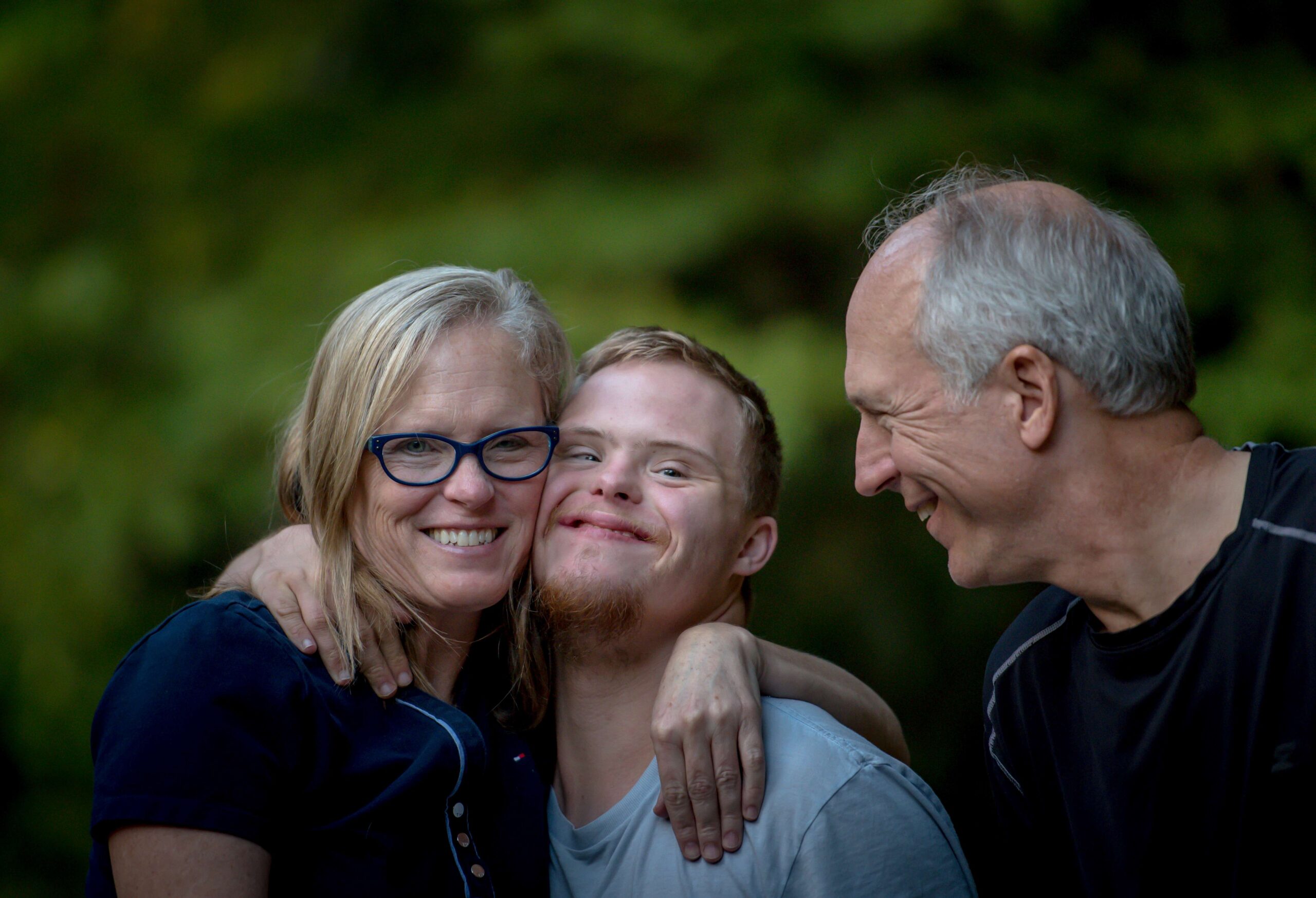
We heard at November’s Trust Board that all 140 of our care service teams now has an identified Triangle of Care champion.
The Triangle of Care is a partnership between professionals, the person being cared for, and their carers – usually a family member or close friend. It sets out how they should work together to support recovery, promote safety and maintain wellbeing.
These are the six standards of the Triangle of Care:
- Carers and the essential role they play are identified at first contact or as soon as possible thereafter,
- Staff are ‘carer aware’ and trained in carer engagement strategies,
- Policy and practice protocols regarding confidentiality and sharing information, are in place,
- Defined post(s) responsible for carers are in place,
- A carer introduction to the service and staff is available, with a relevant range of information across the care pathway, and
- A range of carer support services is available.
This is a great achievement and underlines our commitment to supporting unpaid carers who play such a vital role in the recovery of service users.
Organisational priorities – helping us move from analogue to digital
November’s Trust Board received an update on how we’re performing against our 15 (up from 14) organisational priorities. This was the second progress report for 2025/26, focusing on quarter two data.
All these projects deliver improved quality of care for service users either directly or indirectly.
In line with the national strategy of moving from analogue to digital, I was delighted to see the progress we’re making on our Patient Recorded Outcome Measures (PROMs) priority. In mental health care, PROMs are questionnaires and tools to capture experiences and concerns, help track progress, and ensure care is person-centred and effective.
We’ve now identified all the current PROM forms in use across the Trust – which can (apart from one) be hosted on our Patient Hub smartphone app. And we’re piloting this with around 500 service users within our Northern Gambling Service.
Another of our 15 priorities is our “Reducing mental health emergency department attendances and delays project”, who are reporting good progress. In readiness for Winter, we have identified the improvements we would like to pilot, including enhancing administration support, piloting a triage role and shared escalation arrangements with our acute trust partners. In addition, working with our partners at Leeds Teaching Hospitals, we are exploring how we may in the future be able to create a mental health facility on the acute Trust site.
Our Inpatient Quality Transformation Programme is also making good progress. Whilst the number of patients placed out of area is still a major concern for us, our length of stay position has reduced in line with the planned trajectory.
Driving financial efficiencies is, as you’d expect, one of our organisational priorities. The news here was fairly positive, with a modest surplus reported up to October 2025, which puts us on track to achieve our break-even plan.
Agency expenditure has reduced in year and is £1.4m under plan year to date. Substantive pay expenditure is also £1.3m under plan, largely due to our recruitment freeze. Our adult acute out of area placement spend reduced slightly but remains above planned levels at £3.6m year to date.
Reasons to be proud
October’s Team of the Month goes to . . .
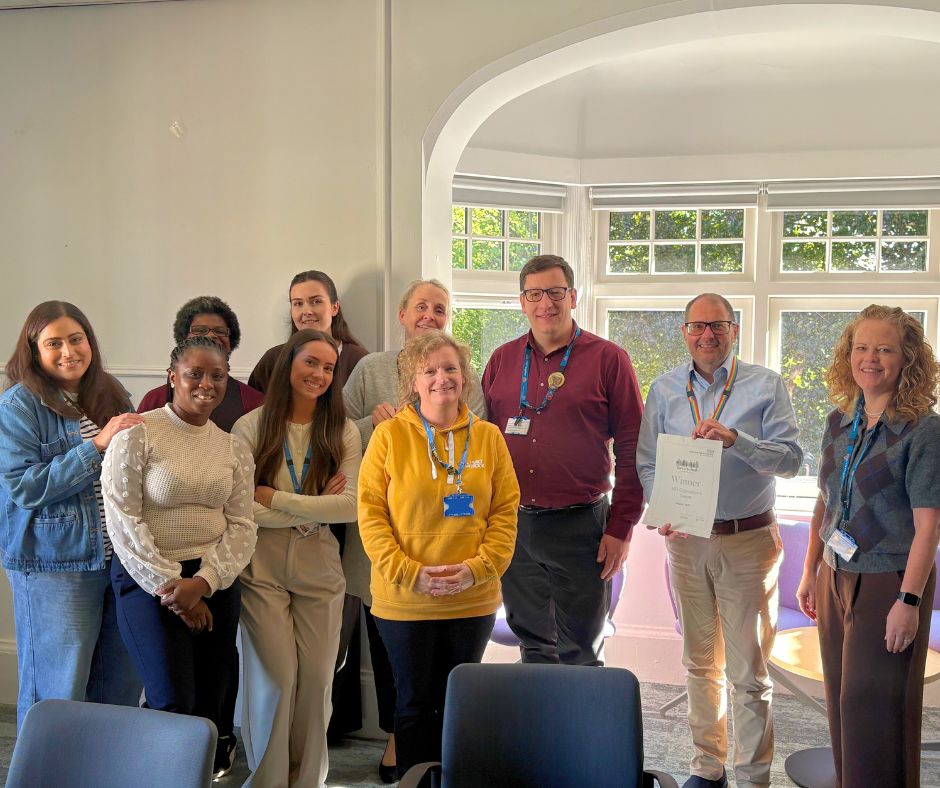
Our HR Operations Team (pictured above) which has been recognised for their outstanding contribution to the Trust’s strategic goals and their unwavering support for staff and managers.
This small but mighty team has played a pivotal role in reducing long-term sickness absence, improving governance, and supporting the return of staff to work.
Sara’s spotlight award goes to . . .

Physiotherapy Associate Practitioner Kelly Hezelgrave (pictured centre above) who receives my Spotlight Award for her exceptional clinical response and compassionate care during a critical incident.
Kelly quickly recognised a young man in distress and took immediate, life-preserving action. Her calm leadership, clinical expertise, and advocacy ensured the patient received the urgent care he needed. Her actions not only stabilised the patient but also provided emotional reassurance in a vulnerable moment.
Nasser has a Spark of Innovation

Congratulations to Nasser Mohammed (pictured) from our Health Facilitation and Involvement Team who has been nominated for the Spark of Innovation Award at the Social Care Stars ceremony in December.
This recognises individuals who introduce groundbreaking ideas, transforming support and care through innovation, particularly for people with learning disabilities and autism.
This month’s Research Hero award goes to . . .
The Attune project – which is a participatory arts-based exploration of young people’s mental health following adverse childhood experiences. At the centre of it are Principal Investigator Ranil Tan and Drama Therapist Louise Combes who’ve previously worked in our complex emotional needs team EMERGE which supported the Attune research project.
We Remembered Them
Staff and service user took time out at the 11th hour of the 11th day of the 11th month as the Trust held two remembrance services for Armistice Day. One in person at Becklin Centre where we welcomed Deputy Lord Lieutenant Michael Fox as our guest of honour. The other was a virtual service which over 100 staff joined.
Both services were led sensitively by our Chaplaincy Team. This short video was taken at our service at the Becklin Centre.